Flying with a 2-year-old means juggling luggage, snacks, and a restless toddler, and the right gear can turn a hectic boarding process into a manageable routine. Parents weighing whether to bring a car seat on board, gate-check it, or skip it entirely all face the same core question: what actually fits through the security checkpoint, fits in the cabin, and keeps a small child secure. This roundup gathers the travel bags, booster seats, and convertible car seats that solve those problems in real airports, so you can pack once and breathe a little easier at the gate.
A Fast Comparison Of The Options
BALEINE Car Seat Travel Bag for Airplane (Black)

Graco TurboBooster 2.0 Backless Booster Car Seat
Chicco GoFit Backless Booster Car Seat

Safety 1st Grow and Go All-in-One Convertible Car Seat
Diono Radian 3R 3-in-1 Convertible Car Seat

KidsEmbrace 2-in-1 Car Seat (Spider-Man)

Disney Baby Grow and Go All-in-One Convertible (Minnie)

Graco Slimfit 3-in-1 Convertible Car Seat
BALEINE Car Seat Travel Bag for Airplane (Blue)

BALEINE Car Seat Travel Bag for Airplane (Pink)
What Each Pick Brings To The Table
Airports are rough on car seats, and a scuffed shell arriving at baggage claim is a familiar sight for parents who travel often. The BALEINE bag steps in as a protective sleeve that holds the seat during gate checks or cargo handling, and the built-in pouch it folds into is the kind of small touch that saves real space in a suitcase.
For families weighing whether to bring a car seat on board or hand it off at the jet bridge, this bag gives the seat a fighting chance against dirt, rain, and conveyor belt scrapes. Parents flying with one child and a backpack will appreciate the three handles most when lifting a bulky seat overhead.
Positive Points
- 420D polyester shell resists tearing and shrugs off light rain during outdoor baggage staging
- Folds into its own attached pouch, so it disappears into luggage when not in use
- Three reinforced handles let two adults share the weight or shift grip mid-staircase
- Drawstring top closure keeps straps and buckles tucked away from snagging
- ID tag slot and printed label help airline staff identify the bag at a glance
Things To Consider
- Inside dimensions favor standard toddler seats; oversized convertible shells may not zip shut cleanly
- Polyester can pick up odors in cargo holds; airing it out after arrival is a small chore
Feature Snapshot
Made For
Families flying once or twice a year who gate-check their toddler seat and want it returned without scuffs.
Where Another Pick Suits Better
Travelers bringing a slim-fit convertible should look at the Diono Radian 3R, which packs its own low-profile footprint for overhead-bin use instead of relying on a gate check.
The Graco TurboBooster 2.0 trades the high-back structure of a full car seat for a low-profile booster that older toddlers can ride in across the country. For parents flying with grandparents, rental cars, or a quick Uber from the airport, the backless design means less to lug and a faster install.
Note that this option is built for ages 4 through 10, so a 2-year-old doesn’t meet its sizing range. The seat really earns its keep once your child hits the lower weight limit and you’ve already moved past harnessed travel.
A Few Strong Suits
- Lightweight shell is easy to carry between terminals or through a hotel lobby
- Open belt guides route the lap and shoulder belt without fuss
- Contoured seat base adds a touch of comfort on longer rides
- Cup holder on the side keeps a snack or sippy cup in reach
Things To Consider
- Not suitable for a 2-year-old; the minimum age is 4 years old
- Backless design leaves the head unsupported during naps, which is worth noting for long-haul rides
Whose Shelf It Belongs On
Older kids traveling between school, sports practice, and road trips with grandparents who need a no-fuss booster.
Skip It When
You still need to transport a 2-year-old in a harness; the Safety 1st Grow and Go handles that stage with a five-point harness.
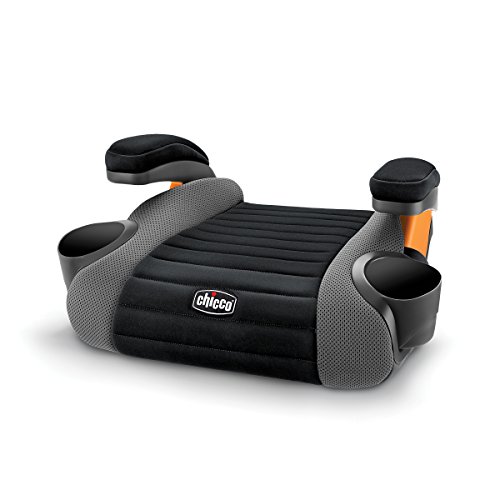
Rideshare travel throws a wrench at most car seat routines, and the Chicco GoFit sidesteps the usual latch dance by skipping anchors entirely. You set it on the seat, route the belt, and go, which matters when your driver is already pulling away from the curb.
Like the Graco TurboBooster 2.0, the GoFit is sized for older children, so it belongs in your travel rotation only after your toddler outgrows a harnessed seat. The flip side is a slim profile that stores neatly in a trunk between trips.
Useful Touches
- No-latch install is friendly to rideshares and rental cars without anchors
- ErgoBoost contoured base adds comfort on rides that drag past an hour
- ClearTex materials meet flammability standards without added chemicals
- Built-in belt guides keep the shoulder belt positioned properly across the chest
Trade Offs
- Designed for ages 4 and up, so a 2-year-old is too young for this booster
- Backless design means nap support depends entirely on the vehicle seat shape
Perfect Match For
Rideshare-heavy city families whose older child needs a portable seat that doesn’t require anchor installation.
Not Your Match When
You’re traveling with a 2-year-old who still needs a harness; consider the KidsEmbrace 2-in-1 for that stage.
The Safety 1st Grow and Go earns its name by stretching through three distinct stages: rear-facing infant, forward-facing toddler, and belt-positioning booster. For parents buying one seat to cover years of growth, that single purchase is appealing, especially when travel days call for installing it in unfamiliar cars.
At 2 years old, most children land in the forward-facing harness stage, and the QuickFit harness system simplifies rethreading between modes. Compared with the BALEINE bag in slot one, this isn’t a travel sleeve; it’s the actual seat you’d bring into the cabin and strap to the airplane seat if you want a familiar restraint.
Practical Advantages
- Three-stage design covers rear-facing, forward-facing, and booster use in one shell
- QuickFit harness removes the rethread step during height adjustments
- Removable cup holders and machine-washable pad make cleanups manageable
- FAA-compliant for airplane use when installed with the vehicle seat belt
Points To Note
- Bulky frame is heavy to haul through long terminal walks
- Forward-facing mode may feel snug for taller 2-year-olds near the upper height range
Quick Facts
Who Will Love This
Families who want a single seat that grows from rear-facing infant to big-kid booster across years of trips.
Swap It Out When
You need three across a narrow back row; the Diono Radian 3R’s slim-fit frame is a better match for that setup.
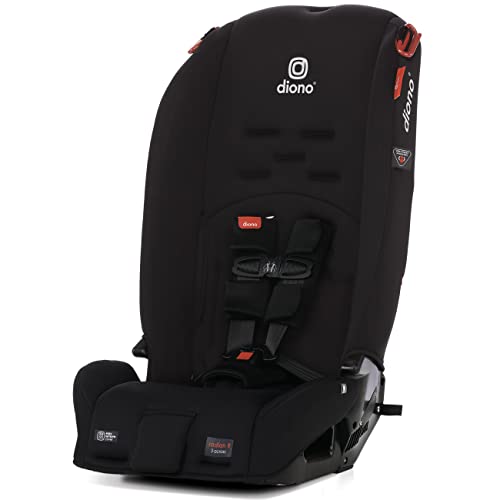
The Diono Radian 3R is built like a piece of automotive hardware, and that shows up in its weight, its steel-reinforced shell, and its willingness to fit three across a tight back row. For parents who prioritize safety engineering over lightweight travel, it’s a seat you install once and lean on for a decade.
Travelers eyeing airplane use should weigh the seat’s heft against the convenience of gate-checking. Unlike the Graco TurboBooster 2.0 or Chicco GoFit in slots two and three, this is a full convertible, not a booster, so it earns its place when a 2-year-old still rides in a five-point harness.
Where It Delivers
- Steel-reinforced frame adds serious side and frontal impact resilience
- Slim-fit profile makes three-across seating achievable in most vehicles
- Ten-year lifespan covers infants through booster use without replacement
- Folds flat for easier stowing in trunks and overhead bins
Things To Consider
- Heavier than most convertibles, so longer terminal walks feel longer
- Initial install is more involved; reading the manual once is worth the time
Feature Rundown
Who Should Grab It
Multi-child households needing three-across seating and a seat that handles infants through booster years.
Another Choice May Suit
Travelers focused strictly on airplane overhead-bin use may find the Graco Slimfit easier to wrestle through a narrow aisle.
The KidsEmbrace 2-in-1 leans into the appeal of licensed characters, and for a 2-year-old who only straps into the seat willingly because Spider-Man is on the shell, that motivation matters. It’s a forward-facing harness seat with a booster mode tucked in for later, which covers a wide window of family road trip years.
Note that forward-facing use requires a minimum of 26.5 lb and 29 in, so a smaller 2-year-old may need to wait a few months before transitioning out of rear-facing. Parents who already have an infant seat may find the KidsEmbrace pairs well as the next-step option once their child outgrows the infant setup.
Notable Gains
- Forward-facing harness transitions cleanly to a belt-positioning booster for older kids
- Latch-equipped install helps anchor the seat firmly in most vehicles
- Multi-position headrest, harness, and recline adjustments follow growth spurts
- Character print turns the seat into a familiar comfort object on travel days
Worth Bearing In Mind
- Forward-facing mode starts at 26.5 lb, so younger toddlers must stay rear-facing elsewhere first
- Licensed fabric is fun but typically not as stain-resistant as solid-color options
Best Suited To
Superhero-obsessed 2-year-olds who need a harness seat now and a booster a few years down the line.
Where A Sibling Pick Shines
Families who want rear-facing capability should step back to the Safety 1st Grow and Go, which covers that earlier stage in the same convertible format.
The Disney Baby Grow and Go borrows the same three-stage format as the Safety 1st Grow and Go but swaps in a Minnie Mouse design that earns quick buy-in from toddlers. For families already loyal to the Disney ecosystem, that familiarity carries into rental cars, rideshares, and the in-laws’ minivan.
At 2 years old, your child likely rides in the forward-facing harness stage, and the QuickFit system means fewer rethreads between modes. The trade-off versus the Safety 1st version is mostly aesthetic and licensing, not functional, so the choice comes down to which design your child tolerates on a long travel day.
A Strong Showing
- Three-stage design covers rear-facing infant through belt-positioning booster
- QuickFit harness saves time during height adjustments
- Minnie Mouse print helps ease resistance at install time
- Machine-washable seat pad simplifies snack and juice mishaps
Points To Keep In Mind
- Character fabric tends to show wear faster than solid-color shells
- Heavier than dedicated travel seats, so long terminal walks add effort
Right Fit For
Disney-loving families wanting a single convertible seat that grows with their child across road trips and flights.
Consider Something Else When
You need a tighter back-row fit; the Graco Slimfit trades the character fabric for a noticeably slimmer shell profile.
Car makers keep shaving inches off back rows, and the Graco Slimfit answers with a 10% slimmer shell and rotating cup holders that tuck out of the way when extra passengers pile in. For a 2-year-old moving between forward-facing and the high-back booster stage, that footprint matters more than raw padding.
The Slimfit covers rear-facing through high-back booster, similar to the Safety 1st Grow and Go, but trades a bit of interior depth for a leaner outer profile. Parents juggling two siblings plus a parent in the back seat will feel that difference during everyday errands, not just road trips.
Noteworthy Benefits
- Slim 10% narrower design saves real estate in compact cars and three-across setups
- Rotating cup holders fold away when not needed
- Three-stage coverage from rear-facing infant to highback booster
- Side-impact testing meets newer standards beyond the federal minimum
Honest Caveats
- Less interior padding than wider convertibles, which taller toddlers may notice
- Install takes patience, especially when rear-facing in low-ceiling sedans
Key Product Details
Who It Suits Best
Parents driving compact or midsize sedans who need a three-mode seat without sacrificing back-row legroom.
Look Elsewhere When
You want a steel-reinforced shell for maximum impact resilience; the Diono Radian 3R offers a heavier-duty build.
The blue BALEINE travel bag is the same protective shell as the black version in slot one, just with a different colorway. If your family travels with a backpack that already runs dark, a brighter blue can be easier to spot on a crowded conveyor belt or in a packed cargo bay.
Functionally, it pairs with the same three-handle layout, drawstring top, and built-in pouch. Travelers who already own a black travel sleeve sometimes grab this version as a second bag for grandparents who fly separately with their own car seat.
Useful Highlights
- 420D polyester shell matches the black version’s tear and water resistance
- Bright blue color stands out at baggage claim
- Folds into the attached pouch for compact packing
- Three reinforced handles for shared lifting with a travel partner
Worth Noting
- Same interior dimensions as the black bag, so it won’t fit oversized convertible shells
- Single design without internal padding, so heavy impacts still transfer to the seat
Built With In Mind
Parents who prefer a brighter colorway for easier identification during airport handling.
Reach For A Different Pick When
You actually want a seat inside the cabin; the Safety 1st Grow and Go is a flight-friendly alternative in the same three-stage convertible format.
The pink BALEINE rounds out the same travel bag family with another color option for families coordinating luggage or stroller gear. It carries the same 420D shell, the same drawstring closure, and the same fold-into-itself storage pouch as the black and blue variants in slots one and nine.
For travelers building a coordinated travel kit, picking up a couple of these bags makes sense if multiple caregivers are flying with separate car seats. Otherwise, the choice between black, blue, and pink is purely visual, since the dimensions and hardware are identical.
The Helpful Details
- Same 420D polyester protection as the other BALEINE colorways
- Pink hue is easy to spot in overhead bins and cargo areas
- Three reinforced handles make airport handoffs manageable
- Built-in pouch keeps the bag tidy between flights
Things To Consider
- Identical specs to the black and blue versions, so color is the only differentiator
- No internal padding, so rough handling still reaches the seat
Perfect Match For
Families who want a coordinated, easy-to-identify travel sleeve and prefer a pink colorway for their child’s gear.
A Better Fit Elsewhere
Shoppers who don’t care about color should grab the black BALEINE in slot one and save the difference for snacks at the gate.
What Matters Most Before Choosing Airplane Car Seat For 2 Year Old
Age And Weight Suitability
A 2-year-old typically falls into the forward-facing harness stage of a convertible seat, with minimums around 26.5 lb and 29 in depending on the model. Backless boosters like the Graco TurboBooster 2.0 and Chicco GoFit are designed for ages 4 and up, so they’re not appropriate yet. Checking the manufacturer-stated height and weight range against your child’s measurements prevents a frustrating purchase that has to be replaced in six months.
Airplane Compatibility And Installation
The Federal Aviation Administration requires that car seats used on aircraft be labeled as certified for motor vehicle use, and most convertibles meet that standard. If you plan to bring the seat onto the plane, confirm it fits through the airplane seat dimensions; wider shells can be tough to maneuver into a window or middle seat. Bag-style options like the BALEINE bag are designed for gate-checking rather than in-cabin use.
Travel Frequency And Gate Logistics
Frequent flyers who rarely leave the seat behind will lean toward a slim, lightweight convertible that handles overhead bins. Families who prefer to gate-check will prioritize a protective travel sleeve and accept a heavier car seat. Each approach has real trade-offs in time and muscle at the jet bridge.
Long-Term Value And Growth Room
Convertible seats that span rear-facing infant through belt-positioning booster are the most economical over time, and they handle the bumpy transitions of toddler growth without replacement. The Safety 1st Grow and Go and Disney Baby Grow and Go fit that mold well, while the KidsEmbrace 2-in-1 covers the forward-facing and booster stages for slightly older toddlers. Choosing a seat that outlasts the 2-year-old stage pays off across multiple years of family travel.
Key Considerations Across These Picks
Pitfalls Shoppers Hit
Buying a backless booster for a 2-year-old is the most common mistake, and it leaves a child without proper upper-body support during a turbulent flight or sudden stop. Another slip is underestimating the seat’s weight; a steel-reinforced convertible like the Diono Radian 3R adds real pounds to your carry load. Skipping a travel bag for gate-checked seats is the third trap, because baggage handling is rarely gentle.
When Paying More Pays Off
Premium convertibles justify their higher cost through longer lifespans, stronger shell construction, and slimmer profiles that survive three-across seating. The Diono Radian 3R’s steel-reinforced frame and ten-year lifespan explain the step up over entry-level convertibles in the same category. For families planning multiple children or years of travel, that durability often pencils out compared with replacing a cheaper seat every few stages.
Frequently Asked Questions
Does a 2-year-old need a car seat on an airplane?
Yes, the FAA recommends a child restraint for any child under 40 lb, and a car seat labeled for motor vehicle use meets that requirement. Booster-style seats must be used with the airplane’s lap belt, while harnessed convertibles use the seat belt path. Parents who don’t bring a seat can hold a lap child on a separate purchased ticket, though that’s less secure.
Can a 2-year-old fly without a car seat?
Children under 2 can fly as a lap infant on most airlines without a separate seat, but the FAA strongly recommends using a restraint when one is available. For families with a car seat already in rotation, bringing it on board and strapping it to the airplane seat is the safer option.
Which car seat is best for airplane travel?
A lightweight, FAA-compliant convertible with a slim shell tends to be the easiest to maneuver through a narrow aisle. The Safety 1st Grow and Go and Graco Slimfit both fit that mold, while the Diono Radian 3R offers more durability at the cost of added weight. Travelers who gate-check rather than bring the seat inside should pair their choice with a protective travel bag.
Are travel bags worth it for gate-checking a car seat?
A travel bag shields the seat from conveyor scrapes, light rain, and dirt during cargo handling, and it folds into itself for easy packing. The BALEINE bag in slots one, nine, and ten fits that role at a modest price. Without a bag, your seat still gets the job done, but may arrive with cosmetic wear that doesn’t affect safety.
How do I clean a convertible car seat after travel?
Most convertibles feature a machine-washable seat pad that unzips for laundering, and a damp cloth handles crumbs in the harness webbing. Avoid harsh cleaners that could weaken straps; mild soap and water are typically enough for sticky juice residue. Air drying the pad prevents shrinkage that some fabrics show in a hot dryer.
The Takeaway
Traveling with a 2-year-old is rarely simple, but the right seat or travel sleeve can turn boarding, taxiing, and the car ride home into predictable steps. Match the seat’s stage range to your child’s current size, decide between cabin carry and gate-check before you buy, and lean on the buying guide points above to filter the list down. Whatever you choose from this roundup, your toddler’s comfort is built into the design.