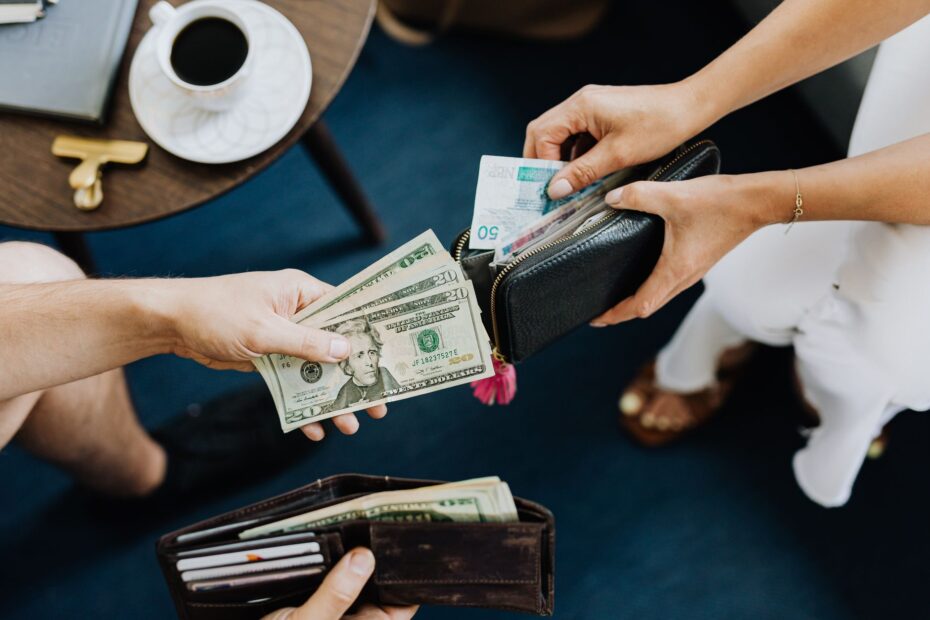
At shops and ATMs abroad, US dollars become local spending power through card payments, cash withdrawals, or exchange-counter conversions. Your final cost depends on the foreign currency exchange rate, provider markup, and fees. A familiar dollar amount on a terminal can still hide a weaker conversion choice.
This explanation suits travelers planning card payments, cash access, and arrival funds. You’ll see how banks, ATMs, card networks, and exchange counters shape what reaches your wallet.
Rates Set the Starting Point for Every Payment
A foreign currency exchange rate shows how much local currency one US dollar buys. That rate affects meals, transit, tips, lodging deposits, museum tickets, and every other purchase you make abroad.
Market rates move throughout the day as currencies trade around the world. Your bank or credit union, Visa, Mastercard, ATM operator, or currency exchange bureau can add a markup before money reaches your account or your hand.
That markup explains why two services can show different dollar totals for the same 100-euro purchase. One service may post a separate fee, while another builds its earnings into a weaker customer rate.
You have four common routes for accessing foreign funds:
- Card purchase Your card network converts the charge from local currency into dollars after the merchant submits the transaction.
- ATM withdrawal Your debit card draws local notes from your checking account through an ATM network.
- Bank exchange Your bank or credit union exchanges dollars before departure, subject to its rate and service terms.
- Cash bureau A currency exchange bureau swaps physical notes at its posted customer rate, sometimes with a stated commission.
Each route places a different business between your dollars and the local amount. Your job is to look past a tempting headline rate and focus on what you actually pay or receive.
The Final Dollar Amount Reveals the Real Cost
A screen showing 1 US dollar equals 0.92 euros tells only part of the story. The amount charged to your account, or the notes placed in your hand, shows the real conversion result.
| Payment route | Advertised rate | Extra charge | Total impact on a 100-euro purchase |
|---|---|---|---|
| Card network rate | 1 USD = 0.92 EUR | 0% foreign transaction fee | About $108.70 before small rate movement |
| Card with issuer fee | 1 USD = 0.92 EUR | 3% foreign transaction fee | About $111.96 |
| Merchant dollar conversion | Merchant-selected rate | Rate markup built in | Could exceed $112 without a separate fee line |
| Cash exchange counter | Posted customer rate | Commission or flat charge | Depends on both the rate and stated charges |
A provider advertising “no commission” can still earn money through a weaker customer rate. For your situation, the useful comparison is the final dollar amount for the same purchase or the final local-currency amount after every charge.
Foreign currency exchange rates for travelers matter less in isolation than the full cost attached to them. A 3% foreign transaction fee adds $3 to each $100 in converted spending, even where the network rate itself is close to the market rate.
Decline a conversion offer that hides the rate until after approval. Your card statement cannot undo a rate accepted at a terminal or ATM.
That full-cost view leads directly to the payment method you carry. Card acceptance, cash needs, and your account terms should guide the choice.
Cards, ATMs, Banks, and Bureaus Fill Different Roles
Card payments reduce the notes in your wallet, while cash still matters for small merchants, market stalls, tips, and places with weak terminal access. Your destination can require both.
| Method | Cost pattern | Convenience | Useful role |
|---|---|---|---|
| Credit card payment | Network rate plus any issuer fee | High where cards are accepted | Hotels, restaurants, rail tickets, larger purchases |
| Bank-affiliated ATM | ATM surcharge plus bank fees | High in cities and transit hubs | Controlled local-cash withdrawals |
| Home bank exchange | Rate spread and possible service charge | Available before departure | Small arrival buffer |
| Airport counter | Wide rate spread or service fee | Very high at arrival | Urgent transport cash only |
| Local exchange bureau | Posted rate and possible commission | Varies by district | Converting leftover notes or a limited cash need |
A credit card with no foreign transaction fee is a strong choice for purchases in card-friendly places. Visa and Mastercard process international transactions, though merchant acceptance varies by country, neighborhood, and business type.
Carry a backup card from a different network where possible. Your primary Visa card does little good at a location that accepts Mastercard but declines Visa, or during a card-account fraud hold.
For many trips, card payments plus measured ATM withdrawals strike a practical balance. You limit excess notes while keeping enough cash for purchases that cannot run through a terminal.
That balance is easier to maintain when your first few hours do not depend on finding an ATM.
A Small Arrival Buffer Avoids a Large Pre-Trip Conversion
A taxi queue at midnight is a poor place to discover that the driver accepts cash only. Carry enough local money for arrival transport, a snack, and a small contingency, then obtain the rest after reaching a bank ATM or a reputable currency exchange bureau.
- Before departure Exchange a modest amount for your arrival period rather than your full trip budget.
- At arrival Use an airport currency exchange kiosk only for an urgent gap, such as ground transport.
- Near lodging Find a bank ATM or an established bureau with a posted customer rate.
- Before moving onward Refill cash in a well-lit location rather than relying on an unfamiliar late-night machine.
The choice to exchange money before or after travel depends on your first few hours abroad. A small pre-trip amount removes pressure after a late flight, while a larger conversion can leave you carrying leftover notes at the end.
Getting euros for travel also requires a country check. France, Italy, Spain, Germany, and several European destinations use the euro, while Switzerland uses the Swiss franc, Poland uses the zloty, and the United Kingdom uses the pound sterling.
Airport currency exchange fees and weaker rates make large conversions an expensive convenience. A $300 airport exchange can lose far more through a poor rate than a small emergency amount, especially where the counter builds its charge into the spread.
Your arrival buffer should cover a specific purpose rather than a vague fear of running short. Transport from the airport, one meal, and a small purchase give you a practical starting point.
Local-Currency Payments Keep Merchant Conversion Out
A card terminal can offer a choice between euros and US dollars. Select euros in France or Spain because a local-currency charge moves through your card network rather than the merchant’s conversion service.
Dynamic currency conversion (DCC) lets a merchant, hotel desk, rental-car counter, or ATM charge you in dollars. The dollar figure feels familiar, yet the provider sets its own exchange rate and can add a substantial markup.
Visa and Mastercard exchange rates apply to overseas card purchases processed in local currency, followed by any foreign transaction fee charged by your card issuer. Your payment screen can reroute that transaction, so inspect each prompt before tapping, inserting, or approving.
Choose the local currency at card terminals and ATMs. Accept a dollar conversion only after independently finding that its full rate beats your card route.
That choice matters because DCC shifts the conversion decision away from your bank and card network. A merchant-selected rate can appear clear on screen while still costing more than the local-currency path.
Hotel deposits deserve the same attention. Ask for the charge, hold, and final invoice in local currency so your card issuer receives the transaction without a merchant-selected conversion.
Cash still carries its own costs, and repeated withdrawals can turn small fixed fees into a larger expense.
ATM Withdrawals Cost Less With Fewer Separate Charges
An ATM abroad does not exchange the cash in your pocket. It draws local notes from your checking account through your debit card, while a kiosk takes physical dollars and trades them at its posted rate.
Three charges can land on one ATM withdrawal: a local ATM surcharge, a home-bank international withdrawal fee, and a foreign transaction or currency-conversion fee. Your daily withdrawal limit also matters because a low limit can force several small transactions and repeated surcharges.
- Choose bank machines Use ATMs attached to banks, inside branches, or in supervised locations.
- Take measured amounts Withdraw enough for several days without carrying a large visible stack of notes.
- Reject dollar conversion Select the local-currency option on the ATM screen.
- Read account terms Look at ATM charges, daily limits, and debit-card travel settings before departure.
- Keep receipts Retain the printed record until your account activity matches the withdrawal.
Using an ATM abroad in larger, measured amounts can reduce the effect of repeated flat charges. A 200-euro withdrawal with a 5-euro local surcharge costs less per euro than four 50-euro withdrawals carrying that same surcharge each time.
Your safe withdrawal amount depends on your lodging, the cash habits at your destination, and your bank charges. Keep cash out of sight before opening maps or transport apps near the machine.
Destination Habits Set Your Daily Cash Amount
A contactless card can cover a museum ticket in London, yet a rural food stand or small ferry may require notes. Your destination’s payment habits decide how much cash belongs in your daily carry.
Look at five practical details before you leave: card acceptance at small businesses, cash needs on public transit, tipping customs, bank ATM access, and the chance of a network outage. These details affect your cash plan more than a broad claim that a country is “card friendly.”
Japan still relies heavily on cash for daily spending in many settings. Sweden accepts cards for far more small purchases, though you should still carry a backup payment method in case a terminal or network fails.
Keep local cash equal to one day of modest spending even in card-heavy cities. That reserve can cover a disrupted terminal, a small market purchase, or transport after your phone battery dies.
Split your travel money between a wallet, a secured bag, and a separate backup card location. Travel money safety improves when a lost wallet does not remove every payment option at once.
Avoid counting notes at an ATM. Step away with cash out of sight, then sort receipts and confirm your route from a more private location.
A Short Travel-Money Routine Limits Fee Surprises
A restaurant payment can fail after dinner because a card issuer sees an overseas charge as unusual. Your bank may ask for a travel notice, while another issuer relies on automated fraud checks, so look at the policy tied to each card.
- Read card terms Look for foreign transaction fees, ATM charges, cash-advance rules, and withdrawal limits.
- Carry two cards Pack a primary card and a backup card from separate issuers or networks.
- Save bank contacts Store international phone numbers outside your wallet and phone case.
- Fund arrival needs Bring a small local-currency buffer for transport and immediate purchases.
- Select local currency Decline dollar conversion prompts at merchant terminals, hotels, rental desks, and ATMs.
- Read activity daily Look at posted transactions and keep receipts for unfamiliar or disputed charges.
Before moving to another city or country, count the notes you still hold and locate bank ATM access near your next stop. That habit keeps currency exchange while traveling tied to real spending needs rather than a rushed search in an expensive location.
Your debit card and credit card serve separate purposes abroad. Keep the debit card for planned cash withdrawals, and reserve the credit card for purchases where card acceptance is strong.
Bottom Line
Your payment method matters as much as the exchange rate itself. Pay in local currency, use a no-fee card where acceptance is strong, withdraw cash in sensible amounts from bank ATMs, and keep a modest arrival reserve.
Those choices place the conversion decision closer to your bank and card network, where the rate is clearer than a merchant or airport counter offer. Currency exchange while traveling becomes less stressful once you know which party sets the rate and which charges reach your account.
FAQ
How does currency exchange work while traveling internationally?
At overseas merchants, ATMs, banks, and exchange bureaus, your dollars become local spending power through card transactions, debit-card withdrawals, or cash conversion. Your final cost comes from the exchange rate, provider markup, and any foreign transaction fee or ATM charge.
What is the best way to exchange currency while traveling?
For many trips, use a credit card with no foreign transaction fee for purchases and withdraw limited local cash from a bank ATM. This approach avoids carrying a large cash supply while covering merchants, transit, and tips that require notes or coins.
Is it better to exchange money before or after travel?
Exchange a small amount before departure for arrival transport and urgent expenses, then obtain most cash after arrival through a bank ATM or carefully selected bureau. Large pre-trip exchanges can leave you with excess notes and a weaker customer rate.
How do ATM withdrawals abroad work, and what fees can apply?
Your debit card draws local notes from your checking account through the ATM network. A local surcharge, home-bank withdrawal fee, and foreign transaction fee can all appear on one withdrawal, so your account terms and withdrawal amount matter.
Should travelers exchange money at the airport?
Airport currency exchange suits an urgent, limited need such as a taxi, transit ticket, or food after arrival. Large airport conversions can carry a weaker customer rate or a service charge, so they are poorly suited to funding an entire trip.
Should I pay in US dollars or the local currency when using a card?
Choose the local currency at a card terminal or ATM. A US-dollar option is dynamic currency conversion (DCC), which lets the merchant or ATM operator set the conversion rate instead of routing the purchase through Visa, Mastercard, and your card issuer.