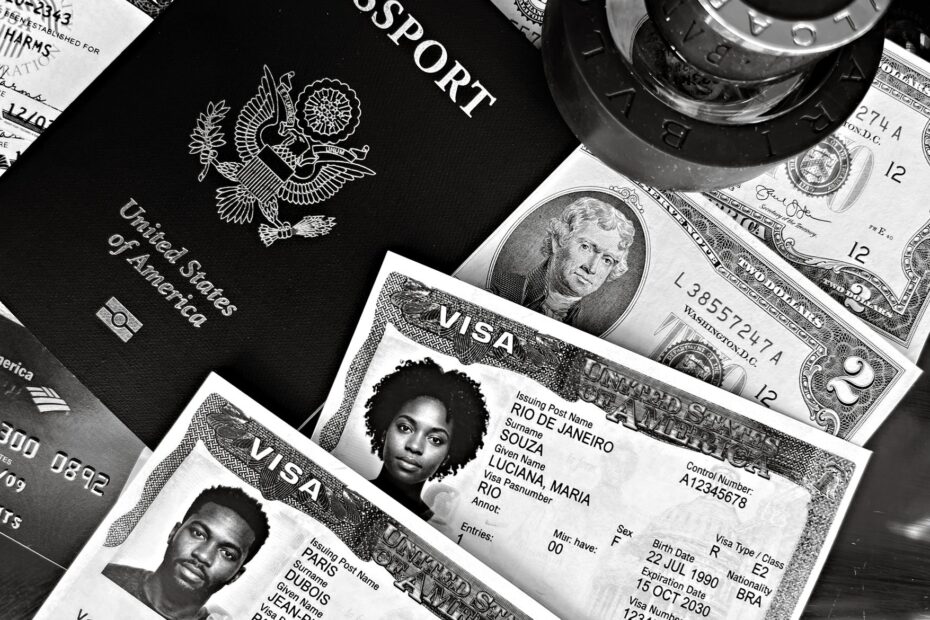
At the border, two separate documents serve distinct roles: a passport establishes your identity and nationality, while a visa authorizes you to seek admission to a destination. Your U.S. passport comes from the United States; a travel visa comes from the country you plan to enter. Those separate roles affect airline screening and border decisions.
The details below help you sort entry rules, document formats, and border decisions before an international trip from the United States.
Documents Have Separate Jobs
A passport is your main document for international travel. It lists your photo, name, date of birth, passport number, nationality, and expiration date. For a U.S. citizen, a U.S. passport also serves as evidence of citizenship while you travel abroad.
A travel visa is permission from your destination country to request entry for a stated reason, such as tourism, study, work, or transit. Your visa can limit your number of entries, the dates available for arrival, and the activities permitted after admission.
| Document | Who issues it | Main job |
|---|---|---|
| Passport | Your home government | Shows your identity and nationality during international travel |
| Visa | Your destination country | Lets you request entry for a stated purpose |
| Entry record | Border control at your arrival point | Lists the period of stay granted at admission |
For a visa vs passport comparison, focus on who issued each document and what it controls. Your passport booklet belongs to your home country, even where a visa sticker fills an entire passport page.
A sticker or digital record does not turn your passport into a visa. The destination country uses that record to show that you have permission to seek entry under a stated category.
Issuers and Document Details
Your home government issues your passport. In the United States, the U.S. Department of State issues a U.S. passport through passport agencies, acceptance facilities, and mail processing.
Machine-readable passport data follows standards set by the International Civil Aviation Organization. Those standards allow airline and border systems to read the passport number, nationality code, and expiration date printed in the document.
Visa decisions come from a destination-country embassy or consulate, immigration office, or similar authority. Before issuing your visa, staff can review your trip purpose, financial records, lodging plans, return arrangements, or invitation letter.
Visa Formats Differ by Destination
Paper stickers remain familiar, but your visa can also appear as a stamp, separate document, or digital record linked to your passport number. Your airline may see that digital record during check-in without a label inside the passport.
Australia’s Electronic Travel Authority is one example of digital travel permission connected to a passport. Canada uses an electronic travel authorization for qualifying air travelers who do not need a visitor visa, so your passport may carry no visa sticker.
Airline approval to carry you only gets you to the border; an officer still decides whether you may enter.
Boarding Permission Does Not Equal Admission
Boarding with a valid visa does not require a border officer to admit you after landing. Your visa lets you request entry, while the border officer decides whether your documents and stated purpose match the entry category.
At a U.S. airport, U.S. Customs and Border Protection can review your travel purpose, passport, visa, baggage, and immigration history. Border authorities abroad hold similar authority at their own ports of entry.
Carry documents that match the purpose stated in your visa. A tourist visa paired with work contracts can lead border officers to question the activities you plan to conduct.
Admission records control your permitted stay after entry. Entry and exit stamps can document travel dates, while the I-94 Arrival/Departure Record lists the admission class and departure deadline granted to many visitors entering the United States.
You should treat the admission record as separate from the visa expiration date. A visa can remain valid after the departure deadline on your I-94 Arrival/Departure Record has passed.
Rules That Set Visa Requirements
Your nationality and destination set the starting point, but they do not settle the full document list. Your trip purpose, planned stay length, prior immigration history, and travel route can change what you need.
A U.S. passport allows visa-exempt travel to numerous destinations, yet it does not remove every entry requirement. You may need a visa for work, study, stays lasting several months, repeated entries, or activities beyond ordinary tourism.
| Entry path | What you receive | What you need before departure |
|---|---|---|
| Visa-exempt travel | No prearranged visa for a qualifying trip | A valid passport and required trip records |
| Visa on arrival | Permission issued at the airport or border | Your passport, fee, photos, and trip details where required |
| Electronic travel authorization | Digital clearance linked to your passport | An online request completed before boarding |
| Prearranged visa | A sticker, stamp, or digital visa record | A consular request completed before travel |
ESTA shows why document labels matter. Travelers who qualify for the U.S. Visa Waiver Program seek Electronic System for Travel Authorization clearance before travel, but ESTA is not a U.S. visa.
The difference between a visa and a passport becomes clearer at this stage. Your passport identifies you, while the entry route sets the extra permission or clearance attached to your specific trip.
Once the relevant permission is identified, timing and matching details become practical safeguards against denied boarding.
Document Checks Before Booking and Departure
Airline staff inspect travel documents before boarding because carriers can face penalties for transporting passengers without required papers. Start with the destination government’s immigration authority or destination-country embassy or consulate rather than a dated travel tip.
- Check passport expiry. Your passport needs enough remaining validity for the destination rule, which can extend several months beyond your planned departure date.
- Match trip purpose. Tourism, paid work, study, transit, and family visits can require separate entry categories for your plans.
- Review blank pages. Some destinations require unused passport space for entry and exit stamps or full-page visa stickers.
- Gather trip proof. Border staff can ask you for onward tickets, lodging details, financial records, or a host address.
- Confirm transit rules. A connection through another country can trigger separate transit-document requirements for your passport.
Nonrefundable travel creates a costly problem where your documents do not meet the stated rule. A passport validity requirement can block your boarding for a three-day vacation before you reach border control.
You can avoid that problem by reviewing each destination rule before paying for flights or lodging. Keep your passport name, reservation name, and visa records consistent across every booking.
Travel Scenarios Show the Difference
A Short Tourist Stay Still Uses a Passport
For a brief holiday in a visa-exempt destination, you still need a valid passport. Not needing a visa does not remove your duty to show identity and citizenship at check-in and arrival.
Your passport remains the document presented to the carrier and border officer. The lack of a prearranged visa only changes the entry process for that destination.
Electronic Clearance Can Be Required Before Boarding
Canada’s electronic travel authorization shows how digital screening works. You submit passport details online before your flight, and the carrier checks the linked clearance before issuing a boarding pass.
That clearance does not replace your passport. Your physical passport still links your identity to the electronic travel authorization held in the carrier’s document system.
Long Stays Need Purpose-Specific Permission
A valid U.S. passport does not let you take a job in Japan, enroll in a degree program in France, or remain abroad beyond a visitor limit. Your destination can require a work, student, residence, or long-stay visa tied to the activity you plan to pursue.
That is where the difference between a visa and a passport becomes practical rather than academic. Your passport identifies you throughout the trip, while your visa sets the reason for your stay and the limits attached to your presence abroad.
Assumptions That Disrupt International Trips
Expiry dates cause more problems than worn passport covers. A passport valid on your departure date can still fall short of a destination’s six-month validity rule or an airline document review.
Visa limits matter just as much for your plans. Your visa can permit one entry rather than several, allow tourism but not employment, or set a short stay within a longer arrival window.
- Read every date. Treat your passport expiration, visa validity, entry date, and departure deadline as separate checks.
- Use passport nationality. Requirements attach to the passport you present, not necessarily to your residence address.
- Match your evidence. Carry records showing the same trip purpose, address, and departure plan stated in your request.
- Review entry limits. Check whether your visa allows one entry, multiple entries, or a fixed number of days after arrival.
- Verify before payment. Review the destination government’s immigration rules before purchasing nonrefundable flights or lodging.
Rules can change after policy shifts, security events, or bilateral agreements. Your next step is to verify the destination’s stated requirements before committing money to travel.
Final Travel Check
Your passport proves who you are and which country recognizes you as a national. A visa gives you limited permission to seek entry for a defined purpose.
Keep the documents separate in your travel planning. Your passport expiration, visa category, electronic travel authorization, entry and exit stamps, and admission record can each affect a different part of the trip.
Border officers make the final admission decision at arrival. The it matters because holding both documents does not remove the need to show that your trip matches the entry category.
FAQ
Is a visa the same thing as a passport?
No. Your passport proves your identity and nationality for international travel, while a visa records permission from a destination country for you to seek entry. A visa can sit inside your passport as a sticker, but the documents serve separate legal roles during your trip.
Do I need a visa if I have a U.S. passport?
A U.S. passport does not remove every visa requirement for you. Your destination, nationality, trip purpose, stay length, and immigration history set the rule. Tourist travel can be visa-exempt, while work, study, and long stays can require a visa.
What countries are visa-free for my passport?
Visa-exempt destinations depend on the nationality shown in your passport and can change with limited notice. Check the destination government’s immigration authority for rules affecting your passport, trip purpose, stay length, and arrival method before booking flights or lodging.
How does a visa appear in a passport?
Inside many travel documents, a visa appears as a printed sticker covering a page or as a stamp placed near an entry mark. Some countries use an electronic record linked to your passport number, so you receive no physical visa label.
How to get a visa
Start with the destination-country embassy or consulate, then select the visa category matching your trip. You may need your passport, photo, travel plan, financial records, an appointment, biometrics, and a consular interview before travel.
Which countries require a visa before arrival?
Countries that require a visa depend on your passport nationality, purpose of travel, and planned stay. A destination’s immigration authority or embassy lists whether you need a prearranged visa, a visa on arrival, or an electronic travel authorization.