Hotel rooms, short-term rentals, RVs, and older cabins aren’t always upfront about fuel-burning appliances. A compact CO alarm tucked into your luggage gives you a steady reading wherever you sleep, without relying on whatever’s already mounted to the ceiling. This list rounds up nine solid options, from sealed-battery minis to plug-in units with battery backup and a few photoelectric smoke companions for fuller coverage on the road.
A Snapshot Of The Selections

Heiman Low-Level Digital Display Mini CO Alarm

Siterlink Plug-In CO Detector 10 Year Battery

Heiman Digital Display CO Alarm 3 Pack
Kidde AA Battery CO Alarm Portable

Kidde Plug-In CO Detector 9V Backup

Heiman Battery Photoelectric Smoke Alarm

Heiman Wireless Interconnected Smoke 3 Pack
Kidde Plug-In CO Detector AA Backup

Heiman Photoelectric Battery Smoke Alarm
More Details On Our Top Picks
Travelers who bounce between rentals a few times a year often want one detector they can toss into a bag and forget about until it’s needed. The Heiman Low-Level Digital Display Mini CO Alarm answers that call with a sealed, non-replaceable CR-2/3AZ lithium cell that runs for the life of the unit. There’s no spare battery to remember, no low-battery chirp at midnight in a roadside motel.
Activation works by sliding the bracket into the back groove and pushing up, after which the alarm stays on until end of service. The digital display shows CO readings in parts per million, so you can see the actual number when the alarm sounds rather than guessing at severity. For most travelers, that single feature removes the worry of whether a stale hotel detector still works.
Everyday Advantages
- Sealed lithium battery lasts the full service life without swaps.
- Digital readout shows live CO levels in ppm for clearer decisions.
- UL 2034 5th Edition and CSFM approval supports residential and rental use.
- Compact shell slips into carry-on or a laptop sleeve.
- Low-level sensitivity catches small leaks before they spike.
Things To Consider
- Non-replaceable battery means the whole unit retires at end of life.
- Smaller display can be hard to read in dim motel lighting.
Who It Suits Best
Frequent flyers and short-term rental guests who want a true set-and-forget alarm without worrying about battery swaps during a trip.
Consider Something Else When
Outlet-heavy travelers staying in properties without accessible outlets should grab the Kidde AA Battery CO Alarm Portable instead.
Extended-stay business travelers and digital nomads usually have a wall outlet to spare but no patience for battery swaps. The Siterlink Plug-In CO Detector pulls continuous AC power from any standard socket and falls back on a built-in 10-year battery during blackouts, the kind that happen in older inns and converted buildings during storms.
Compared to the Heiman mini above, this one trades pocket portability for a stable outlet connection, which means the alarm sits where the CO tends to drift (low and near sleeping height). The electrochemical sensor responds to low CO concentrations, so the alarm reacts before concentrations climb into dangerous territory.
Reasons It Performs
- Continuous AC power keeps the sensor warm and responsive.
- 10-year backup battery covers outages common in older properties.
- Plug-in form means no mounting hardware on unfamiliar walls.
- Electrochemical sensor reads low-level CO accurately.
Worth Noting
- Occupies an outlet full-time, blocking adjacent plugs.
- Not designed for tent, RV, or cabin use without a nearby socket.
Quick Facts
Made For
Rental dwellers and extended-stay guests who split time between serviced apartments and hotels with reliable outlets.
A Better Fit Elsewhere
Backpackers and RV travelers should look at the Heiman Low-Level Digital Display Mini CO Alarm, which runs purely on its sealed battery.
Families splitting a vacation rental or a large Airbnb often find that one alarm on the nightstand leaves the kids’ room and the basement den unprotected. The Heiman Digital Display CO Alarm 3 Pack solves that by giving you three identical standalone units, each powered by 2 AA batteries and certified to UL 2034 for residential use.
Each alarm watches for CO from common sources: furnaces, water heaters, fireplaces, gas stoves, clothes dryers, portable generators, and vehicle exhaust. With three in your suitcase, you can stage one in the master bedroom, one in the living area, and one in the basement or wherever fuel-burning appliances live.
Well-Handled Touches
- Three units cover a full rental without buying separately.
- Replaceable AA batteries keep each alarm serviceable for years.
- UL 2034 certification supports residential code compliance.
- Digital display gives a real ppm number on each unit.
- Portable placement means no drilling into unfamiliar walls.
Trade Offs
- AA batteries need replacing across three units.
- No interconnection, so one alarm won’t trigger the others.
Right Fit For
Families and groups renting multi-room properties or homes with multiple fuel-burning appliances on different floors.
Skip It When
Solo travelers or couples staying in single-room hotels will find the Kidde AA Battery CO Alarm Portable more compact and easier to manage.
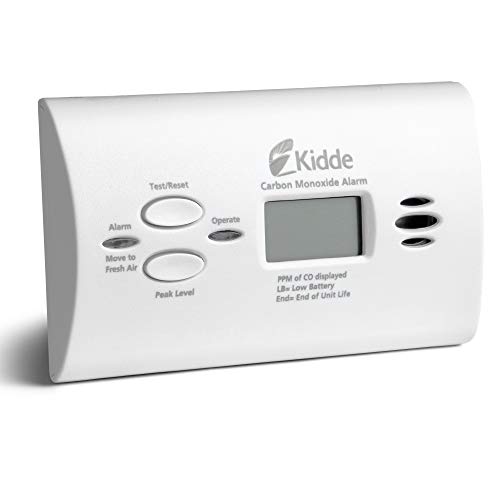
Road trippers and motel-hoppers tend to want something they can drop on a nightstand, a picnic table, or the dashboard of a sleeper van. The Kidde AA Battery CO Alarm Portable leans into that with a compact shell that runs on 2 AA batteries, requires no wiring, and works during a power outage because it’s never been plugged in to begin with.
A green LED confirms power, a red LED flashes when CO triggers the 85-decibel alarm, and the test-reset button handles weekly checks. The electrochemical sensor reads CO reliably, and the included batteries mean it’s ready to use straight out of the package.
Advantages To Know
- Tabletop or wall-mount placement without tools.
- 2 AA batteries keep it working through blackouts.
- Test-reset button simplifies monthly self-checks.
- 85 dB alarm is loud enough to wake heavy sleepers.
Small Caveats
- No digital readout shows actual ppm numbers.
- AA cells need periodic swapping across long trips.
Feature Snapshot
Best Suited To
Road trippers, van lifers, and motel guests who want a portable, no-installation alarm they can move from room to room.
Look Elsewhere When
Rental dwellers with steady outlet access and a need for live CO numbers should pick the Kidde Plug-In CO Detector 9V Backup instead.
Long-term renters who treat a furnished apartment like home often want the same trust they’d put in a wall-mounted unit. The Kidde Plug-In CO Detector 9V Backup delivers that feel: it plugs into a standard 120V outlet, runs continuously, and falls back on a 9V battery if the building’s power drops.
The digital LED display shows the CO concentration the sensor is reading in real time, and peak level memory logs the last detected event for post-trip review. LED indicators provide at-a-glance status, which is helpful in dark rooms.
Useful Strengths
- Plug-in power keeps the sensor on without manual charging.
- 9V battery backup handles outages common at older buildings.
- Peak level memory records the last CO detection.
- Digital LED display gives a clear ppm reading.
Points To Note
- 9V backup battery isn’t user-replaceable across the full lifespan.
- Bulkier plug profile blocks the adjacent outlet.
At A Glance
Who Should Grab It
Extended-stay business travelers and rental tenants who want a permanent-feeling plug-in alarm with backup power.
Another Choice May Suit
Travelers on the move without reliable outlet access will find the Kidde AA Battery CO Alarm Portable easier to relocate.
Smoke coverage matters as much as CO coverage in short-term rentals, where unfamiliar kitchens and dated wiring can spark both threats. The Heiman Battery Photoelectric Smoke Alarm is built to the UL 217 10th Edition standard, which is the most rigorous smoke alarm spec currently used in North America, and it earned a Red Dot Design Award for its low-profile shell.
Its dual-wavelength photoelectric chamber (a sensor that uses two light wavelengths to spot smoldering fires faster) reacts to slow, smoldering fires rather than the open-flame bursts ionization alarms catch. Battery operation keeps it independent of unfamiliar wiring, so it works the moment you set it on a shelf.
Features That Help
- UL 217 10th Edition certification covers modern safety benchmarks.
- Dual-wavelength photoelectric sensor catches smoldering fires early.
- Low-profile Red Dot awarded design fits any decor.
- Battery operation means no dependence on building wiring.
Less Ideal Details
- Doesn’t sense CO, so it pairs with a dedicated CO alarm.
- Batteries need periodic checks during longer trips.
Whose Shelf It Belongs On
Travelers with sensitivity to aesthetics who want a recognized smoke alarm that doesn’t clash with modern rental interiors.
Reach For A Different Pick When
You need a single unit that monitors both CO and smoke; the Heiman Low-Level Digital Display Mini CO Alarm is a smarter CO-focused companion.
A single alarm is rarely enough when sleeping through smoke can mean waking through a fire. The Heiman Wireless Interconnected Smoke 3 Pack links three alarms together wirelessly, so when one detects smoke every unit in the chain sounds off, even across rooms and floors. Open-area wireless range reaches up to 656 ft (200 m), which covers most vacation rentals easily.
Important caveat: these alarms do not connect to a smartphone app or Wi-Fi. The “wireless” label refers strictly to inter-unit communication, which keeps the setup dead simple but means no push notifications on your phone. You hear it because the alarm is in the room with you.
What Works In Its Favor
- Wireless interconnection triggers all three units at once.
- 656 ft open-area range covers multi-room rentals.
- Three-alarm pack stages coverage across a property.
- No app or Wi-Fi requirement simplifies setup.
Practical Considerations
- No smartphone alerts, so you rely on the alarm sound alone.
- Three units take up luggage space on the way to the rental.
Feature Card
Perfect Match For
Group travelers and families renting multi-room properties who want whole-property smoke coverage that wakes everyone at once.
Where A Sibling Pick Shines
Solo road trippers will find a single Heiman Battery Photoelectric Smoke Alarm easier to pack and set up at each stop.
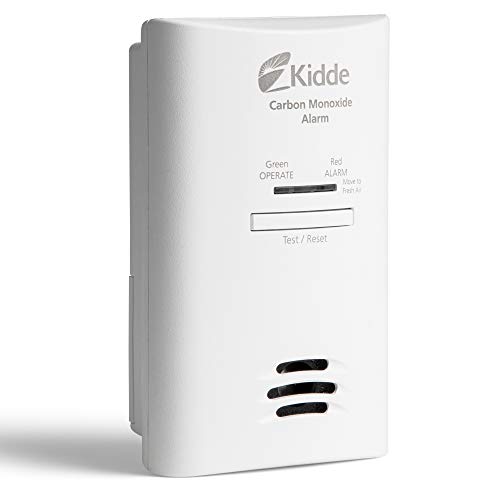
The Kidde Plug-In CO Detector AA Backup is the modern counterpart to the older 9V model above, swapping the backup cell for two AA batteries that you can replace yourself. It still plugs into a standard 120V outlet for continuous operation, and the AA cells kick in when the power drops at older inns or storm-prone regions.
An electrochemical sensor reads CO accurately, the test-hush button silences nuisance alarms without disabling the unit, and LED status lights give an at-a-glance read on power and alarm state. For travelers who want plug-in confidence with replaceable backup cells, this is a clean middle ground.
Strengths Worth Knowing
- Plug-in form stays on without manual charging.
- Replaceable AA backup batteries extend serviceable life.
- Test-hush button silences nuisance triggers safely.
- Electrochemical sensor responds to low CO concentrations.
Honest Caveats
- Blocks an outlet full-time, like other plug-in units.
- No digital display shows the live ppm number.
Built With In Mind
Rental tenants and extended-stay guests who want plug-in confidence with batteries they can swap on their own schedule.
Swap It Out When
You need a live digital readout to confirm levels during an alarm; the Kidde Plug-In CO Detector 9V Backup displays ppm directly.
Vacationers who already carry a CO detector but want a smoke alarm to round out coverage often look for something as compact and battery-driven as their CO unit. The Heiman Photoelectric Battery Smoke Alarm matches that profile: UL 217 10th Edition certified, dual-wavelength photoelectric chamber, and a Red Dot awarded low-profile shell.
Unlike the interconnected 3-pack above, this is a standalone unit meant to live on a shelf or nightstand in a single room. For most short-term rental stays, one of these per sleeping area is plenty, and the battery operation means it works whether the building’s wiring is modern or not.
What Makes Sense
- UL 217 10th Edition certification covers modern safety benchmarks.
- Compact footprint slips into luggage alongside a CO alarm.
- Photoelectric dual-wavelength sensor targets smoldering fires.
- Red Dot awarded design looks at home anywhere.
Where It May Fall Short
- No CO detection, so it complements rather than replaces a CO alarm.
- Standalone unit, so it won’t trigger other alarms in the property.
The Right Fit
Travelers who already carry a dedicated CO alarm and want a similarly sized smoke companion for each stay.
Not Your Match When
Multi-room coverage is the priority; the Heiman Wireless Interconnected Smoke 3 Pack handles whole-property alerts in one chain.
Choosing A Travel CO Alarm That Actually Helps
The first decision is power source. Sealed-battery minis like the Heiman Low-Level Digital Display Mini CO Alarm work anywhere and need no outlets, which is perfect for cabins, RVs, and older hotels with limited sockets. Plug-in units with battery backup, like the Kidde and Siterlink options, suit extended-stay rentals where a stable outlet is always available and blackouts are common.
Sensor type matters too. Electrochemical sensors (which detect CO through a chemical reaction rather than electrical resistance) tend to read low CO concentrations accurately, and that’s the type every pick in this list uses. A digital display showing live ppm numbers is genuinely useful because it lets you see whether a small leak is brewing versus a full alarm event, which changes whether you open a window or evacuate.
Sensor Sensitivity And Why It Matters
Low-level detection means an alarm reacts before CO concentrations climb into the range that triggers headaches and confusion. For most travelers, that earlier warning gives you time to ventilate a room and contact the property manager, rather than waking up already symptomatic.
Power Backup And Outage Behavior
Battery backup matters more than people realize. Hotels, inns, and rentals in storm-prone areas can lose power overnight, and CO leaks from fuel-burning appliances often coincide with the same weather events. An alarm that drops offline the moment power does is a real gap, so choose a unit with sealed-cell or replaceable backup batteries.
Portability Versus Permanent Placement
Tabletop units travel easily but tend to get knocked over or forgotten at checkout. Plug-in units stay anchored but require an available outlet. Decide based on your typical trip length: short getaways favor portable minis, month-long stays favor plug-ins with battery backup.
Key Considerations Across These Picks
Where Shoppers Go Wrong
Many travelers grab a basic smoke alarm and assume it covers CO too, but ionization smoke alarms don’t detect carbon monoxide. Make sure your kit includes a dedicated CO sensor, since smoke and CO are different threats requiring different chambers.
Another common slip is choosing a plug-in unit for a property with no usable outlets near the bed. CO is slightly lighter than air and tends to mix evenly, but it pools near sleeping height, so the alarm should be close enough to wake you, not across the room behind a suitcase pile.
Where The Extra Money Goes
Higher-tier CO alarms tend to add digital displays, peak level memory (a stored record of the highest CO reading since the last reset), and longer sealed-battery lifespans. These features matter most for extended-stay renters, property managers running multiple units, and travelers who want a forensic readout after an alarm event.
For quick weekend trips, a basic electrochemical alarm with replaceable batteries does the job well, and the savings are easy to justify. Step up only when you need a readout, interconnection, or years of zero-maintenance service.
Frequently Asked Questions
Do I really need a CO alarm when traveling?
Fuel-burning appliances like water heaters, fireplaces, and gas stoves can leak CO quietly, and older buildings may have aging equipment with no current alarm. A portable unit gives you a reading the property’s fixtures may not provide.
CO is colorless and odorless, so symptoms like headaches or fatigue are often the only warning. A dedicated alarm catches leaks before those symptoms appear.
What’s the difference between CO and smoke alarms?
CO alarms use electrochemical sensors that react to carbon monoxide gas, while smoke alarms use photoelectric or ionization chambers that react to airborne particles. The two threats require separate sensors, which is why travelers often pack both.
A combo unit covers both, but dedicated alarms tend to react faster to each specific hazard.
How long do portable CO alarms actually last?
Most portable units have a service life of 5 to 10 years, with sealed lithium batteries running for the entire lifespan. Replaceable battery units can run longer with fresh cells, but the sensor itself still ages and eventually needs replacement.
Check the manufacturing date printed on the back and plan to retire the unit when it hits end of service.
Where should I place a travel CO alarm in a hotel room?
Set it on a nightstand or shelf close to sleeping height, ideally within arm’s reach of where you sleep. Keep it a few feet away from curtains and avoid bathrooms, kitchens, or windows where fresh air can dilute the reading.
CO mixes evenly with air in most rooms, so a single alarm near the bed covers a typical hotel layout.
Can I use a smoke alarm to detect CO too?
Standard ionization or photoelectric smoke alarms don’t respond to carbon monoxide. You need a CO-specific sensor, which uses a different detection method entirely.
Some combo units do both jobs, but if you’re packing a single-purpose smoke alarm, pair it with a dedicated CO unit for full coverage.
Final Verdict
The right travel CO alarm depends on how you move through the world. Backpackers and frequent flyers will appreciate the sealed simplicity of the Heiman Low-Level Digital Display Mini CO Alarm, while rental dwellers get steady coverage from the Kidde Plug-In CO Detector 9V Backup or its AA-equipped sibling. Smoke coverage rounds out the kit, and the Heiman interconnected 3-pack gives whole-property alerts when one room detects trouble. Pick the combination that matches your trip length, luggage space, and tolerance for battery swaps.