Picking a pack for multi-day trips usually means guessing where the sweet spot sits between bulky 65-liter haulers and featherweight day bags. The 40L range covers weekend loops, fast-and-light thrus, and overnights without forcing you to leave the sleeping pad behind. This guide walks through nine options across hiking packs, dry bags, and tactical silhouettes, so you can match capacity and construction to the way you actually move outside.
The Main Contenders
N NEVO RHINO 35L Internal Frame Backpack

Osprey Rook 50L Men’s Backpacking Backpack

Osprey Tempest 40L Women’s Hiking Backpack
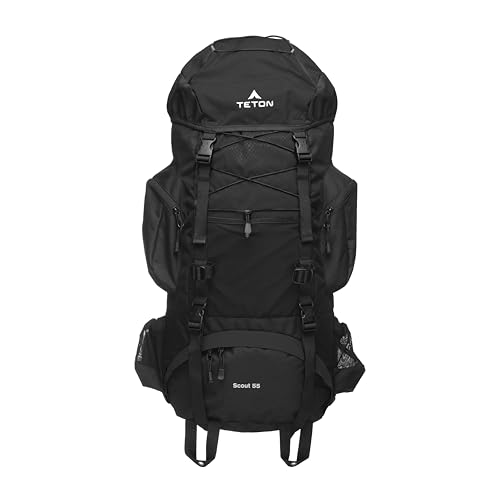
Teton 55L Scout Internal Frame Backpack

Earth Pak Waterproof Dry Bag Backpack

OMGear Waterproof Dry Bag Backpack

Mardingtop 25L Tactical Backpack
Mardingtop 15L Tactical Sling Backpack
MARCHWAY Floating Waterproof Dry Bag 40L
More Details On Our Top Picks
Stepping down from the 50L giants on this list, the N NEVO RHINO sits at the smaller end of the range and behaves like a gateway pack for newer backpackers. The shell mixes ripstop polyester with nylon panels, which keeps weight in check while giving the high-stress zones a fighting chance against abrasion. For weekend loops with a light shelter and a down quilt, 35L feels honest rather than cramped.
A built-in rain cover stows at the bottom, and bar-tacked seams reinforce the shoulder strap anchor points. You won’t find the sculpted women’s fit of the Osprey Tempest here, but for a unisex frame on a tight budget, the bones are sound.
A Favorable Mix
- Ripstop fabric blend holds up to brush and rough trail-side staging.
- Stash rain cover pulls out fast when a front rolls in mid-hike.
- Internal frame keeps the load close to your spine for steadier footing on descents.
- Capacity covers a warm-weather overnight with room for a mid-layer.
Small Caveats
- Water-resistant shell is not fully waterproof in sustained downpours without the cover deployed.
- Unisex fit can ride high on shorter torsos, depending on your proportions.
Key Product Details
Right Fit For
Beginners building their first overnight kit on a budget who mostly travel in dry conditions.
Look Elsewhere When
The Osprey Rook 50L is a smarter move for taller hikers carrying heavier cold-weather loads.
Whereas the N NEVO RHINO leans compact, the Osprey Rook 50L stretches into proper multi-day territory while staying friendly to first-time backpackers. AirSpeed Suspension is a trampoline-style mesh back panel that lets air circulate between your back and the load, which matters more than you’d think on a long climb in summer. The injection-molded ladder lock lets you dial torso length without fuss.
The 50L volume swallows a three-season shelter, extra layers, and a bear canister with space left over for a relaxed camp setup. It’s also a bluesign-certified build, a sustainability standard that tracks cleaner chemistry across the supply chain.
What Stands Out
- Adjustable torso system grows with you or fits multiple family members in a pinch.
- Integrated rain cover deploys from its own pocket for unexpected showers.
- AirSpeed back panel keeps sweat moving on humid climbs.
- 50L capacity handles a long-weekend loadout comfortably.
Points To Keep In Mind
- Men’s-specific cut, so the fit may feel off if you’re between sizes or have a shorter torso.
- Larger volume can tempt overpacking, which adds fatigue over long miles.
Quick Facts
Best Suited To
First-time backpackers tackling two- to four-night trips who want a forgiving fit and room to grow into the hobby.
Skip It When
The Osprey Tempest 40L serves female hikers better with its tailored hipbelt and shorter back panel.
The Tempest 40L is the women’s counterpart to the Rook, but it’s more than a recolor. An injection-molded AirScape back panel and continuous-wrap harness flex with your body on technical ground, and the women’s-specific hipbelt is contoured to sit correctly on narrower waists. A dedicated sleeping bag compartment and reservoir sleeve add real organizational value.
If the 40-liter capacity sweet spot is your target, this pack threads the needle between space and discipline. Trekking pole and ice axe attachments round it out for shoulder-season alpine use where the weather can flip on you.
Where It Delivers
- Women’s-tuned hipbelt sits on the right anatomy, easing pressure on longer days.
- Continuous-wrap harness tracks your movement on scrambles and side-hilling.
- Separate sleeping bag compartment speeds camp setup at the end of a long push.
- Trekking pole attachments free up your hands when the trail steepens.
Things To Consider
- 40L demands discipline, so ultralight shelter and sleep systems pay off here.
- Premium build carries a steeper price than unisex entry options on this list.
Feature Snapshot
Whose Shelf It Belongs On
Female backpackers prioritizing a tailored fit for fast multi-day routes in mixed terrain.
A Better Fit Elsewhere
The Teton 55L Scout is a smarter pick for shorter torsos or younger hikers just getting into overnights.
The Scout slots in for hikers who have been left out of standard pack sizing. A three-quarter internal frame and an adjustable torso panel dial in for shorter backs, opening the multi-day category to teens and smaller adults. At 55L it skews toward the roomier end of this list, so it can swallow a family-shared tent plus kid-sized sleep kits.
An integrated rain cover comes along for the ride, and Teton’s reputation for approachable customer support is a quiet plus when introducing younger hikers to overnight travel.
Points In Its Favor
- Adjustable torso panel fits younger or shorter hikers who normally struggle with adult packs.
- 55L volume doubles as a family loaner for weekend group trips.
- Internal frame keeps the load stable when carrying awkward camp gear.
- Built-in rain cover saves the cost of buying one separately.
Potential Drawbacks
- Capacity can balloon into a heavy load if you don’t rein in extras.
- Build quality favors accessibility over premium materials compared to the Osprey options.
Spec Overview
Built With In Mind
Smaller-framed adults, teens, and parents who want one pack to share across a household.
Swap It Out When
Solo travelers should consider the N NEVO RHINO 35L for a lighter, more disciplined load.
Here the list pivots away from frameless hiking packs and into a different job. The Earth Pak dry bag backpack is built for water, not weight distribution. Commercial-grade 500D PVC with thermowelded seams keeps gear bone-dry on kayak launches, paddleboard sessions, or marine work. The added zippered pocket handles the items you actually need to grab mid-paddle.
It’s a different animal from the Osprey Rook: no internal frame, no hipbelt, just a sealed tube with shoulder straps. That makes it a poor choice for long walks but a smart pick for boat-supported trips and shoreline days.
The Value In It
- Welded seams and PVC body block spray, splash, and brief submersion.
- External zippered pocket gives fast access to phone or snacks without breaking the seal.
- Roll-top closure creates a simple, reliable water barrier most owners can trust at a glance.
- Heavy-duty material shrugs off rock scrapes at put-in points.
Worth Bearing In Mind
- Lacks a frame or hipbelt, so it’s uncomfortable for long portages.
- PVC body can feel stiff in cold weather before the bag warms up.
Perfect Match For
Paddlers and shoreline travelers who need watertight storage for electronics and dry layers.
Reach For A Different Pick When
Backpackers should default to the Osprey Tempest 40L for any trip involving real mileage under load.
The OMGear dry bag shares Earth Pak’s waterproof DNA but offers a wider size ladder from 5L up to 40L. That flexibility matters for households where one bag services a paddleboard day and the next packs a weekend kayak trip. The roll-top seals out spray, and sealed seams do the heavy lifting below the waterline.
There’s no internal frame, so this is firmly a boat-and-beach solution. If you want a single dry bag that adapts across activities, the multi-size range is the real selling point.
What Works In Its Favor
- Five size options cover everything from phone pouches to overnight gear runs.
- Sealed seams and roll-top closure keep contents dry through splash and rain.
- Lightweight shell doesn’t add noticeable weight on the shoulder straps.
A Few Limitations
- No structured back panel, so the bag slumps when only partially loaded.
- Strap hardware is functional rather than premium, depending on how rough your trips get.
Who Should Grab It
Outdoor households juggling kayaks, paddleboards, and beach trips who want one bag line that scales up or down.
Consider Something Else When
The MARCHWAY Floating Dry Bag offers a tougher welded shell for more abrasive environments.
The Mardingtop 25L breaks from the hiking pack pattern with MOLLE webbing across the exterior, a hook-and-loop patch panel, and a flat organizational layout borrowed from military rucksacks. At 25L it sits below the 40L target, but for day hikes, range days, or motorcycle travel, the modular carry system is the draw.
Side cinch straps secure rolled jackets, while the front pocket organizes tools, maps, or a camera in dedicated slots. The look won’t appeal to everyone, but owners who lean into the modular side tend to keep finding new uses.
What Earns Its Place
- MOLLE webbing accepts aftermarket pouches for genuinely personalized loadouts.
- Front organization panel keeps small gear sorted without rummaging.
- Side pockets fit 32 oz bottles for hydration on warm-weather outings.
- Patch area welcomes morale flags or nametape for identification.
Room For Improvement
- 25L is too small for true overnight trips, so it plays a support role rather than a primary pack.
- Tactical styling draws attention in settings where you’d rather blend in.
Feature Rundown
Made For
Tactical EDC users, range-goers, and hikers who appreciate modular organization on day trips.
Not Your Match When
Multi-day backpackers will get more value from the Osprey Rook 50L and its framed carry system.
The 15L sibling to the larger Mardingtop trades capacity for carry versatility. Detachable straps reconfigure the bag as a backpack, sling, crossbody, chest pack, or hand-carry depending on the moment. At 9.5 by 7.1 by 16.9 inches and just under a kilogram, it disappears into a commute or a coffee-shop stop.
YKK buckles and 600D polyester hold the construction together, so the bag handles daily wear better than budget nylon alternatives. It’s the smallest pack on this list, but it earns its place for shoppers who want tactical styling without the bulk.
Reasons It Performs
- Five carry modes adapt to cycling, transit, or quick trail stops.
- Lightweight build stays comfortable across long daily carries.
- YKK hardware resists the usual weak points over months of use.
Where It May Fall Short
- 15L can’t substitute for a true backpacking pack, so its role is supportive.
- Single-strap sling mode can fatigue one shoulder on heavier loads.
Who Will Love This
Urban commuters and travelers who want a modular tactical bag for daily essentials and quick outings.
Another Choice May Suit
Hikers needing true trail capacity should look at the Teton 55L Scout for a roomier framed option.
MARCHWAY rounds out the list with a reinforced tarpaulin dry bag that floats if it goes overboard. Welded seams and heavy-duty buckles handle the abrasion of rocky put-ins, and the roll-top closure is the same time-tested seal paddlers have trusted for decades. The 40L option lands squarely on this roundup’s capacity target.
It plays the same role as the Earth Pak and OMGear bags, with a focus on rugged construction rather than pockets. For trips where the bag might end up in the drink, that floating assurance is the headline feature.
Real-World Strengths
- Welded tarpaulin body resists tears even after repeated rocky landings.
- Floats when sealed, which protects gear and aids recovery if dropped.
- Roll-top seal is intuitive and quick to inspect before launch.
Details To Watch
- No external pocket, so quick-grab items stay inside the main roll.
- Strap padding is minimal compared to framed packs on long portages.
Perfect Match For
Kayakers, rafters, and paddleboarders who want a robust waterproof bag that floats as a backup.
Look Elsewhere When
The Earth Pak Waterproof Dry Bag suits shoppers who need an external zip pocket for quick-access items.
What Matters Most Before Choosing 40 Liter Backpacking Packs
Fit and Torso Sizing
A pack’s volume number means nothing if the torso length is wrong. Most frameless and framed packs here adjust between roughly 14 and 20 inches of torso length, but the adjustment ranges vary. Measure from the C7 vertebra (the bony bump at the base of your neck) down to the iliac crest (the top of your hip bones). The Teton 55L Scout earns its place for shorter hikers who usually get squeezed out of adult sizing.
Frame vs. Frameless Construction
Internal frames transfer weight to your hips and stabilize awkward loads, which matters for multi-day hiking with real food and shelter weight. Frameless dry bags like the Earth Pak and MARCHWAY trade structure for waterproofing and only work for boat-supported travel. For most backpackers, the framed options in this list carry loads more comfortably over distance.
Materials and Weather Protection
Ripstop polyester and nylon blends (as on the N NEVO RHINO and Osprey packs) balance weight and abrasion resistance. PVC and tarpaulin dry bags win on waterproofing but trade breathability and comfort for a watertight seal. For shoulder-season trips where rain is likely, an integrated rain cover or a fully waterproof body avoids the soggy-gear problem on day two.
Intended Use Case
Match the pack to the trip, not the other way around. A 40L hiking pack like the Osprey Tempest covers most overnight and weekend trips. A 50L+ pack like the Osprey Rook 50L handles cold weather or group-gear splits. Dry bags step in when the activity centers on water, and tactical packs cover modular day use.
Smart Choices Across This Round-Up
Where Shoppers Go Wrong
A common trap is picking capacity by gear list alone, then realizing the torso length doesn’t match. Always check the adjustment range before falling for a volume number. Another slip is assuming water-resistant shells handle downpours the same way a true dry bag does; sustained rain still soaks through fabrics, which is why integrated covers and PVC bodies exist. Finally, oversizing to “leave room for extra stuff” usually means carrying more weight than your body wants to haul.
When Paying More Pays Off
Premium hiking packs like the Osprey Tempest invest in suspension systems, women’s-specific hipbelts, and contoured shoulder harnesses. Those touches pay off across hundreds of trail miles, reducing hot spots and fatigue. For shorter trips or less frequent use, a budget frameless pack or a mid-tier internal-frame bag delivers most of the value without the higher price. The upgrade is worth it when trip frequency climbs past a handful of nights per season.
Frequently Asked Questions
Is 40 liters enough for backpacking?
A 40-liter pack comfortably handles a warm-weather overnight or a three-season weekend with a lightweight shelter, down quilt, and food. For winter camping, longer trips, or bulkier gear, stepping up to a 50- or 55-liter pack gives breathing room.
What’s the difference between a hiking pack and a waterproof dry bag?
A hiking pack uses an internal frame, padded hipbelt, and breathable fabric to distribute weight across miles of trail. A waterproof dry bag seals gear inside a welded or taped shell for water exposure but offers no structured carry support.
How do I measure my torso for a backpack?
Stand relaxed and locate the C7 vertebra at the base of your neck, then measure straight down to the iliac crest at the top of your hip bones. That measurement, in inches, is your torso length and should fall within the pack’s adjustment range.
Are women’s-specific backpacks worth it?
For most women, yes. Hipbelts, harness shapes, and back-panel lengths are tailored to different anatomy, which reduces pressure points over long days. The Osprey Tempest is a strong example of that fit philosophy.
Can I use a tactical backpack for hiking?
For day hikes and modular setups, tactical packs like the Mardingtop 25L work well, especially when MOLLE attachments matter. For multi-day trips, framed hiking packs offer better weight distribution and ventilation over long distances.
Wrap Up
The right pack depends less on the biggest number and more on how you actually spend time outside. Framed hiking packs handle trail miles, dry bags protect gear on the water, and tactical silhouettes cover modular day use. Match the volume to your trip length, double-check torso fit, and the rest of the decision usually sorts itself out.