Flying with clubs demands a travel bag that handles rough cargo holds, tight connections, and long walks through terminals. The six airplane golf bags below were chosen for protection, mobility, and storage capacity that suits everything from a yearly buddies trip to weekly tournament travel. Each one addresses a specific pain point: lifting fatigue, scuffed clubheads, or gear that simply doesn’t fit.
A Fast Comparison Of The Options

Sun Mountain ClubGlider Journey Golf Travel Bag

Golfimate Golf Travel Bag with Carbon Fiber Hard Top

OutdoorMaster Padded Golf Travel Bag

Sun Mountain ClubGlider Meridian Golf Travel Bag

OutdoorMaster Golf Travel Bag with Hard Case Top
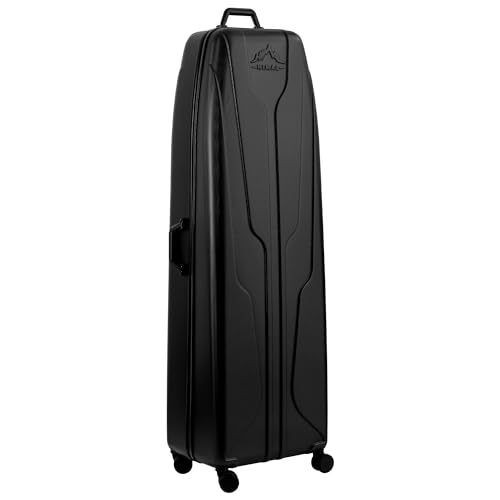
uniHimal Hard Case Golf Travel Bag
The Picks, Examined More Closely
The Journey takes Sun Mountain’s patented ClubGlider leg system and drops it into a lighter, more packable frame than its larger sibling. Extendable legs hold the full weight of the bag at a comfortable handle height, so a long terminal walk stops feeling like deadlifting your driver.
Four swiveling wheels pivot smoothly around corners and crowded gate areas. For golfers who fly a handful of times a year and dread the airport shuffle, this design solves the lifting problem without the bulk of a fully padded hard case.
What Earns Its Place
- Retractable legs absorb the bag’s weight, sparing your back and shoulders during long terminal walks
- Four-wheel rolling geometry handles tight corners and crowded gate areas with minimal effort
- Compact size makes it easier to store at home or fit in a smaller vehicle trunk
- Padded interior construction cushions clubheads against typical baggage handling impacts
Things To Consider
- Less internal padding than full hard-shell models, so over-packing fragile headcovers is wise on rough routes
- Premium Sun Mountain positioning tends to place it at a higher tier than entry-level soft cases
Who Will Love This
Frequent flyers who want rolling ease without the weight and bulk of a fully armored hard case, especially anyone managing back or shoulder strain.
Consider Something Else When
Travelers checking bags on airlines known for rough cargo handling should look at the Golfimate Golf Travel Bag with Carbon Fiber Hard Top for stronger top-end impact resistance.
Where the Journey focuses on rolling ease, Golfimate leans hard into impact protection. A carbon fiber hard top caps the bag where stacking and pressure damage typically happen, while thick multi-layer padding and reinforced stitching handle the sides and base.
The 1680D oxford shell resists abrasion from conveyor belts and baggage cart edges. Reinforced handles and smooth-rolling wheels round out a design aimed squarely at flyers who treat their clubs hard, often flying into resorts with multiple connections.
A Few Strong Suits
- Carbon fiber top shell absorbs stacking pressure that flattens unprotected bags
- 1680D oxford body resists tears and scuffs during long-haul cargo handling
- Multi-layer padding protects clubheads from direct impact on rough routes
- Sturdy grab handles make lifting into vehicles and overhead bins more controlled
Points To Keep In Mind
- Heavier than soft-sided rolling bags, which may matter when airlines impose weight thresholds
- Hard top adds bulk, so storage at home requires a corner or garage spot
- Reinforced stitching is tough, but owners commonly report the wheel mounts as the first wear point after extended use
Quick Facts
Best Suited To
Golfers flying into destinations with multiple connections or onto carriers known for rough baggage handling, particularly those carrying premium club sets.
Look Elsewhere When
Travelers wanting effortless rolling over long terminal walks should consider the Sun Mountain ClubGlider Journey Golf Travel Bag, which trades top-end armor for superior glide geometry.
Occasional flyers don’t always need carbon shells or retractable legs. OutdoorMaster’s padded entry-level travel bag wraps clubs in a 900D oxford shell with a thickened cushion layer, which is plenty for one or two trips a year on domestic routes.
In-line skate wheels with a rubber base keep the rolling motion stable, and the bag folds down reasonably flat for storage. For golfers dipping a toe into air travel without committing to a premium system, this lands as a sensible starting point.
Key Advantages
- Accessible price point suits golfers new to flying with clubs
- 900D oxford shell handles scuffs and light rain without bulk
- In-line skate wheels roll smoothly across smooth terminal floors
- Foldable design simplifies closet or garage storage between trips
Honest Caveats
- No rigid top, so stacking pressure from other luggage remains a risk on busy flights
- Padding is generous but not heavy-duty, which limits protection on rough international routes
- Two-wheel geometry, rather than full four-wheel, makes tight corners harder to navigate
Made For
Golfers taking one or two flights a year on domestic carriers who want dependable padding without premium pricing or weight.
A Better Fit Elsewhere
Anyone logging frequent long-haul flights should reach for the OutdoorMaster Golf Travel Bag with Hard Case Top, which adds an ABS hard top for stronger stacking protection.
The Meridian is the bag that made Sun Mountain’s retractable-leg system famous. It carries the full ClubGlider package at a larger frame than the Journey reviewed earlier, so it fits oversized cart bags with room to spare.
Tournament players and committed traveling golfers tend to gravitate here. The retractable legs carry 100% of the bag’s weight, four swiveling wheels pivot through tight gates, and the heavy padded body absorbs the typical beating of a season’s worth of flights.
Useful Highlights
- Retractable legs eliminate lifting, which matters on tournament-heavy travel schedules
- Four-wheel design pivots smoothly through crowded terminals and tight gates
- Larger interior fits oversized staff bags without forcing compression
- Padded top and sidewalls cushion clubs during repeated baggage handling
Trade Offs
- Heavier than the Journey, which can tip past airline weight thresholds on some carriers
- Premium positioning places it well above entry-level padded options
- Full-size frame needs dedicated storage space at home
Feature Snapshot
The Right Fit
Tournament players and frequent flyers who want maximum rolling comfort and are willing to invest in long-term durability over a soft-sided entry model.
Swap It Out When
Budget-conscious occasional flyers should pick the OutdoorMaster Padded Golf Travel Bag instead, which covers the basics at a fraction of the cost.
This is OutdoorMaster’s armored take on a travel bag, pairing an ABS hard shell top with a soft 1680D ballistic nylon body. The hybrid approach protects the clubhead zone where pressure damage concentrates while keeping the overall weight reasonable.
Long-haul international flyers and golfers checking into tournaments overseas benefit most. The hard top deflects stacking impacts, the nylon body shrugs off abrasion, and the optimized in-line skate wheels stay stable over uneven terminal surfaces.
Real-World Strengths
- ABS crush-resistant top shell defends the most vulnerable clubhead zone
- 1680D ballistic nylon body handles abrasion and light weather exposure
- Thickened cushion layer adds a second line of defense around the club heads
- Premium rubber wheel base keeps rolling stable across varied terminal surfaces
Things To Weigh
- Hybrid hard top adds weight compared with pure soft-sided bags
- Bulky frame requires a corner or vehicle for storage between trips
Feature Card
Perfect Match For
Golfers flying international routes or checking bags on carriers with stacked cargo, anyone who values top-zone armor over rolling convenience.
Skip It When
Travelers who prioritize glide geometry over stacking protection should consider the Sun Mountain ClubGlider Meridian Golf Travel Bag for its retractable-leg rolling system.
uniHimal’s hard case goes fully waterproof, which matters more than it sounds for flyers routing through rainy hubs or coastal resort destinations. A polycarbonate shell wraps the full bag rather than just the top, sealing clubs against both pressure and moisture.
The interior fits driver bags up to 46 inches long and 10.5 inches wide, so most standard and oversized setups slide in without forcing. For golfers in wet climates or anyone tired of soggy gear after a rain-drenched connection, this is a practical specialty pick.
Practical Pluses
- Full PC hard shell delivers uniform impact protection on all sides
- Waterproof construction keeps clubs dry through wet weather and cargo handling
- Spacious interior fits driver bags up to 46 inches long
- Crush-resistant shell defends against stacked luggage pressure
Some Limits To Know
- Full hard shell adds noticeable weight compared with soft-sided rolling bags
- Specialty waterproof design may exceed what dry-climate flyers actually need
- Rigid construction requires dedicated storage space at home
At A Glance
Whose Shelf It Belongs On
Golfers in wet climates, coastal regions, or anyone routing through rainy hubs who want full-shell waterproof protection over soft-sided flexibility.
Reach For A Different Pick When
Dry-climate flyers who care more about rolling ease than weatherproofing should choose the Sun Mountain ClubGlider Journey Golf Travel Bag for its retractable-leg glide system.
What Separates A Great Airplane Golf Bag From A Mediocre One
Protection depth is the first filter. Soft padded bags absorb scuffs and light impacts, which suits occasional flyers on calm domestic routes. Hard shell tops, sometimes paired with full polycarbonate bodies like the uniHimal reviewed above, defend against stacking pressure that flattens clubheads. Match the protection level to your airline and route. Domestic mainline carriers handle bags carefully, while regional and budget carriers often do not.
Wheel geometry is the next consideration. Four-wheel designs with swiveling fronts pivot smoothly around tight gate areas, while two-wheel in-line skate wheels roll straight but lose agility in crowds. Retractable leg systems take pressure off your back by absorbing the bag’s weight, which matters most for tournament-heavy travelers logging many flights a year.
Interior sizing is often overlooked. Bags accommodating 46-inch driver bags leave room for headcovers, rangefinders, and a change of clothes, while tighter 44-inch interiors force compression. Always measure your stand or cart bag against the travel case dimensions before committing.
Storage and weight round out the decision. Hard cases take up garage corners between trips, while soft bags fold flat. Weight under 8 pounds keeps you under most airline thresholds; anything over 10 pounds can trigger overweight fees on some carriers.
Smart Spending Across These Picks
Common Mistakes First Timers Hit
The biggest miss is choosing a soft-sided bag for stacked-cargo routes. Domestic mainline carriers stack carefully, but regional jets pile bags in tight bins, and hard top protection becomes critical. Another common error is overstuffing the interior to “save room” for shoes or towels, which compresses clubheads against the padding and reduces shock absorption. Pack clubs first, then fill gaps with soft apparel only.
Where The Extra Money Goes
Premium pricing on retractable-leg systems and carbon or ABS hard tops reflects engineering rather than branding. The ClubGlider mechanism alone, used on both Sun Mountain picks above, costs more to manufacture than a simple zipper sleeve. Hard top shells also require additional mold tooling and material sourcing. For travelers logging more than four flights a year, that engineering pays back in fewer broken clubs and a noticeably easier airport walk.