Long flights, economy seats, and a body that wasn’t built to sit upright for nine hours. Anyone who flies regularly knows the dull ache that sets in around hour three, the kind that turns a redeye into a slow negotiation between your tailbone and whatever padding the airline chose. A good travel cushion changes that math. The picks below split roughly into two camps: inflatable options that fold down smaller than a paperback, and gel-grid or foam cushions that trade packability for steady support. Both have a real place, and which one suits you depends on how you pack, how long you sit, and how much bulk you tolerate under you.
The Choices Worth Comparing

SILVORIC Inflatable Seat Cushion for Long Flights

Travel Cushion Airplane Seat with 36 Air Bags

Comfidur High-Density Charcoal Memory Foam Seat Cushion

Purple Back Cushion Lumbar Support Pillow
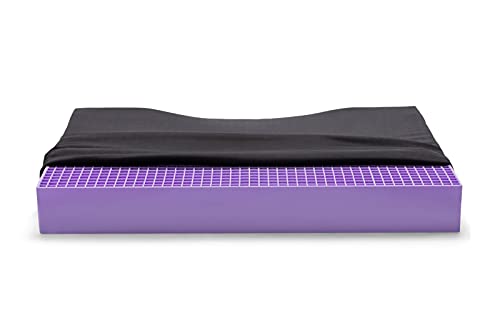
Purple Ultimate Seat Cushion 2.5-Inch Gel
Purple Double Seat Cushion 2-Inch Soft and Firm

Purple Royal Seat Cushion 2-Inch Gel with Handles

Purple Simply Seat Cushion 1.25-Inch Low-Profile Gel

Bebykilemi Inflatable Seat Cushion with Adjustable Firmness
The Picks, Examined More Closely
The SILVORIC lands first because it solves the most common packing objection. You can deflate it, fold it flat, and tuck it into a jacket pocket or a carry-on side panel. Manual press inflation means you control firmness by feel rather than by guessing how many pumps equal “firm enough.”
On a long flight, that adjustability matters more than people expect. A cushion that’s perfect in row 34B might feel too soft in a different seat, and being able to add a press or two of air mid-flight is a small luxury.
Practical Advantages
- Folds to a fraction of its inflated size for easy stowing in luggage or a daypack
- Firmness is fully adjustable, so the same cushion works for lounging or upright work
- Light enough to carry between the gate, the plane, and a rental car without thinking about it
- Doubles as a stadium or bleacher pad when travel plans include a game day
Things To Consider
- Air cushions can shift under you during turbulence or repositioning
- You need to reinflate it each leg, which adds a small step to your routine
Who It Suits Best
Carry-on minimalists and travelers who hate checking bags benefit most, since this stows in spaces where a gel cushion simply won’t fit.
Where Another Pick Suits Better
Flyers who prefer a set-and-forget feel should look at the Purple Royal Seat Cushion, which holds its shape without any reinflation between legs.
The 36-air-bag design sets this one apart from a standard inflatable slab. Each cell compresses individually, so the cushion adapts to the shape of your seat rather than fighting against it. Press-type inflation skips the pump entirely, which is a quiet quality-of-life win when you’re inflating in a tight economy row.
Heavy-duty construction suggests it’s aimed at people who use a cushion daily, not just on holiday flights. The trade-off is bulk in the bag, even when deflated.
Real Benefits
- Multi-cell layout spreads pressure across the coccyx and thighs more evenly than a flat air cushion
- Press inflation means no extra gear to pack or lose
- Sturdy enough to handle daily commuting and frequent-flyer schedules
- Works on office chairs and stadium seating, so the purchase pulls double duty at home
Honest Caveats
- Deflated size is larger than the SILVORIC, so it’s less friendly to ultralight packers
- Air-bag texture can feel unusual under a thin layer of clothing
Key Specs
Made For
Long-haul flyers and anyone sitting eight-plus hours who needs pressure distribution that adapts to their body.
Not Your Match When
Travelers who fly with strict weight or space budgets should look at the Bebykilemi Inflatable Seat Cushion, which folds to a much smaller footprint.
Memory foam and air cushions take almost opposite approaches to comfort, and the Comfidur lands firmly in the foam camp. The charcoal infusion is a real touch, intended to help with odor control over months of daily use. The non-slip base and adjustable strap keep it from sliding off an airplane seat during a long movie.
You trade packability for stability. There’s no deflation step, no reinflation, and no flexing mid-flight. For travelers who find air cushions too bouncy, that’s a fair swap.
Strengths Worth Knowing
- High-density foam holds its shape under extended use without flattening out
- Charcoal layer helps manage odor in humid cabin air
- Removable, washable cover makes spills and travel grime easy to clean
- Adjustable strap keeps it anchored to chairs that don’t have a flat seat pan
Points To Note
- Full-size foam is bulky in a carry-on and won’t compress like an inflatable
- Firmness level may feel too structured for sitters who want a softer, sink-in feel
Best Suited To
Posture-focused sitters and people who want a single cushion for home, office, and travel without any setup steps.
Look Elsewhere When
Travelers prioritizing backpack-friendly gear should consider the SILVORIC Inflatable Seat Cushion, which compresses to almost nothing when not in use.
Most picks on this list are seat cushions, but the lower back is where many long-haul aches actually start. The Purple Back Cushion uses the brand’s GelFlex Grid, a polymer lattice that collapses under pressure points and supports everywhere else. The 92% polyester, 8% spandex cover stretches with the grid instead of fighting it.
An adjustable strap lets you mount it on an office chair at home, then move it to a plane seat without buying a second cushion. The honest read is that this works best as a complement to a seat cushion, not a replacement for one.
A Strong Showing
- GelFlex Grid cradles the lumbar curve without the flat-plate feel of standard foam
- Spandex-blend cover flexes naturally as you shift in your seat
- Strap-and-buckle system fits most office, gaming, and car chairs
Small Caveats
- Addresses the back, not the seat pan, so most travelers pair it with a separate seat pad
- Grid texture can feel unusual against a thin shirt in warm cabins
Who Should Grab It
Anyone whose back pain starts higher than the tailbone, especially people who sit in economy without much lumbar support, will get the most from this.
A Better Fit Elsewhere
Travelers who need seat-pan pressure relief should look at the Purple Ultimate Seat Cushion, which tackles the sitting surface rather than the spine.
At 21.75 by 18 by 2.5 inches, the Ultimate is the largest cushion in Purple’s line and the one most likely to span a full economy seat pan. The extra depth buys meaningful tailbone cradling, which is the main reason people buy seat cushions in the first place.
For travelers who run broad in the hips or just want full coverage, the size alone is the selling point. For narrow seats, it may feel oversized.
The Good Stuff
- Generous dimensions cover wider seat frames and broader body types without gaps
- 2.5-inch depth provides real tailbone elevation, helpful on flat economy seats
- GelFlex Grid breathes better than closed-cell foam in warm cabins
Trade Offs
- Large footprint won’t fit a backpack; it lives in a roller bag
- Heavier than the slimmer options in Purple’s range
Quick Facts
Perfect Match For
Broader seat frames and travelers who want maximum coverage, particularly on long-haul flights where every inch of cushion counts.
Swap It Out When
Travelers packing light will find the Purple Simply Seat Cushion easier to carry, since it’s slimmer and lighter while keeping the same core material.

The Double is the most interesting design in Purple’s lineup, and the one most people overlook. Two grid layers stack on top of each other, and flipping the cushion changes which layer faces up. Small grid up feels plusher, large grid up feels firmer.
On travel days, that flip is genuinely useful. A flight out might call for soft; the return leg, after a long day, might feel better firm. You don’t have to choose in advance.
The Case For It
- Reversible design gives two distinct feels in one cushion
- Double-thick grid adds pressure relief that single-layer cushions can’t match
- Spandex-blend cover holds up well to repeated flipping
Less Ideal Details
- Heavier and bulkier than single-layer options in the same family
- Two-inch profile can raise you noticeably in low-roof cars
Right Fit For
Comfort-customization fans who like tuning their setup depending on the day, the leg, or the seat.
Reach For A Different Pick When
Anyone who knows they want maximum softness should consider the Purple Royal Seat Cushion, which is built around a single, supportive feel rather than a flip option.
The Royal is the most travel-focused of Purple’s gel lineup, and the built-in handles are the giveaway. At 17.5 by 15.75 by 2 inches and roughly 6 pounds, it’s a substantial cushion, but the handles make it easy to grab out of a roller bag at the gate rather than fishing around mid-boarding.
GelFlex Grid handles long-haul pressure well, and the size lands in the middle of Purple’s range, large enough for coverage but smaller than the Ultimate.
What It Does Well
- Built-in handles make the gate-to-seat handoff noticeably smoother
- Mid-size dimensions cover most economy seat pans without overhang
- Two-inch depth strikes a balance between support and not raising you too high
A Few Limitations
- Six pounds is heavy for carry-on-only travelers
- No flip-side option like the Double Seat Cushion
Spec Overview
Whose Shelf It Belongs On
Gate-to-gate commuters and business travelers who move through airports often will appreciate the handles more than occasional flyers will.
Where A Sibling Pick Shines
Travelers who want maximum portability should consider the Purple Simply Seat Cushion, which is lighter and slimmer for backpack travel.
The Simply lives in a category of its own. At 17.5 by 15.75 by 1.25 inches and roughly 4 pounds, it’s the slimmest and lightest gel option in Purple’s range. The low profile matters in tight seats, where a thicker cushion can push your head into the underside of the seat in front of you.
The trade-off is depth. You still get GelFlex Grid, but the pressure relief is more subtle than what the 2.5-inch Ultimate delivers.
Everyday Advantages
- Low profile fits where bulkier cushions can’t, including low-roofed car seats
- Lighter than other Purple options, friendlier to commuter bags
- Same GelFlex Grid core as the thicker models for consistent feel
Possible Compromises
- Less tailbone elevation than the 2-inch or 2.5-inch options
- Pressure relief is more about spreading weight than adding cushion depth
Built With In Mind
Tight seat pitches and low-ceilinged cabins where a thicker cushion would cramp your posture further.
Consider Something Else When
Travelers with significant tailbone discomfort often do better with the Purple Double Seat Cushion, which adds two layers of grid for more pronounced relief.
The Bebykilemi is the easiest inflate on this list, and that’s the headline. Four to five breaths is enough, no press pump, no external accessory, and no extra minute in a cramped airplane row. The valve controls firmness, so adding a little more air or letting some out is a small, controlled adjustment.
Folded to roughly 4.3 by 4.3 by 2.36 inches, it shrinks to smaller than a soda can, smaller than many of the inflight snacks the airline will try to sell you.
Key Advantages
- No-pump inflation takes seconds, even in a tight economy seat
- Adjustable firmness lets you fine-tune the feel mid-flight
- Compact folded size fits in a coat pocket or small daypack
- Unfolds to a usable 15.7 by 11.8 by 2.75 inches for most chair and bench sizes
Points To Keep In Mind
- Smaller inflated footprint than gel options, so coverage is more limited
- Re-inflating between legs adds a small step to your travel routine
Feature Snapshot
Who Will Love This
Last-minute packers and travelers who want a cushion that disappears into a coat pocket until the moment they need it.
Skip It When
Anyone wanting a set-and-forget seat pad with no setup steps should look at the Comfidur High-Density Charcoal Memory Foam Seat Cushion, which holds its shape with zero inflation.
What Actually Matters When Picking a Travel Cushion
Material changes the feel more than any other spec. Inflatable cushions pack down to almost nothing and let you tune firmness, but they shift under you during repositioning. Memory foam and gel-grid cushions feel more planted, but they take up a real slice of your bag. The honest read is that both work; they just solve different problems.
Dimensions are worth more attention than most shoppers give them. A 2.5-inch cushion sounds luxurious until you realize it puts your head close to the seat in front of you in a tight pitch. For low-ceilinged cabins, a low-profile option like the Purple Simply often outperforms a thicker cushion in raw comfort. The 15-amp analogy here is the seat pitch: the cushion has to fit the seat, not just your body.
Weight and folded size matter more for carry-on-only travelers than for anyone checking luggage. An inflatable is hard to beat if you’re trying to keep a backpack light, and a gel-grid option makes more sense if you have a roller bag and a long-haul itinerary.
Finally, think about setup time. Some inflatables need a minute with a press pump. The Bebykilemi is the easiest inflate on this list, and the SILVORIC is close behind. Gel-grid cushions need no setup, which is a small win in a row where you don’t want to fuss.
Key Considerations Across These Picks
Pitfalls Shoppers Hit
The most common mistake is choosing a cushion that doesn’t fit the seat you’ll actually be in. A 2.5-inch gel cushion that feels great at home can feel claustrophobic in a tight economy seat, and a low-profile option that fits the cabin may feel too thin under you. Always measure the seat pitch you typically fly before committing to depth.
Another trap is buying strictly on packability. A cushion that folds to nothing is genuinely useful, but only if it provides enough pressure relief to make a long flight tolerable. A thin inflatable can feel like sitting on a pool float after a few hours, especially if the cabin pressure is already leaving you puffy.
Where The Extra Money Goes
Premium-tier models in this category, particularly the larger gel-grid options, cost more because of the core material. GelFlex Grid is a polymer lattice that does something closed-cell foam and simple inflatables can’t, namely collapse under pressure points while supporting the rest. That engineering costs money, and it shows in long-haul comfort.
Foam cushions with charcoal infusion and removable covers also sit at the higher tier. The cover material, the density of the foam, and the strap hardware all add up. Whether the upgrade is worth it depends on how often you use the cushion. A frequent flyer with chronic lower-back tension will feel the difference. An occasional holiday traveler may not.
Frequently Asked Questions
How thick should an airplane seat cushion be? Most travelers do well with 1.5 to 2.5 inches of cushion depth. Anything thicker can press your head toward the seat in front of you in tight cabins, while anything thinner may not relieve pressure over long flights.
Are inflatable seat cushions allowed on planes? Inflatable cushions are generally allowed in carry-on luggage. Deflate fully before packing to avoid issues at security and to keep the size manageable in your bag.
Can a seat cushion help with back pain on long flights? Yes, particularly cushions that elevate the tailbone and tilt the pelvis forward. Pairing a seat cushion with a lumbar support pillow often helps more than either product alone, especially on flights longer than four hours.
How do I clean a travel seat cushion? Most cushions have removable, washable covers. Unzip the cover, wash it on a gentle cycle, and let it air dry. The inner foam or grid should not go in a washing machine; spot clean only.
Are gel cushions better than memory foam for travel? It depends on your priorities. Gel-grid cushions tend to breathe better and recover their shape faster, while memory foam often feels plusher at first contact. For warm cabins or long days, gel-grid usually wins on temperature control. For a softer sink-in feel, memory foam is the more familiar choice.
The Takeaway
The right airplane travel seat cushion depends less on specs and more on the kind of traveler you are. Inflatable options win on packability and weight, gel-grid cushions win on consistent support, and memory foam splits the difference with a softer, more familiar feel. Most people who fly more than a few times a year end up with at least two in rotation, one ultra-portable for short trips and one more substantial for long-haul routes. Start with the use case that matters most to you, and let the rest of the trip fall into place.