Living off the grid from a campervan means every amp-hour counts, and the wrong battery setup turns a quiet morning into a scramble for the nearest outlet. From weekend escapes in compact campervans to full-time van conversions running induction cooktops and rooftop AC, the right lithium or auxiliary starting battery shapes how the trip actually feels. This roundup covers nine batteries suited to different van layouts, power budgets, and climates, so you can match storage to your rig without oversizing or undershooting.
The Main Contenders

Redodo 12.8V 100Ah Group 24 LiFePO4 Battery

VATRER POWER 24V 300Ah LiFePO4 Battery

Mosasaur 48V 100Ah LiFePO4 Golf Cart Battery

Litime 12V 100Ah Trolling Motor LiFePO4 Battery
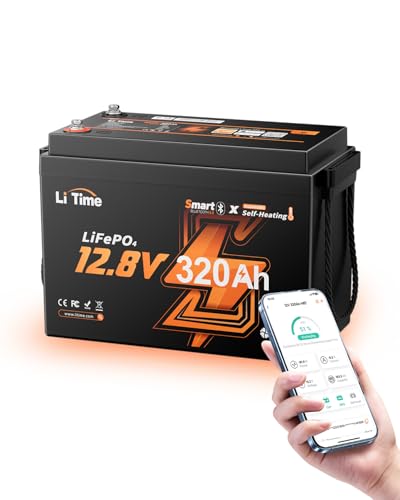
Litime 12V 320Ah Mini LiFePO4 Self-Heating Battery

Litime 12V 100Ah LiFePO4 Group 31 Battery

Litime 12V 100Ah RV Self-Heating LiFePO4 Battery
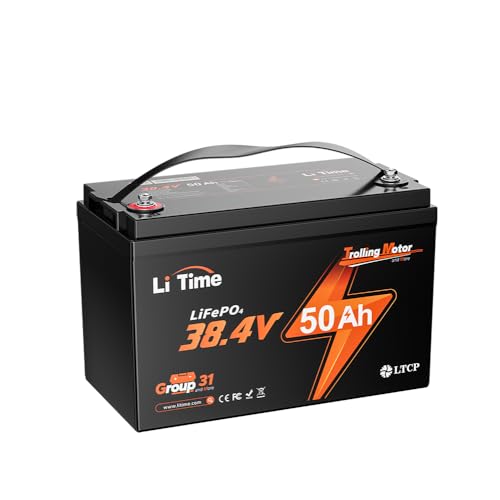
LiTime 36V 50Ah TM LiFePO4 Battery
MARXON Group 94R AGM 12V 80Ah Battery
Taking A Closer Look At The Options
Most campervan conversions start with a Group 24 or Group 31 battery box already mounted, and Redodo’s 12.8V 100Ah LiFePO4 (lithium iron phosphate, a stable and long-lasting battery chemistry) drops straight into that footprint. The roughly 21-pound weight makes hoisting it into a rear cabinet or under-bench bay a one-person job for most builds. The integrated 100A BMS (battery management system, an internal controller that protects against overcharge, over-discharge, and shorts) keeps the cell stack protected during heavy inverter draws.
Daily drivers who charge from solar or alternator will appreciate the 4000-plus cycle rating, which comfortably outlasts lead-acid in mixed partial-charge use. Where this battery earns its place in a van is weekend trips with a fridge, lighting, fan, and device charging, though heavier AC loads may call for the larger picks later in this list.
Positive Takeaways
- Standard Group 24 dimensions slot into existing battery trays and boxes without modification.
- About 21 pounds, roughly half the weight of a comparable AGM (absorbent glass mat, a sealed lead-acid battery type), which simplifies single-person installs.
- 4000-plus cycle life supports years of partial-state cycling from solar panels.
- 100A BMS guards against common fault conditions during inverter peaks.
- 1280Wh usable capacity covers fridge, lights, fan, and laptop charging for a typical weekend.
Things To Consider
- A single 100Ah unit may be undersized for full-time vanlife with induction cooking or rooftop AC.
- Cold-weather charging below freezing requires a heated model or careful solar management in winter.
Key Specs
Made For
Weekend vanlifers running solar-charged builds powering modest DC loads like fridges, lighting, and device charging.
Consider Something Else When
Full-time travelers running induction cooktops should look at the VATRER POWER 24V 300Ah unit for the higher output it demands.
Big inverters and induction hobs need serious current, and stepping up to a 24V bank cuts that amperage in half compared to 12V at the same wattage. The VATRER POWER 24V 300Ah LiFePO4 delivers 7.68kWh of storage with a 200A BMS, enough headroom for induction cooking plus a rooftop AC unit cycling on and off. The high-temp cutoff at roughly 167°F and low-temp charging cutoff keep the cells within a healthy range during heavy summer and shoulder-season use.
Full-time vanlife families and remote-work conversions benefit most from this size class. The companion app lets you check SOC (state of charge, the percentage of usable energy remaining), voltage, and current from the cab without crawling into the battery compartment. For vans that only need modest lighting and fridge duty, this is honestly too much battery, and the Redodo Group 24 above handles that role at a friendlier footprint.
The Case For It
- 200A continuous rating supports larger inverters and simultaneous AC loads.
- App monitoring delivers real-time SOC, voltage, and current without opening the bay.
- Built-in temperature cutoffs protect the pack in hot vans and freezing overnights.
- 24V architecture reduces cable gauge and current draw at high wattages.
Trade Offs
- Physical size and weight demand a dedicated battery bay or reinforced floor mount.
- Requires a 24V-compatible charger, solar controller, and inverter to unlock the full benefit.
Right Fit For
Full-time vanlifers powering inverter-driven AC and induction loads who need the headroom.
Not Your Match When
Weekend warriors with simple lighting and fridge duty will overspend choosing this over the Litime 12V 100Ah Trolling Motor battery.
Specialty builds with rooftop AC and induction cooking sometimes jump straight to 48V to minimize cable runs and current draw at the inverter. The Mosasaur 48V 100Ah packs 5.12kWh into a classic lead-acid case footprint, around 77 pounds, with a 200A BMS supporting 10.24kW of peak power. Owners commonly appreciate the included charger that arrives matched, plus an app and LCD screen for redundant SOC reading.
Where this battery earns its spot is in vans with AC units cycling all night and induction cooking at dinner. Compared to the VATRER POWER above, this trades capacity for voltage, halving current draw for the same wattage. For most compact van builds, this is overkill, but for larger Class B and Class C motorhomes with serious AC needs, the headroom is the point.
Everyday Perks
- 48V architecture minimizes current draw through long cable runs from rear battery bays to cab inverters.
- Dual monitoring via app and on-battery LCD gives redundant SOC reading from the cab.
- Classic lead-acid case footprint simplifies mounting in standard trays.
- 4000-plus cycle rating handles daily deep cycling over the long haul.
Honest Caveats
- 48V solar charge controllers and inverters are a narrower, sometimes pricier category than 12V or 24V gear.
- At 77 pounds in a single brick, you need a flat reinforced mounting surface.
Whose Shelf It Belongs On
Large van and motorhome owners with rooftop AC and induction cooking should consider it.
Look Elsewhere When
Standard campervan owners running a 12V fridge and lights should choose the Redodo 12.8V 100Ah Group 24 battery instead.
Van builds that double as fishing rigs or boat tenders benefit from a battery tuned for steady trolling-motor draws. The Litime 12V 100Ah Trolling Motor LiFePO4 (lithium iron phosphate) handles sustained lower loads typical of trolling motors rather than short inverter spikes, making it a natural fit for vans with marine gear. Bluetooth monitoring pairs via QR scan for real-time SOC and discharge status from your phone.
Low-temp charging cutoff below freezing keeps cells safe during shoulder-season launches from cold ramps. Owners commonly appreciate the auto-connect feature that links the battery to the app on range. Compared to the Redodo Group 24 above, this one leans toward marine tuning, but both work in a van if the trolling feature isn’t critical.
Practical Advantages
- Trolling-motor-focused tuning suits vans doubling as fishing platforms or tender tow vehicles.
- Bluetooth monitoring gives phone-side SOC and discharge status without the cab gauge.
- Low-temp charging cutoff protects cells during cold-morning solar top-offs.
- 12V 100Ah class suits standard van DC distribution panels.
Points To Keep In Mind
- Trolling-motor orientation may favor marine load profiles over standard inverter peaks.
- Bluetooth-only monitoring means no on-battery LCD fallback if the phone is out of reach.
Best Suited To
Anglers and marine-leaning vanlifers who want trolling-motor performance from their house battery.
Reach For A Different Pick When
Standard campervan converters should reach for the Litime 12V 100Ah Group 31 battery for its broader compatibility.
Cold-weather charging is the silent killer of lithium batteries, and the Litime 12V 320Ah Mini tackles this head-on with built-in self-heating. The two heating modes activate below 41°F during charging and shut off at 50°F, letting you solar-charge in freezing temperatures without damaging the cells. The smart low-temp cutoff still blocks unsafe discharge below -4°F when heating isn’t running.
At roughly 57 pounds and 35 percent smaller than a typical 320Ah battery, this unit fits in compact battery compartments found in smaller campervans. Mountain travelers, ski-season campers, and shoulder-season nomads benefit most from this combination of capacity and cold protection. Compared to the standard 100Ah picks above, this trades footprint for triple the capacity plus active heating.
Notable Gains
- Self-heating activates below 41°F to allow safe cold-climate solar top-ups.
- 320Ah capacity covers multi-day off-grid stays without recharging anxiety.
- Mini form factor at 57 pounds fits compact battery bays in smaller vans.
- Low-temp discharge cutoff adds an extra layer of cold protection.
Worth Noting
- Self-heating draws some of the charging current, lengthening cold-weather top-off times.
- Hazardous-materials shipping regulation makes returns restricted if sizing turns out wrong.
Who Will Love This
Cold-climate and shoulder-season travelers who need winter-capable lithium capacity.
Where Another Pick Suits Better
Desert and warm-weather-only travelers should choose the VATRER POWER 24V 300Ah battery for higher voltage headroom.
Outdoor battery bays and exposed exterior mounts demand a sealed unit, and the Litime 12V 100Ah Group 31 carries an IP65 rating (a dust-tight and water-jet-resistant ingress protection standard) against dust and low-pressure water jets. Automotive-grade A+ cells support up to 15,000 cycles at proper depth-of-discharge, with a 100A BMS guarding 20-plus fault scenarios from overcharge to short circuits. The Group 31 footprint slots into larger RV battery trays commonly found in Class B and Class C vans.
Expandable configurations up to 4P4S let you scale from 12V to 48V systems by paralleling and serialing additional packs. Owners commonly appreciate the sealed case in vans where road spray reaches the battery compartment. For vans with interior battery bays, the IP65 spec is honestly unnecessary, and the Redodo Group 24 above handles that role in a smaller box.
Positive Points
- IP65 sealed case protects against dust and water jets in exposed battery bays.
- Up to 15,000 cycle rating at proper depth-of-discharge extends service life well beyond standard lithium.
- 4P4S expansion supports parallel and serial scaling from 12V up to 48V architectures.
- 20-plus BMS protections guard against common fault conditions during heavy use.
Minor Gripes
- Group 31 footprint won’t fit smaller Group 24 battery trays without modification.
- Cycle rating maxes out only at conservative depth-of-discharge, dropping at deeper discharges.
Quick Facts
Perfect Match For
Outdoor and exposed-mount installers who need a sealed Group 31 pack for harsh mounting locations.
A Better Fit Elsewhere
Indoor-bay vans with modest loads will find the Litime 12V 100Ah Trolling Motor battery a friendlier match.
Bluetooth 5.0 (a faster, longer-range wireless protocol than older Bluetooth versions) monitoring plus self-heating in a Group 24-friendly footprint makes this a versatile middle-ground pick. The Litime 12V 100Ah RV Self-Heating LiFePO4 includes two heating modes, regular and energy-efficient, that warm the pack during cold-morning solar top-offs without excessive draw. The app pairs quickly for SOC and status tracking from inside the van.
Van converters who want cold-weather charging protection without stepping up to 320Ah capacity benefit from this unit’s balance. Owners commonly appreciate the energy-efficient heating mode for use on limited solar input. Compared to the larger Litime 320Ah self-heating pick above, this one keeps the standard 100Ah footprint while still adding cold protection.
Useful Highlights
- Dual heating modes balance cold protection and solar input efficiency.
- Bluetooth 5.0 monitoring delivers reliable phone-side SOC and discharge status.
- Group 24-friendly footprint fits standard campervan battery trays.
- Self-heating activates automatically during charging below 41°F.
Less-Strong Areas
- 100Ah capacity caps runtime with high-draw appliances over multi-day stays.
- Heating energy overhead extends cold-morning recharge times compared to non-heated units.
Who Should Grab It
Four-season van converters who want cold protection without stepping up capacity.
Skip It When
Multi-day boondockers needing extended capacity should grab the Litime 12V 320Ah Mini LiFePO4 Self-Heating Battery instead.
Trolling motors typically run on 24V or 36V systems, and the LiTime 36V 50Ah TM LiFePO4 matches that voltage class natively. Automotive-grade cells support up to 15,000 cycles, with low-temp cutoff protection guarding cells in cold-morning launches. Group 31 dimensions allow mounting in standard marine battery trays, useful for vans that double as tender tow vehicles or shore-side base camps.
Vans paired with 36V trolling motors for fishing expeditions are the natural fit, since this unit replaces the three 12V batteries that a 36V trolling motor would otherwise require. Owners commonly appreciate the ABYC and ASA membership signals behind the brand. For vans without a trolling motor, this voltage class is awkward, and the standard 12V picks above are simpler.
Where It Excels
- 36V native output matches standard trolling-motor voltage without serialing three 12V packs.
- Low-temp cutoff protects cells during cold-morning launches from chilly ramps.
- Automotive-grade cells support up to 15,000 cycles at proper depth-of-discharge.
- Group 31 footprint fits standard marine battery trays in vans and tenders.
Where It Is Less Suited
- 36V class doesn’t pair well with standard 12V van DC distribution without a converter.
- 50Ah capacity caps runtime for anything beyond trolling-motor support.
Built With In Mind
Vans paired with 36V trolling motors for fishing or marine expedition use.
Another Choice May Suit
Standard campervan owners without trolling motors should reach for the Litime 12V 100Ah Trolling Motor LiFePO4 Battery for standard DC use.
Van life isn’t only about the house battery; the chassis starting battery needs reliable cold-cranking performance too. The MARXON Group 94R AGM delivers 850 CCA (cold cranking amps, a measure of starting power at 0°F) and 80Ah in a maintenance-free sealed case designed for start-stop vehicles. The Group 94R footprint fits modern van chassis battery trays without modification. The faster recharge acceptance compared to flooded lead-acid supports vans with frequent stop-and-go driving or idle-heavy traffic.
Vans with start-stop systems benefit most from this AGM design, which handles the constant engine cycling that floods conventional batteries. Owners commonly appreciate the sealed case in vans where the starting battery sits near the cabin. This isn’t a house battery, so for living loads, the LiFePO4 picks above remain the right tool, with this one handling the engine side.
Strengths Worth Knowing
- 850 CCA supports reliable cold-morning starts in chilly climates.
- AGM sealed case fits start-stop system requirements without venting.
- Maintenance-free design eliminates periodic water checks under the hood.
- Group 94R footprint matches modern van chassis battery trays directly.
Worth Bearing In Mind
- This is a chassis starting battery, not a deep-cycle house battery for living loads.
- AGM performance drops significantly when used for repeated deep cycling in solar banks.
Who It Suits Best
Van owners needing a reliable chassis starting battery for start-stop systems and cold-morning reliability.
Swap It Out When
Vans needing deep-cycle house storage should pair this with the Redodo 12.8V 100Ah Group 24 LiFePO4 Battery instead.
What Matters Most Before Choosing Battery For Van Life
Calculate Daily Amp-Hour Draw First
Add up the fridge, device charging, lights, fan, and any occasional inverter loads to estimate a daily Ah consumption. Match that to roughly twice the daily draw, since most LiFePO4 chemistries cycle healthiest at 50 percent depth-of-discharge. A weekend campervan with a 50L fridge, LED lights, and laptops usually lands near 60Ah, meaning a single 100Ah LiFePO4 battery handles the job.
Voltage Class Shapes Charging Gear
Twelve-volt systems match standard RV and van DC distribution, making gear swaps simple. Twenty-four-volt and 48V systems cut current in half at high wattages but require matched solar controllers, chargers, and inverters. Larger vans with induction cooking and AC benefit from the higher voltage class, while standard builds stay simpler on 12V.
Footprint and Mounting Location Decide What Fits
Group 24 batteries slot into standard campervan battery trays, while Group 31 packs need larger bays. Sealed IP65 cases (a dust-tight and water-jet-resistant enclosure rating) handle exposed exterior bays, while indoor mounting relaxes that requirement. Measure the bay before ordering, since lithium sizing differs from the lead-acid units being replaced.
Cold Weather Demands Self-Heating or Compromise
Lithium cells below freezing risk damage during charging without active heating. Self-heating batteries solve the problem for shoulder-season and winter travelers, while non-heated units work fine in warm and temperate climates. Mountain and northern travelers should budget for heated units to avoid capacity degradation and unsafe charging.
Common Considerations Before You Decide
Wrong Turns To Avoid
Selecting capacity by biggest number rather than actual daily draw leaves you paying for Ah you can’t access in a standard battery compartment. Many first-time converters also forget that chassis batteries and house batteries are separate systems, with deep-cycle LiFePO4 units failing as engine starters and AGM starters failing as house banks. Charge profile mismatches between the battery BMS and the solar controller cause chronic undercharging in mixed-brand systems.
Where The Extra Money Goes
Higher-tier units earn their premium through longer cycle life ratings, sealed IP65 cases, self-heating cold protection, and matched chargers included in the box. The 4P4S expansion capability on Group 31 units lets you start with one pack and grow into a larger bank without replacing the original. Premium-grade A+ cells maintain tighter capacity matching across the pack, which directly extends service life in daily cycling.
Frequently Asked Questions
How long do lithium batteries last in a campervan?
Quality LiFePO4 batteries typically deliver 4000 to 15,000 cycles depending on depth-of-discharge and cell grade. For a weekend camper charging to 80 percent and discharging to 20 percent daily, expect a decade of use before noticeable capacity loss. Full-time vanlife with deeper cycling reduces that timeline proportionally.
Can a van battery run an air conditioner?
Most rooftop AC units draw 1500 to 3000 watts, which requires either a 24V or 48V battery bank paired with a properly sized inverter. A single 100Ah 12V battery runs a small portable AC for a brief window but won’t sustain overnight cooling. Plan on at least 300Ah at 24V or 48V for serious AC runtime.
Do lithium batteries work in cold weather?
Standard LiFePO4 batteries should not be charged below freezing without active heating, since this damages the cells permanently. Self-heating models solve this with internal warmers that activate during charging, making them appropriate for winter and shoulder-season use. Cold discharge down to roughly -4°F remains safe in most units with low-temp cutoff protection.
What size battery bank for full-time vanlife?
Full-time vanlife with induction cooking and AC typically needs at least 300Ah at 24V or 48V, often more for multi-day off-grid stays. Weekend use with a fridge, lights, and device charging works fine on a single 100Ah 12V battery. Solar panel sizing should match the battery capacity to recharge efficiently during daylight windows.
Can I mix lithium and lead-acid batteries in the same bank?
Mixing chemistries in a single battery bank causes chronic imbalance and accelerated degradation in both battery types. Use a single chemistry per bank, or separate banks with isolated charging profiles. Many vans run a lithium house bank and a separate AGM starter battery, which is the standard two-bank approach.
The Takeaway
The right battery for van life depends on your daily amp-hour draw, voltage preferences, and the climate you travel through. For weekend campervan builds, the Redodo Group 24 handles standard loads in a friendly footprint, while full-time travelers with AC and induction cooking need the headroom of 24V or 48V banks. Cold-climate and outdoor-mounted vans benefit from self-heating and IP65-sealed units that protect cells in harsher conditions.