A bedroll for camping is only as good as the night it gets you through, and the wrong one punishes you at 3 a.m. with cold seams, thin padding, or a fit that traps you in a tight cocoon. The list below mixes classic rectangular sleeping bags and self-inflating foam pads, because a proper “bedroll” setup usually pairs warmth with insulation from the ground. Whether you’re car camping at a state park, hunting out of a base camp, or building a guest bed in a cabin tent, these ten picks cover a wide spread of cold ratings, sizes, and packing realities.
The Picks In Brief
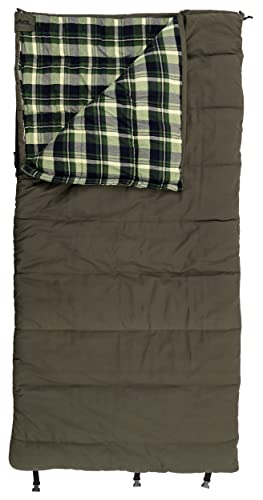
ALPS OutdoorZ Redwood -10°F Flannel-Lined Sleeping Bag
ALPS OutdoorZ Redwood -25 Sleeping Bag
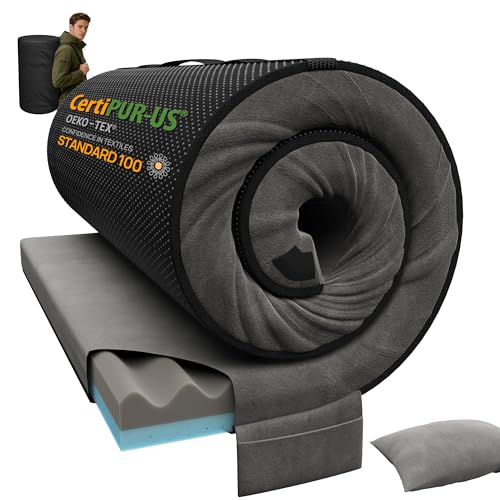
Releep 3-Inch Dual-Sided Memory Foam Camping Mattress

Teton Outfitter XXL Sleeping Pad for Cot
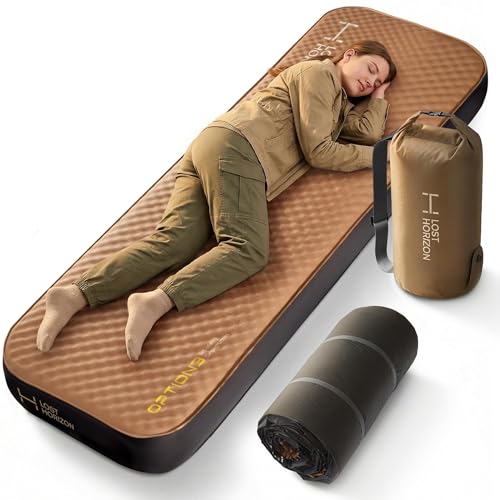
Lost Horizon Option3 Self-Inflating Foam Cot, 4.5″

Lost Horizon Option3 Self-Inflating Twin, 4.5″

Lost Horizon Option3 Self-Inflating Slim Single, 3″

Lost Horizon Option3 Self-Inflating Queen, 4.5″

Lost Horizon Option3 Self-Inflating Full, 4.5″
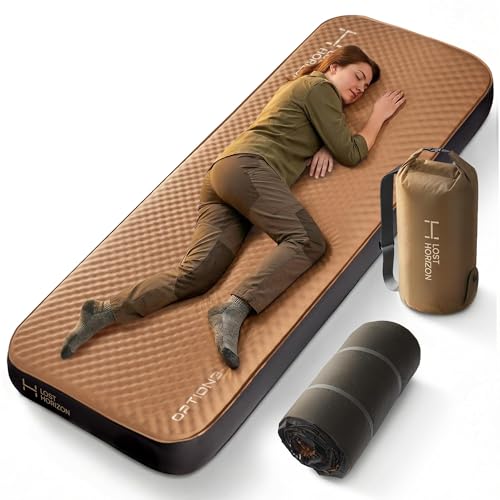
Lost Horizon Option3 Self-Inflating Single, 4.5″
What Each Pick Brings To The Table
The Redwood -10°F is a different sort of bedroll, closer to a classic wool-blanket roll than a synthetic mummy bag. It uses a 100% cotton canvas shell and a soft plaid flannel lining, which means it feels like real bedding the moment you slide in, even before the TechLoft insulation (a layered fill of siliconized micro-denier fibers designed to trap warm air) starts doing its job.
Two heavy-duty zippers and the oversized rectangular cut let you lie flat or sit up inside, which makes a long hunting weekend in a wall tent far less claustrophobic. Compared with the tighter cut on most synthetic bags, the roomy dimensions here are a real ownership perk for restless sleepers and broad-shouldered campers. In our view, anyone who treats the cabin or base camp as home for a week will appreciate the canvas weight and the way it drafts less when paired with a cot.
Positive Takeaways
- Cotton canvas shell handles rough use and rough shelters, which is useful when the tent floor is full of pine needles and gravel.
- Flannel lining delivers that “tucked-in” feeling you usually only get at home, with no clammy synthetic sheen.
- -10°F rating covers shoulder-season hunts and high-elevation trips where lighter bags quit early.
- Oversized rectangle lets two sleepers share on a wide platform pad, or one restless sleeper sprawl.
Worth Noting
- Canvas is heavy and bulky when packed, so it’s not the bag for backpackers counting ounces.
- Owners commonly report a long break-in period before the fill fully loftes (puffs up to its insulating height).
Who It Suits Best
Base-camp and cabin campers, cold-weather hunters, and anyone who wants a “real bed” feel on a cot.
Consider Something Else When
Backpackers chasing a lighter pack should look at the ALPS OutdoorZ Redwood -25, which keeps the same roomy build for sub-zero trips but trades weight savings you won’t notice in a truck.
Step up from the -10°F version and you land at the Redwood -25, a deep-winter rectangle bag built for late-season hunts, ice-fishing shanties, and mountain camps where the thermometer drops well below zero. The same TechLoft fill, in a thicker stack, traps more warm air in the same oversized envelope, so you get the roomy lay-flat feel without giving up serious warmth.
For a bedroll setup, this bag pairs naturally with a self-inflating pad underneath, since the loft does the heavy lifting above the ground. You may find the wider shoulder room a real blessing if you’ve ever woken up with a stiff neck after a night in a tight mummy. Where the canvas-shell Redwood -10°F feels like a cabin bag, this one is the expedition cousin, with a temperature rating that lets you sleep when the frost is creeping up the tent walls.
A Few Highlights
- -25°F rating covers serious cold without forcing you into a constrictive mummy shape.
- TechLoft fill holds loft through cold, damp nights where cheaper fills collapse.
- Same generous cut as the -10°F, so sharing a wide platform pad stays practical.
Trade Offs
- Higher fill weight means a larger pack footprint, which can crowd a small tent vestibule.
- You pay a meaningful premium for the extra cold protection you may not use on shoulder-season trips.
- Dry cleaning and air-out routines matter more at this temperature rating, since trapped moisture kills loft fast.
Made For
Late-season hunters, ice anglers, and high-elevation campers who face single-digit nights on a regular basis.
Not Your Match When
Three-season family campers in moderate climates get more value from the ALPS OutdoorZ Redwood -10°F, which costs less and packs smaller.
Where the ALPS bags cover the warmth side of a bedroll, the Releep 3-Inch Mattress handles the comfort side, with a dual-layer foam build (gel-infused memory foam on top for pressure relief, high-density support foam underneath) that actually feels like a real mattress on a tent floor. The waterproof cover and bundled pillow make it a complete setup rather than just a pad you toss in the car.
For car campers and SUV sleepers, this roll-up foam pad solves the “sleeping on the ground” problem in a way air mats rarely do, with no fear of slow leaks and no midnight re-inflation. You may find the 3-inch profile is the sweet spot: enough to keep hips off uneven ground, light enough to handle on setup. The trade-off shows up when you need to pack it small for hiking; this is decidedly a “drive-up” bedroll component, not a backcountry one.
Key Advantages
- Gel memory foam layer eases shoulder and hip pressure on hard tent floors.
- Waterproof shell protects against condensation and the inevitable spilled coffee.
- Bundled pillow and carry bag make it a true out-of-the-box sleep system.
Points To Note
- Rolled size takes up significant trunk space compared with self-inflating pads.
- Foam can hold odors in humid climates without regular airing-out between trips.
Right Fit For
Car campers, SUV and minivan sleepers, and anyone outfitting a guest tent who wants home-style comfort.
Look Elsewhere When
Backcountry hikers should skip this and look at the Teton Outfitter XXL, which trims bulk for tighter pack loads.
The Teton Outfitter XXL is a purpose-built cot topper: 2.5 inches of foam wrapped in a poly canvas cover, sized to span a wide camp cot rather than a sleeping bag. Slip-resistant loops along the edges anchor the pad to the cot frame, so you don’t wake up with the pad migrating off the cot in the middle of the night, a common problem with generic foam pieces.
This pad shines as the base layer of a bedroll system on a raised camp cot, turning a taut canvas cot surface into something closer to a futon. The roll-up design and broad footprint also make it a reasonable guest-bed topper for a cabin or wall tent. Compared with the Releep’s all-foam memory build, the Teton trades plush cradling for a firmer, more supportive feel that holds up under heavier sleepers.
Why It Works Well
- 2.5-inch foam is plenty thick to soften a canvas cot without going floppy.
- Slip-resistant loops solve the “pad slides off cot” headache at 2 a.m.
- Poly canvas cover resists abrasion from cot hardware and rough shelter floors.
- Rolls compactly for storage between trips, with no inflation valves to fuss with.
Honest Caveats
- It’s cot-sized, not a general-purpose ground pad, so using it on bare ground wastes its best features.
- Poly canvas cover can feel a bit crinkly against thin sleepwear.
Best Suited To
Campers who already own (or plan to own) a wide cot and want a stable, no-inflation sleep surface on top of it.
A Better Fit Elsewhere
Sleepers who need a real mattress feel on a flat tent floor will be happier with the Releep 3-Inch Dual-Sided Memory Foam Camping Mattress, which is built for direct ground use.
The Lost Horizon Option3 in cot size is a self-inflating pad with real substance: 4.5 inches of foam filling, roughly 5.5 pounds of material, and a build aimed at sleepers who want a thicker bed under their sleeping bag without the fuss of a hand pump. The “self-inflating” label means the open-cell foam (foam with interconnected air pockets that expand when the valve opens) sucks in air when you unroll and crack the valve, then you top it off with a few breaths.
For an elevated tent cot, this pad bridges the gap between a thin cot topper and a full air mattress, with a firm, supportive feel that doesn’t bottom out under your shoulders. The 4.5-inch loft also adds meaningful insulation between you and the cot’s cold surface, which matters more than most campers expect on a fall night. You may find the 220-pound capacity a comfortable match for most adult sleepers in this size, with some flex for couples on a wide cot platform.
What Stands Out
- 4.5-inch profile genuinely softens a camp cot without turning into a wobble-prone air bed.
- Self-inflating setup saves you from hand-pumping, which is a real perk after a long day outside.
- Open-cell foam holds shape over years of use, unlike cheap foam that compresses permanently.
Possible Compromises
- 5.5-pound pad weight adds up fast on a backcountry trip; it’s firmly a car-camp item.
- Valves can be slow to seat fully on first use until you get the technique down.
Who Should Grab It
Car campers and base-camp sleepers who run a cot and want a thicker, more mattress-like surface under their bag.
Swap It Out When
Sleepers who want a bigger footprint for two should step up to the Lost Horizon Option3 Self-Inflating Foam Queen, 4.5″, which spreads the same loft across a much larger pad.
Twin-size versions of the Option3 keep the 4.5-inch loft and open-cell foam build, but spread it across a footprint that fits a standard cabin tent or a large family tent’s inner room. The 8.5-pound foam filling hits a useful middle ground: heavier than the cot version, lighter than the queen, with enough support capacity for a single sleeper up to 300 pounds.
This is a solid pick when you want a “real bed” in a wall tent without dragging a full air mattress and pump along. The setup story is the same as the cot version: crack the valve, watch it drink in air, top it off. In our view, the twin is the most versatile size in the Lost Horizon lineup because it bridges single sleepers who want stretch room and one parent camping with a kid who rolls in at 5 a.m.
Well-Handled Touches
- 4.5-inch open-cell foam holds insulation value night after night, even in cool shoulder seasons.
- Twin footprint fits a standard cabin tent without crowding the door or vestibule.
- 300-pound capacity handles adult sleepers plus restless kids without bottoming out.
Some Limits To Know
- Heavier than an inflatable twin, so two people splitting the weight on a hike will notice it.
Whose Shelf It Belongs On
Solo car campers in large family tents, and parents building a kid-friendly cabin tent setup.
Reach For A Different Pick When
Couples sharing a tent should move to the Lost Horizon Option3 Self-Inflating Foam Queen, 4.5″, which gives both sleepers more elbow room without sacrificing loft.
The Slim Single steps the Option3 concept down for tight spaces: a 62-by-26-inch footprint and a 3-inch loft that slips into a backseat, a truck cab, or the narrow floor of a solo tent. The 3-inch profile trims both weight and pack size compared with the 4.5-inch siblings, which makes this the most portable option in the Lost Horizon lineup.
Vehicle sleepers in particular benefit from the narrow cut, since it sits across a folded-down back seat without forcing you to fold around the wheel wells. The trade-off is a less generous sleeping area, so anyone over six feet tall will want to test the length before committing. You may find the 3-inch loft is plenty for warm-weather trips, but you’ll want a warmer bag and an extra blanket underneath in shoulder seasons.
Benefits That Matter
- Compact 62-by-26-inch cut fits vehicles, solo tents, and bunk platforms.
- 3-inch loft is a smart compromise between comfort and pack size.
- Self-inflating design means no pump, no mouthpiece, and no midnight re-inflation.
Where It Is Less Suited
- 3-inch loft gives up some ground insulation, so cold-soak nights feel colder.
- Narrow width can feel tight for side sleepers who shift around a lot.
Perfect Match For
Solo travelers sleeping in cars, truck campers, and one-person tents where space matters more than sprawl room.
Skip It When
Sleepers who want full-stretch comfort should size up to the Lost Horizon Option3 Self-Inflating Foam Single, 4.5″, which keeps the solo footprint but adds more loft and warmth.
The Queen version is the biggest sibling in the Option3 family, with 13 pounds of foam filling spread across a full queen-size footprint. The 4.5-inch loft and 440-pound weight capacity turn a large family tent into something that genuinely feels like a bedroom, with room for two adults or a parent-and-kid sleepover without anyone losing shoulder space.
Where the cot and twin versions work for solo setups, the queen is built for two sleepers, with the open-cell foam and air core doing the support work together. Compared with inflatable queen air beds, this pad stays firmer through the night and won’t sag in the middle when one sleeper rolls over. The honest read is that the queen is overkill for solo trips but a real upgrade for couples who want a residential-style bed on a multi-night camp.
What Earns Its Place
- Queen footprint lets two adults sleep side by side without drafting off each other’s warmth into the mat.
- 440-pound capacity handles two adults plus the inevitable pile of gear at the foot of the bed.
- 4.5-inch open-cell foam is more stable than an air chamber, so restless sleepers don’t roll to the middle.
Trade-Offs To Consider
- 13-pound pad weight and queen roll size demand real trunk space, not a sedan back seat.
- Setup time is longer than the smaller Lost Horizon sizes because more air has to enter the foam.
Who Will Love This
Couples in large family tents, parents hosting a kid’s sleepover under canvas, and glampers who refuse to give up a real bed.
Where A Sibling Pick Shines
Solo sleepers don’t need the queen’s footprint, and the Lost Horizon Option3 Self-Inflating Foam Single, 4.5″ gives them the same loft in a much easier-to-pack size.
The Full size lands between the twin and the queen, with 12 pounds of foam filling and a 440-pound capacity that handles a single sleeper who wants real stretch-out room or a parent sharing with a small child. The 4.5-inch open-cell loft is identical to its siblings, so you get the same support and ground insulation across a more compact footprint than the queen.
This is a smart pick for one-person campers in a large tent who don’t want the queen’s weight but still want a bedroll pad that feels more like a futon than a sleeping mat. The full footprint also fits a wide range of family tents that are technically “queen-compatible” but feel cramped with a queen pad. In our view, this is the under-appreciated middle of the lineup for solo sleepers who want room to roll without hauling the biggest pad in the family.
Reasons It Performs
- Full-size footprint gives a single sleeper generous room without queen-level weight.
- 12-pound foam filling keeps the pad firm under shifting sleepers all night.
- Same 4.5-inch loft and open-cell build as the queen, so support and insulation are consistent.
Worth Bearing In Mind
- Still too large for solo backpacking, despite trimming some weight off the queen.
Built With In Mind
Solo car campers in large tents who want more room than a twin but don’t need to fit a partner.
Another Choice May Suit
Sleepers who want maximum stretch room and don’t mind the extra weight will prefer the Lost Horizon Option3 Self-Inflating Foam Queen, 4.5″.
The single-size Option3 rounds out the family with a 4.5-inch loft and 6.5 pounds of foam filling, sized for a single sleeper in a one- or two-person tent. The 220-pound capacity matches the cot version, and the self-inflating setup keeps first-time campers from wrestling with pumps and valves on their inaugural trip.
This is the entry point into the Lost Horizon lineup, and it’s a forgiving one: the pad forgives over-inflation, doesn’t punish you for sleeping off-center, and rolls back into a storage bag without an exact folding dance. Compared with the broader twin, the single trades a lot of sprawl room for an easier pack size, which makes it the more sensible pick for newer campers who aren’t sure how often they’ll use it.
Notable Gains
- 4.5-inch open-cell loft gives new campers a real comfort upgrade over thin closed-cell foam pads.
- 6.5-pound pad weight is manageable for short carries from the car to the tent.
- Self-inflating setup removes the learning curve that frustrates first-time air-mat users.
Points To Keep In Mind
- Single-width is a tight fit for sleepers who move around or sleep on their sides with arms outstretched.
The Right Fit
New campers testing out car camping, and anyone who wants a no-fuss upgrade from a basic closed-cell pad.
Look Elsewhere When
Side sleepers and broad-shouldered campers often need the extra width of the Lost Horizon Option3 Self-Inflating Foam Twin, 4.5″ to actually rest well.
What To Weigh Before Picking A Bedroll For Camping
A bedroll works best when you match it to the climate, the sleeping surface, and the trip, not when you grab the warmest or thickest option on the shelf. The first real decision is warmth versus pack size, since the coldest-rated bag here is also the heaviest, and the biggest pad is also the bulkiest. Think about whether you’re carrying it on your back or rolling it out of a trunk.
Size matters more than people expect. Rectangular sleeping bags and self-inflating pads both come in widths and lengths that change how the night feels. A solo sleeper who tosses and turns will hate a narrow pad, and a couple will hate a “one-person” twin in a family tent. Look at both the sleeping dimensions and the packed dimensions before you commit.
Ground insulation is the piece beginners often miss. A great sleeping bag on bare cold ground still loses heat downward, which is why the self-inflating pads in this list are 3 to 4.5 inches thick. Thicker loft means more trapped air, which means less heat pulled out of you by the ground. Pad thickness matters more than bag rating once temperatures drop into the 30s and below.
Durability and care round it out. Cotton canvas shells feel great but demand air-out time between trips. Open-cell foam pads need a valve check now and then and a chance to dry fully before storage. Poly canvas covers on cot pads handle abrasion well, but snagging on cot hardware is a real-world risk if you skip the slip-resistant loops. Pick the option that fits how you actually camp, not the one with the most impressive spec line.
Where Shoppers Go Wrong
Common Shopping Slip Ups
A lot of shoppers grab a bag rated for colder temps than they’ll ever face, then resent the weight and bulk on every warm trip. The honest read is that a -25°F bag at 50°F is sweaty, not cozy. Match the rating to your lowest realistic night, with a small margin, not to a worst-case fantasy.
The other common mistake is buying a pad for its packed size without checking its actual loft. A pad that rolls up small but only offers an inch of foam is fine for summer car camping, not for shoulder-season ground sleeping. Three inches is the practical floor for cold-soak protection in most climates.
Where The Extra Money Goes
Higher-tier bedrolls and pads spend your money in three places: real insulation fill instead of generic polyfill, true cotton canvas or coated shells instead of thin nylon, and self-inflating foam cores instead of cheap closed-cell foam. The upgrade pays off when you camp in shoulder seasons, sleep on rough ground, or set up the same bed for years rather than a single season. A warm night in a four-season bag, on a thick self-inflating pad, is a real ownership benefit, not a marketing line.
Frequently Asked Questions
What temperature rating do most campers actually need?
For three-season car camping in most of the U.S., a 20°F to 30°F rated bag handles the vast majority of nights, with a 0°F to -10°F bag reserved for shoulder-season hunters and high-elevation trips. The -25°F bag in this list is only worth it if you regularly camp in deep cold.
Self-inflating pad versus memory foam roll-up: which is better for car camping?
Self-inflating pads win on pack size and ground insulation per inch of thickness, while memory foam roll-ups win on plush, residential-style comfort and zero leak risk. For a typical car camp where trunk space isn’t tight, the self-inflating option is the more versatile long-term buy.
Can a bedroll setup work for backpacking?
A real bedroll is almost always too bulky and heavy for backpacking, since the canvas bags and thick foam pads here are designed for car and base-camp use. Backpackers typically run lighter synthetic mummy bags and inflatable pads, not the roomy rectangle style of a bedroll.
How do you keep a self-inflating pad from smelling musty?
The trick is to fully deflate the pad, open the valve wide, and let the open-cell foam air out in a shaded, dry spot before you roll it back up. Storing the pad inflated or damp is the most common cause of lingering odor, especially after humid trips.
Do you really need a separate sleeping pad under a warm bag?
Yes, because your sleeping bag’s insulation gets compressed under your body weight, which kills its ability to trap warm air exactly where you need it. A foam or self-inflating pad underneath restores that insulation layer, and it’s the single biggest upgrade for cold nights.
Closing Remarks
The right bedroll for camping comes down to your climate, your tent, and how you actually move through a campsite, not the most extreme rating on the page. Pick the warmth and loft that match the coldest night you’ll face, the size that fits your tent and your sleep style, and the care routine you’ll realistically follow. A good bedroll is the kind of gear you stop thinking about, because every night just feels like a good night, and that’s exactly the point.