Rolling into camp after a long day in the saddle is one of travel’s quiet rewards, but the wrong shelter can turn that evening into a soggy, cramped lesson. You need a tent that packs small enough to live on a bike, pitches fast after dark, and stays dry when the weather turns. This roundup focuses on packs that actually work for cyclists: ultralight backpacking shells, purpose-built bikepacking shelters, and a few bike storage options for the driveway back home. Every pick here was chosen for the realities of pedal-powered travel, from frame bag fit to vestibule space for panniers.
Your Options, Compared

BISINNA 2/4 Person Camping Tent Lightweight Waterproof
HILLMAN 2 Person Instant Dome Tent with Rainfly

Naturehike Star River 2 Person Backpacking Tent

NEMO Equipment Dragonfly OSMO Bikepacking Tent

Naturehike Mongar 2 Person Ultralight Backpacking Tent

MSR Hubba Hubba Bikepack 2 Person Tent

Naturehike 1 Person Lightweight Backpacking Tent
PZT Bike Tent Storage Shed for 4-5 Bikes

PZT Bike Tent Storage Shed for 2-3 Bikes
PZT Bike Tent Storage Shed for 6-10 Bikes
Taking A Closer Look At The Options
Budget-conscious riders who still want a real backpacking shelter will find the BISINNA 2/4 Person a practical starting point. It uses a 190T polyester rainfly rated to PU2000mm (a hydrostatic head measure, where higher numbers mean better water resistance under pressure) paired with 7001 aluminum poles (a strong-yet-light alloy commonly used in tent frames), which keeps total carry weight down while still holding up in a steady rain.
Compared with the instant-setup HILLMAN covered next, this is a traditional pitch design, so plan an extra five to ten minutes at camp. The mesh inner tent is the kind of detail you’d expect at a higher price, and it helps on warm summer nights when ventilation matters more than warmth.
Useful Highlights
- 190T polyester fly with PU2000mm coating handles all-day rain
- 7001 aluminum poles keep packed weight reasonable for cycling
- Mesh inner body helps on warm-weather tours
- Two-person layout fits a pair plus a small pile of gear
Things To Consider
- Traditional pole setup takes longer than the pop-up options below
- Best for fair-weather riders; heavy storm performance depends on site selection and seam care
Made For
Weekend cyclists on a budget who mostly ride in dry shoulder seasons and want a serviceable two-person shelter.
Consider Something Else When
Riders who want near-instant pitching after dark should look at the HILLMAN instead.
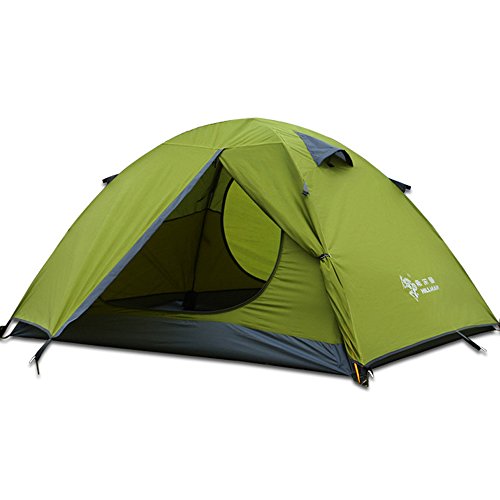
The HILLMAN is built for the rider who pulls into camp tired, sore, and not in the mood to thread poles. Its instant-pitch design throws up in roughly a minute, which matters when sunset is closing in. The polyester body and included rainfly handle typical summer storms, and the dual D-shaped doors stop you from climbing over your riding partner at midnight.
Versus the BISINNA above, you trade a smaller packed footprint and lower weight for speed of setup. Floor space runs about 82 inches long with two small vestibules, so there is room for boots and a pannier outside the sleeping area.
Where It Helps
- Near-instant setup removes friction after a long ride
- Two D-doors and twin vestibules ease shared living
- Carry bag keeps the bundle tidy on a rear rack
Worth Noting
- Heavier than traditional pole tents, so it suits shorter trips
- Pack size is bulkier than the ultralight Naturehike options below
Feature Snapshot
Right Fit For
New campers and casual touring riders who value pitch speed over absolute minimum weight.
Skip It When
Long-distance bikepackers trimming every gram should consider the MSR Hubba Hubba Bikepack further down.
The Star River 2 has been a touring favorite for years because it solves a basic cycling problem: two people, two doors, and real vestibule space. The 210T polyester shell and 7001 aluminum frame keep total weight around the 5-pound mark, which is reasonable when split between a tandem or two single bikes. Interior height near 43 inches lets you sit up to cook or sort gear without ducking.
Compare it to the BISINNA at the top of the list, and the Star River’s double-wall construction is the clear upgrade. Where the BISINNA uses a single-wall mesh body, the Star River’s two-layer design traps less condensation in cool weather.
The Practical Payoff
- Two doors and large vestibule for boots, panniers, and a wet rainfly
- 43-inch peak height makes sitting up comfortable
- Double-layer body reduces interior condensation on cool nights
Trade Offs
- Heavier than the single-wall Naturehike Mongar listed later
- Floor footprint is tight for two adults plus a dog
Whose Bike It Belongs On
Couples or riding partners who want a comfortable shared shelter without paying ultralight prices.
A Better Fit Elsewhere
Solo riders counting grams should jump ahead to the Naturehike 1 Person tent.
The Dragonfly OSMO is the tent you buy once and keep for a decade of dirty weekends. Its OSMO poly-nylon ripstop fabric (a tightly woven material reinforced at regular intervals to resist tearing) is woven from recycled yarns and is PFAS-free (made without the long-lasting “forever chemicals” found in some waterproof coatings), so the water repellent treatment does not wash out as fast as older coatings. Less stretch when wet also means the fly stays taut through a storm instead of sagging onto your face.
Against the MSR Hubba Hubba Bikepack coming up, the NEMO trades a touch of weight for taller doorways and Gatekeeper tiebacks (small elastic straps that hold rolled-up doors open so you can step in hands-free). Both are serious bikepacking tools.
What It Does Well
- OSMO ripstop keeps water repellency through years of use
- Tall, easy-entry doors with tiebacks for hands-free access
- Recycled fabric with PFAS-free waterproofing
- Dual vestibules for pannier storage on long routes
Room For Improvement
- Premium pricing puts it out of reach for casual riders
- Heavier than a dedicated ultralight shelter for gram counters
Quick Facts
Best Suited To
Serious bikepackers who log hundreds of miles a year and want a shelter that ages gracefully.
Not Your Match When
First-time buyers on a tight budget should start with the BISINNA at the top of this list.
The Mongar is a strong upgrade for riders who already know the Star River and want to shave weight. The Y-shaped pole structure (a central pole that forks into two arms, creating a wide, stable footprint with fewer pieces) is genuinely fast to pitch, even for one person on a cold evening, and the included footprint saves your bathtub floor (the raised waterproof tub that lines the tent’s bottom) from abrasion on gravel campsites.
Set against the NEMO Dragonfly, the Mongar is much friendlier on the wallet and noticeably lighter. The trade-off is in fabric weight and long-term coating durability, which is where the NEMO’s premium materials earn their keep.
Features That Help
- Y-frame pole layout pitches quickly even solo
- Free-standing design (stands on its own without stakes) suits rocky ground
- Footprint included, so no extra purchase needed
- Packed size around 19 inches for handlebar or frame bag use
Points To Note
- Total weight near 5.3 lb is mid-pack, not truly ultralight
- Setup instructions sewn into the stuff sack can be hard to read in the dark
Who It Suits Best
Multi-day riders who need a balance of low weight, easy setup, and a forgiving price.
Another Choice May Suit
Riders wanting true bikepacking-specific pole geometry should look at the MSR Hubba Hubba Bikepack.
The Hubba Hubba Bikepack is MSR’s answer to a specific question: how do you make a proven backpacking tent work on a bike? The answer is DAC NSL poles (a premium aluminum alloy pole set with a green-anodized finish, the industry standard for lightweight tent structures) cut into shorter segments so the bundle fits in a frame bag instead of sticking out of a handlebar roll. Weight drops noticeably over the standard Hubba Hubba, and the shorter pole sections stop leverage on your bars from working the tent loose over rough trails.
Against the Naturehike Mongar, this is a clear step up in materials and pole quality, but at a meaningful price difference. You feel that difference most on long, technical routes.
Useful Touches
- Shorter pole sections pack into frame bags without handlebar strain
- DAC NSL poles are lighter than standard aluminum
- Two-door, two-vestibule layout for two riders
- Compatible with MSR’s regular footprint and accessories
Some Limits To Know
- Significantly more expensive than the Naturehike options above
- Setup is more involved than an instant dome like the HILLMAN
Perfect Match For
Weight-conscious cyclists running a serious bikepacking setup with frame bags and a clean cockpit.
Swap It Out When
You mostly camp at car-camping sites with the bike in a rack, where the PZT storage tents later in this list are the more useful buy.
Solo bike tourers have different needs than couples, and this Naturehike 1 Person addresses them head-on. The 20D silicone-coated nylon (an ultralight fabric where “denier” measures fiber thickness, lower numbers mean lighter weight) rainfly is rated to PU4000mm, which is a serious waterproofing spec for a sub-three-pound shelter. All seams and corners are taped, so you stay dry in long rain, not just the first hour of it.
Versus the MSR, the Naturehike 1P is much cheaper and only a little heavier. It is not a true bikepacking-specific shelter, but its small packed size lives happily in a rear pannier.
Notable Upsides
- 20D silicone-coated nylon fly with PU4000mm rating
- All seams and corners factory-taped for storm protection
- 7001 aluminum poles hold up in heavy wind
- Footprint included for under-tent protection
A Few Limitations
- Tight fit for taller riders over six feet
- Single-wall areas can collect condensation in cool, humid air
Feature Card
Who Should Grab It
Solo bike tourists who want near-ultralight weight without paying for a full ultralight premium tent.
Reach For A Different Pick When
You regularly ride with a partner, in which case the Naturehike Star River offers real two-person space.
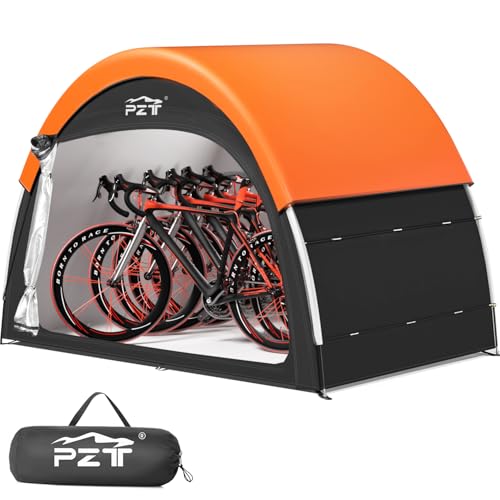
Switching gears: this PZT shed is for the bikes you already own, not the ones you sleep under. The 79 x 59 x 67 inch frame holds four to five standard bikes or four electric bikes, and the included rain cover keeps the worst weather off frames, saddles, and electronics. The double-thickness top helps it survive winter wind without tearing, a common failure point on cheaper covers.
Compared with the smaller PZT 2-3 bike version below, this is the right size for a family with mixed road and e-bikes. The size jump also gives you usable headroom for a lawn mower or stacked garden gear in the off-season.
What Works In Its Favor
- Holds four to five standard bikes or four e-bikes
- Reinforced top resists tearing in winter wind
- Rain cover included, so the bikes stay dry year-round
- Doubles as storage for garden tools or pool gear
Practical Considerations
- Floor footprint is large, so measure your driveway or yard first
- Anchor stakes work best in soft ground; concrete pads need added weights
Built With In Mind
Multi-bike households that have run out of garage space and want a covered outdoor setup.
Where Another Pick Suits Better
Riders with only one or two bikes should save money with the PZT 2-3 bike storage shed further down.
For tighter driveways and small households, the PZT 2-3 bike shed makes more sense than the bigger unit above. The 210D Oxford fabric (a mid-weight woven polyester named after the original Oxford weave, where “D” again stands for denier) with PU4000mm coating is the same heavy-duty spec used in motorcycle covers, and the heat-sealed seams stop capillary leaks where water would otherwise wick through the stitching.
There is also a small ventilation window and an interior storage pocket, which is the kind of detail that matters when you actually use the shed day to day. A velcro-attached rain cover on top adds a second layer against sideways rain.
A Strong Showing
- 210D Oxford fabric with PU4000mm waterproofing
- Heat-sealed seams prevent wicking leaks
- Vent window reduces interior moisture buildup
- Interior pocket for locks, lights, and small tools
- Velcro rain cover for sideways rain protection
Worth Bearing In Mind
- Only fits two to three bikes; expanding households will outgrow it
- Stakes struggle in hard clay or rocky soil
The Right Fit
Two-rider households or anyone with a single e-bike and a small cargo bike.
Where A Sibling Pick Shines
Families with four or more bikes should step up to the PZT 4-5 bike version covered above.
The 6-10 bike PZT shed is the biggest option in this lineup, with a 79 x 97 x 67 inch footprint that swallows a family’s worth of bikes, scooters, and even a small motorcycle. It uses the same 210D fabric and reinforced top as the smaller PZT units, so weather protection is consistent across the lineup. Just confirm you have the wall and yard space before ordering, because returning one of these is more work than returning a tent.
Versus the 4-5 bike version, the extra depth here is the meaningful difference. You can park bikes side by side and still reach the back row without unloading the front.
The Value In It
- Holds six to ten standard bikes or five to seven e-bikes
- Same PU4000mm fabric and rain cover system as the smaller PZT sheds
Potential Sticking Points
- Large footprint needs real yard or driveway space
- Assembly is a two-person job the first time around
Made For
Large families, bike clubs, or anyone with a deep bench of two-wheelers that need weather protection.
Look Elsewhere When
You only have one or two bikes, in which case the PZT 2-3 bike shed is the better fit.
What Matters Most Before Choosing Bicycle Camping Tents
Packed size and weight sit at the top of the priority list for any cyclist. A tent that does not fit on the bike will not get used, and ounces add up fast across a multi-week tour. Look for a packed length under about 20 inches so the bundle can live in a frame bag, handlebar roll, or rear pannier without snagging branches on singletrack.
Fabric weight and waterproof rating are the next pair to weigh. Lower-denier (D) flys are lighter but more delicate, so solo riders chasing grams should expect gentler handling. Hydrostatic head ratings (the water column height, in millimeters, a fabric can hold before leaking) above PU3000mm handle all-day rain; below PU2000mm is fine for fair-weather summer trips only. Pole material matters too, since 7001 aluminum strikes a strong balance between weight and cost, while DAC NSL poles are the upgrade choice for serious routes.
Finally, think about how you actually camp. Pitch speed matters when sunset is closing in, and vestibule space matters when you need to stash panniers, helmets, and wet rainflies outside the sleeping area. Two-door layouts are far easier for two riders than a single-shared door, and free-standing designs (tents that hold their shape with just the pole tension, so they need fewer stakes) save you on rocky or hardened ground.
Smart Considerations Before You Buy
Mistakes Worth Dodging
Many first-time bike campers buy a great backpacking tent that is simply too long for their frame bag, then end up strapping it awkwardly to a rear rack where it catches every gust. Measure your cargo setup before picking a tent, and match the packed length to the space you actually have. Another common slip is underestimating vestibule space; a tent that fits two sleepers often does not fit two sleepers plus four loaded panniers. Plan for gear outside the sleeping area.
Where The Extra Money Goes
Premium tents like the NEMO Dragonfly OSMO and MSR Hubba Hubba Bikepack cost more because the fabric stays waterproof longer, the poles last more seasons, and the pole geometry is shaped around how cyclists actually carry a load. For weekend riders, that premium is hard to justify. For anyone logging multiple long tours a year, it usually pays for itself in fewer replacements and drier nights over time.
Frequently Asked Questions
What size tent fits best on a touring bike?
Most riders find a two-person tent with a packed length around 18 to 20 inches and total carry weight under 6 pounds the sweet spot. That size splits between front and rear bags without overloading either, and it leaves room for a frame bag, sleeping bag, and pad.
Are bikepacking tents really different from backpacking tents?
In short, yes. Bikepacking-specific designs use shorter pole sections so the bundle fits in a frame bag instead of hanging off handlebars, which protects the tent from leverage damage on rough trails. Standard backpacking tents work fine for touring but often have pole lengths that hang over the front of the bike.
How waterproof does a bicycle camping tent need to be?
A PU3000mm hydrostatic head rating is the practical minimum for three-season storms. Anything below PU2000mm is best reserved for dry climates and short summer trips.
Can I use a regular bike cover instead of a bike storage tent?
A cover works for one or two bikes short-term, but a tent-style shed with a metal or reinforced frame holds up longer in wind and gives you usable interior space for tools, locks, and accessories. Covers also tend to trap moisture against the frame.
How do I clean and store a bicycle camping tent?
Brush off loose dirt, sponge with lukewarm water and a mild soap, and let the tent air dry completely before packing. Long-term, store the tent loosely folded in a cool, dry place so the PU coating does not stick to itself.
Bottom Line
The right bicycle camping tent depends on whether you sleep under it on the road or use it to shelter bikes at home. Riders chasing low weight on a real tour get the most from the NEMO Dragonfly OSMO or the MSR Hubba Hubba Bikepack, while weekend cyclists will be perfectly happy with the BISINNA or HILLMAN. Driveway storage needs are a different question, and the PZT sheds cover everything from a single commuter to a family fleet. Match the tent to the bike, and the rest of the gear falls into place.