You rolled into the campground loop, leveled the trailer, and now your bikes are still riding inside the cab, scratching the headliner. RV and camper owners hit the same wall: bikes need to come along, but the rig rarely has a proper receiver waiting. Hitch racks, bumper-mounted adapters, platform carriers for heavy e-bikes, and roof crossbars for pop-ups all solve it differently, and the wrong match means swaying bikes, blocked tailgates, or a tongue weight that surprises the suspension. This roundup walks through nine carriers built specifically for campers and RVs, so you can match the mount to the trip.
A Snapshot Of The Selections
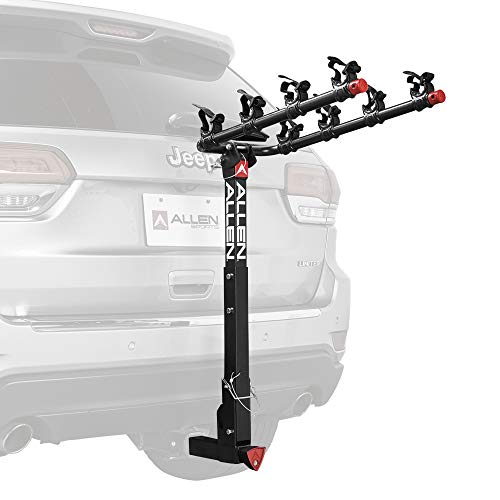
Allen Sports Deluxe 4-Bike Hitch Carrier (Model 542QR)

Quick Products QPERBAB RV Bumper Adapter (2″ Receiver)

Allen Sports Deluxe+ 2-Bike Hitch Carrier (Model 820QR)

CyberRack E2 Hitch eBike Rack with Ramp
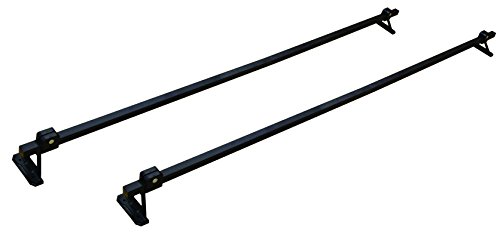
Swagman Roamer Cross Bars for Pop-Up Trailers

Stromberg Carlson BC202BA Platform 2-Bike Carrier

RoamEase Hitch 2 eBike Rack with Ramp

RoamEase Hitch E-Bike Rack with Ramp (170 lb)
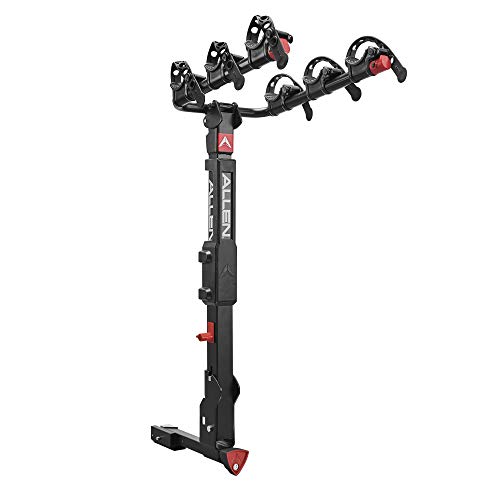
Allen Sports 3-Bike Hitch Rack
Why These Options Stand Out
The Allen Sports 542QR turns a standard 2-inch receiver into a four-bike hauler without forcing a roof-mount retrofit. For camper trips where the whole family rides, that means one rack carries every bike in the convoy, which simplifies the morning pack-up considerably. The quick-release cradle arms and individual tie-down straps keep each frame secured separately, so a loose fender or a wobbly handlebar on one bike won’t transfer its motion to the others.
Where this rack makes the most sense is on a travel trailer or motorhome already equipped with a 2-inch hitch receiver and four riders in tow. It’s notably heavier and longer than the two-bike Allen options, so smaller tow vehicles may feel the rear overhang on tight campsite turns.
Real-World Strengths
- Carries four bikes in a single mounted unit, so the whole family travels together
- Quick-release design speeds up setup when arrival and setup windows are short
- Individual tie-down cradles grip each frame separately, reducing bike-to-bike contact
- Locking system adds a layer of security at trailheads and overnight stops
- Fits standard 2-inch receivers common on RVs and larger tow vehicles
Worth Noting
- Bulkier than two-bike racks, which can make backing into fuel pumps trickier
- Not ideal for e-bikes or fat-tire bikes that exceed typical weight ranges
Right Fit For
Families of four with standard-frame bikes running a motorhome or travel trailer with a 2-inch receiver.
Look Elsewhere When
You ride heavy electric bikes, in which case the CyberRack E2 platform rack handles the weight and tire width far more comfortably.
Not every camper rolls out of the factory with a hitch receiver, and that’s exactly the gap this adapter fills. The Quick Products QPERBAB bolts onto a 4-inch by 4-inch RV bumper and creates a 2-inch receiver opening, essentially giving a bare-bumper camper the same mounting point a motorhome has. It’s a small piece of steel with an outsized effect on what the rig can carry.
It works best as a foundation piece: pair it with a hitch-mounted rack like the Allen Sports options later in this list, and suddenly a basic travel trailer can join the bike-hauling conversation. The 200 lb tongue weight rating is generous for a bumper-mounted adapter, though not intended for towing a separate vehicle.
A Strong Showing
- Unlocks hitch-mount accessories on trailers that never had a receiver from the factory
- 200 lb tongue weight capacity handles most two- and three-bike racks comfortably
- Bolt-on installation avoids the need for permanent welding or fabrication
Points To Keep In Mind
- Requires a 4-inch by 4-inch square bumper, which excludes many Class B vans and aluminum-bodied campers
- Not rated for towing duties, only for cargo and bike rack mounting
- Adds step-in reach height at the rear of the trailer, which can be awkward when loading cargo totes
Best Suited To
Travel trailer owners with a bare square bumper who want to add a hitch rack or cargo basket without replacing the rear end.
Consider Something Else When
You drive a pop-up tent trailer with a softer roof structure, where the Swagman Roamer cross bars are the smarter solution.
For couples towing a camper with smaller sedans or crossovers, the Allen Sports 820QR solves a specific problem: it fits both 1¼-inch and 2-inch hitches, which most compact cars and crossovers actually have. The quick-set carry arms snap into place and fold down when the rack is off the vehicle, so the unit stows flat in a camper’s basement without eating the entire storage bay.
Where it shines is a two-rider setup with standard road, hybrid, or mountain bikes on a vehicle that doesn’t have the towing capacity for a heavier 4-bike platform. The internal tilt-away release also helps when the rear hatch or tailgate still needs access, a common issue on SUVs pulling small trailers.
Strengths Worth Knowing
- Compatible with both 1¼-inch and 2-inch receivers, expanding the vehicle pool
- Patented tie-down cradles protect frames with individual straps, reducing scratches
- Tilt-away release allows tailgate access without removing the bikes
- Lightweight steel construction is easier to install and remove than four-bike options
Honest Caveats
- Two-bike capacity only, so growing families will outgrow it
- Frame-hanging design requires crossbar-style top tubes, or a separate bar adapter for step-through or full-suspension frames
Who It Suits Best
Two-rider households with standard-frame bikes driving a compact car, crossover, or small SUV with a 1¼-inch or 2-inch hitch.
Not Your Match When
The household includes kids’ bikes plus adult bikes, in which case the four-bike Allen Sports 542QR saves a second trip to the trailhead.
Standard hanging racks meet their match the moment a 60-pound electric bike shows up. The CyberRack E2 is a platform-style carrier with a 200 lb total capacity, a fold-out loading ramp, and a wheel-cradle design that grips tires up to 5 inches wide. For campers running Class A motorhomes or large SUVs to a national park, that means loading a heavy e-bike becomes a one-person push up the ramp rather than a two-person lift.
The fold-up platform keeps the rack’s footprint tight at the campsite, which matters more than it sounds when the rig is parked inches from a neighbor’s picnic table. Compared to the Allen hanging racks above, the trade-off is weight and price for raw carrying strength and tire compatibility.
What Pays Off
- 200 lb capacity comfortably handles two e-bikes at 100 lb each, with margin for accessories
- Fits up to 5-inch fat tires and 50-inch wheelbases, covering most e-bike and fat-tire configurations
- Folding platform reduces rear-end clearance needs when parked at tight fuel stations
- Ramp loading spares the back on heavy e-bikes that weigh more than typical riders can lift
Trade-Offs
- Heavier than hanging racks, so removal and reinstallation take more effort
- 2-inch receiver only, no compatibility with 1¼-inch hitches
Quick Facts
Made For
E-bike owners with fat-tire or high-capacity electric bikes who need ramp-assisted loading on a Class A motorhome or large tow vehicle.
A Better Fit Elsewhere
You only ride standard non-electric bikes, in which case the Allen Sports 820QR saves significant weight and clearance space.
Pop-up tent trailers are a different beast from bumper-pull travel trailers, and the Swagman Roamer cross bars are built with that difference in mind. The square steel crossbars mount permanently to the roof of a pop-up, truck canopy, or tonneau cover, then accept most clamp-on bike, kayak, and cargo carriers. The bars are cuttable to fit the specific roof width, which is a thoughtful touch for older trailers with non-standard dimensions.
For campers who already carry kayaks or rooftop gear, the same crossbars double as a multi-sport base, so the bike rack investment is shared with the rest of the outdoor kit. Where it loses points is the commitment: this is a permanent modification, not a removable rack, and the roof load adds wind drag on long highway drives.
Positive Takeaways
- Cuttable crossbars fit older pop-up trailers that don’t match current industry sizing
- Accepts a wide range of clamp-on accessories for bikes, kayaks, and cargo boxes
- Multi-sport versatility means one roof system handles the whole outdoor kit
- Permanent mount frees up hitch and bumper space for other gear
Soft Spots
- Requires permanent installation, which not every renter or seasonal camper wants to commit to
- Adds roof height, which can complicate low-clearance storage buildings and covered campsites
Who Should Grab It
Pop-up tent trailer owners with a permanent campsite routine and multiple outdoor sports to haul.
Reach For A Different Pick When
You travel between campgrounds frequently and need a removable rack, in which case the Stromberg Carlson platform carrier keeps the rear hitch doing the work.
The Stromberg Carlson BC202BA is the most flexible hitch option in this roundup because it ships with both 2-inch hitch and 4-inch/4.5-inch square bumper adapters. That dual compatibility is unusual in this category, where most carriers are locked to one receiver size. The alloy steel frame supports up to 80 lb of bike weight, which lands in the middle of the spectrum: heavier than hanging racks, lighter than the dedicated e-bike platforms.
It works equally well on a travel trailer’s rear bumper, a Class C motorhome’s factory hitch, or a tow vehicle, so the same rack can move between rigs. The platform design cradles wheels rather than hanging frames, which means fewer scuff marks on carbon or matte finishes.
Notable Upsides
- Includes both 2-inch hitch and square bumper adapters for cross-rig flexibility
- Alloy steel frame resists corrosion in wet and coastal camping environments
- Platform cradles hold wheels rather than frames, protecting paint and finish
- 80 lb capacity handles most standard e-bikes and heavier mountain bikes
A Few Limitations
- Two-bike capacity only, no option to expand
- Lower weight rating than the dedicated e-bike racks like the CyberRack E2
The Right Fit
RV owners with a mix of trailer and motorhome setups who want one rack that adapts to different receiver sizes.
Skip It When
You run two heavy e-bikes over 80 lb combined, which the RoamEase 170 lb platform rack absorbs more easily.
The RoamEase Hitch 2 carries two e-bikes at up to 170 lb total, with a built-in ramp and a fold-flat platform that collapses against the rear of the vehicle. For campers with tight storage covers or seasonal sites where the rig stays hitched for weeks, that folding action means the rack isn’t a parking-lot liability when the bikes come off.
The dual-layer anti-theft system pairs a hitch pin lock with a locking arm, which adds a real layer of security at trailheads and overnight stops. Compared to the CyberRack E2’s higher 200 lb capacity, this one’s trade-off is weight rating in exchange for a more compact folded footprint.
Real Benefits
- Folding platform reduces the rack’s parked footprint when bikes are off
- Ramp-assisted loading protects the back and frame from repeated heavy lifts
- Locking hitch pin and arm system secures both the rack and the bikes
- Accepts up to 5-inch fat tires, covering most e-bike tire profiles
Where It May Fall Short
- 170 lb capacity runs lighter than the CyberRack E2, so two heavy e-bikes near the upper range may strain the structure
Perfect Match For
Campers who leave the rig parked for long stretches and need a fold-flat rack that doesn’t block rear access or stick out into the campsite.
Another Choice May Suit
You regularly haul two heavier e-bikes close to 100 lb each, where the CyberRack E2’s 200 lb rating provides a more comfortable margin.
The sibling RoamEase rack shares the 170 lb capacity, ramp loading, and 5-inch fat-tire fit, but tunes the structure for a slightly different rider profile. It’s described explicitly for families and road trip use, with a reinforced frame that aims to keep the platform stable over long highway miles. For two-rider e-bike households that drive longer distances between campgrounds, the design intent lines up with the use case.
Compared to the RoamEase Hitch 2, the difference is mostly in the framing language and the intended use cases rather than headline specs. If the previous RoamEase rack appealed to you for storage-tight RVs, this one leans toward highway-stable long-haul towing.
Bright Spots
- 170 lb capacity covers two e-bikes in the typical commuter and trail weight range
- Guide ramp simplifies loading for riders who solo-camp without a spotter
- Reinforced structure aims to limit sway on long highway pulls
- 2-inch receiver compatibility fits most trucks, SUVs, and Class A motorhomes
Less Ideal Details
- Specs overlap heavily with the other RoamEase model, which can complicate the choice between them
- Two-bike only, with no easy path to add a third without a separate rack
Built With In Mind
Two-rider e-bike households taking long highway trips between campgrounds and wanting a stable, ramp-loaded platform.
Swap It Out When
You camp in tight storage areas where the folding footprint matters more than highway stability, where the RoamEase Hitch 2 model takes priority.
The Allen Sports 3-bike rack slots into the middle of the brand’s hitch lineup, sized for households that need one more spot than the two-bike model without committing to the four-bike footprint. Like the 820QR, it accepts both 1¼-inch and 2-inch hitches, which keeps the door open for smaller tow vehicles and crossovers that don’t have a Class III hitch.
It’s the natural pick for parents with two kids’ bikes plus an adult bike, or for two adults and a guest rider on a long weekend. The trade-off compared to the 4-bike Allen model is shorter overall length, which makes backing into fuel pumps and tight storage areas noticeably easier.
Advantages To Know
- Three-bike capacity fits the most common family configuration without oversizing
- 1¼-inch and 2-inch hitch compatibility suits compact and mid-size tow vehicles
- Shorter overall length than the 4-bike model for easier maneuvering
Where It Is Less Suited
- Frame-hanging design still needs a top tube crossbar for some step-through and full-suspension frames
- Not designed for e-bikes, which exceed the per-bike weight limit
Whose Shelf It Belongs On
Small families with three standard-frame bikes driving a crossover, minivan, or compact SUV with a 1¼-inch or 2-inch hitch.
Where A Sibling Pick Shines
You regularly carry four riders at once, in which case the Allen Sports 4-Bike Hitch Carrier (Model 542QR) handles the larger load without requiring a second rack.
Matching Bicycle Carriers To Your Camper Setup
The right carrier depends less on the brand and more on the rig and the riding setup. Hitch-mounted racks are the most common route, and the “hitch” itself is the receiver tube welded to the vehicle frame that the rack slides into and locks down. Standard sizes are 1¼-inch and 2-inch, and matching the rack to the receiver is the first gate. Smaller crossovers usually ship with 1¼-inch hitches, while trucks, SUVs, and most RVs have 2-inch receivers.
Hanging racks, like the Allen Sports options, grip the bike by the frame and work well for standard road, hybrid, and mountain bikes under roughly 35 lb per bike. Platform racks, like the CyberRack E2 and RoamEase models, cradle the wheels and handle heavier loads, including e-bikes and fat-tire builds. Bumper-mounted adapters, like the Quick Products QPERBAB, fill the gap when the trailer or RV has a square steel bumper but no receiver. Roof crossbars, like the Swagman Roamer, work best on pop-up tent trailers where the roof structure can support the load and the bikes can ride above the cab.
E-bike owners need to pay closest attention to weight ratings. A 60 lb electric bike on a 35 lb-rated hanging rack is a structural problem waiting to happen, and most e-bike-specific racks include ramps specifically because lifting that weight over a tire cradle is awkward and risky. Fat-tire compatibility (tires wider than roughly 3 inches) is a separate gate, and not every rack clears 4- or 5-inch tires without an adapter.
For pop-up tent trailers and truck campers, the roof line often rules out long hanging racks because the bikes would block the pop-up roof or canopy. Crossbar systems or rear-mounted platforms usually win in those setups. Class A motorhomes and Class C motorhomes typically have 2-inch receivers already, and the same racks that work on a tow vehicle usually work on the coach.
Key Considerations Across These Picks
Where Shoppers Go Wrong
The most common error is buying a rack based on bike count without checking the per-bike weight. A two-bike rack rated for 70 lb total is a frustrating purchase when each electric bike weighs 55 lb. Closely related is the receiver size mismatch: a 2-inch rack on a 1¼-inch receiver won’t seat, and an adapter doesn’t magically upgrade the load rating. Skipping the ramp is another shortcut that hurts over time, since lifting a 60 lb e-bike up onto a wheel cradle is harder than it looks in the parking lot.
Where The Extra Money Goes
The premium tier in this category pays for three things: higher per-bike weight ratings, ramp loading systems, and folding platforms that survive tight storage. The CyberRack E2 and RoamEase racks sit in that tier for good reason. They handle the bikes that ruin cheaper racks, and they save backs at every campsite. For households with standard non-electric bikes on a smaller tow vehicle, the Allen Sports hanging racks and the Quick Products adapter cover the use case at a noticeably lower entry cost, and the upgrade is only worth chasing when the bikes themselves justify it.
Frequently Asked Questions
What hitch size do most campers and RVs use?
Most Class A and Class C motorhomes use 2-inch receivers, while travel trailers commonly use 2-inch or 4-inch by 4-inch square bumpers that need an adapter.
Can a hanging bike rack carry an electric bike?
Hanging racks generally cap out around 35 lb per bike, so most e-bikes require a platform rack rated for the higher weight, like the CyberRack E2 or RoamEase models.
Do I need a ramp for a platform rack?
A ramp is highly recommended for any rack carrying e-bikes, since lifting a 60+ lb electric bike over a wheel cradle without one risks damage to the bike and the back.
Will a bike rack block the camper’s rear access?
Hanging racks with tilt-away releases preserve some tailgate access, but platform racks generally block the hatch unless they fold up vertically when parked.
Are roof crossbars better than hitch racks for pop-up campers?
Roof crossbars often work better for pop-ups because the bikes ride above the cab and don’t interfere with the pop-up roof or rear bumper access, which is the core pitch of the Swagman Roamer system.
The Takeaway
Matching a bike carrier to a camper comes down to three honest questions: what receiver or bumper does the rig have, how heavy are the bikes, and where will the rig be parked between rides. Work through those gates first, and the right rack usually picks itself from this list. The Allen Sports hanging racks and Quick Products adapter cover standard-frame setups on a budget, while the CyberRack E2 and RoamEase platforms step in when e-bikes and fat tires enter the picture. The Swagman crossbars and Stromberg Carlson platform fill the niche cases for pop-ups and mixed rigs, where the typical hitch rack simply doesn’t fit the bill.