Bike travel is one of those things that sounds simple until you’re standing at the airport cargo counter, frame grease on your gloves, wondering if your machine will survive the conveyor belt. Airline baggage handlers are not gentle, and bikes are long, awkward, and expensive. A solid transport case cushions the blow, keeps components from working loose, and lets you roll into your destination ride-ready.
The picks below cover the full range of cycling styles: full-suspension mountain bikes, carbon road frames, triathlon rigs, folding commuters, and compact bikes that need their own fitted sleeve. Some shells are rigid, some are soft, and one is a small cage-mounted tube for the parts that tend to vanish inside a larger bag. The right choice depends on your frame type, your tolerance for disassembly, and how often you fly with the bike.
The Leading Options At A Glance

tamthy Bicycle Travel Bag 1680D Waterproof 26 inch

VEVOR Road Bike Travel Bag with TSA Lock

SCICON Sports Aerocomfort 3.0 TSA Triathlon Bag

Rhinowalk Folding Bike Carry Bag 26 inch
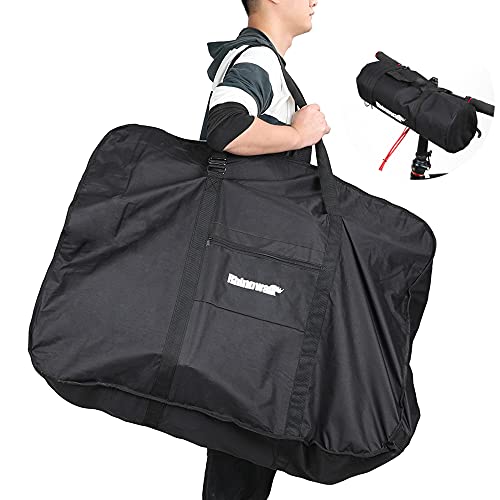
HUNTVP Bike Travel Bag 26 inch Folding Pouch

SETOXYX Folding Bike Bag 20-26 inch 840D

CamGo 20 Inch Folding Bike Bag Black

SUNELFFY 26 Inch Folding Bike Transport Case

Zefal Z-Box Bottle Cage Tube
Why These Options Stand Out
The tamthy bag targets riders packing 26-inch mountain or hybrid frames where bulk and weight matter more than featherlight portability. Its 1680D Oxford fabric shell is the thickest common spec you’ll see on soft-sided bike cases, and that density translates to real resistance against abrasion from conveyor belts and overstuffed cargo holds.
When you fold the bag flat inside a closet, it disappears into roughly the space of a camping chair. Inside the main compartment, you’ll need to drop the front wheel and unbolt the handlebar, which keeps the bag’s collapsed profile slim enough to handle without a second pair of hands.
Positive Takeaways
- 1680D Oxford outer shell resists scuffs and light rain during outdoor storage
- Generous 130 x 82 x 25 cm cavity swallows full-size 26-inch frames without bending
- Carry straps and handles distribute weight for short walks to check-in counters
- Folds into a small footprint for home storage between trips
- Budget-friendly entry point compared to hard-shell alternatives
Honest Caveats
- Soft-sided build offers less impact protection than a rigid case like the VEVOR below
- Removing the front wheel and handlebar is required, adding time at the airport
Who It Suits Best
Riders with 26-inch mountain or hybrid frames who want a soft, foldable bag at a modest cost and don’t mind a bit of disassembly.
Consider Something Else When
Triathlon riders should look at the SCICON Sports Aerocomfort 3.0 TSA Triathlon Bag, which keeps the handlebar and saddle in place for much faster airport transitions.
Where the tamthy above leans soft and foldable, the VEVOR case throws weight at the problem. Its rigid EVA shell (EVA is a foam-rubber material that flexes on impact rather than cracking like ABS plastic) wraps your 700C road or triathlon bike in a structured cocoon, while TSA-approved locks let security inspect the bag without forcing you to cut zip ties. A Travel Sentry lock is pre-screened by airport security, so agents have a master key and your bag arrives intact.
You’re still removing wheels, handlebar, pedals, and saddle, then stashing each piece in the included saddle cover, handlebar protectors, and chain protector. That ritual eats 20 to 30 minutes on either end of a trip, but the payoff is a frame that arrives without rub marks on the top tube.
A Few Strong Suits
- Rigid EVA shell absorbs impacts better than fabric-only bags
- TSA-approved padlock streamlines security checks
- Dual zipper layout opens flat for easier packing and inspection
- Includes frame and component protectors for chainstay and fork coverage
Trade Offs
- Bulkier than soft bags when stored at home
- 700C-specific fit may not suit 26-inch mountain or folding frames
- Heavier to haul through terminals than a fabric alternative
Feature Snapshot
Made For
Carbon or aluminum road bike owners who fly several times a year and want structured frame protection plus painless security screening.
Where Another Pick Suits Better
Travelers with smaller folding bikes will find the CamGo 20 Inch Folding Bike Bag Black a tighter, lighter fit for their frame size.
The Aerocomfort 3.0 takes a different design path than the VEVOR: instead of a hard box, it uses a triple-layer padded fabric mounted to a stand system. The bike stays on its own kickstand inside the bag, secured with straps, which means you leave the handlebar, saddle, and seatpost where they belong. For triathletes timing their transitions, that convenience is worth the premium.
Eight wheels arranged in twin clusters swivel 360 degrees, so you can steer the loaded case through a terminal the way you’d push a heavy suitcase. The TSA-approved padlock keeps inspections clean, and the case fits tri bikes, TT rigs, and most road frames within its 132 x 97 x 50 cm envelope.
Everyday Perks
- No handlebar or saddle removal cuts packing time substantially
- Twin-wheel system makes the loaded case easier to maneuver
- Compatible with both disc and rim brake setups
- Tear-resistant, triple-layer padded fabric for repeated trips
Factors To Consider
- 11 kg empty weight is substantial on a long walk to the gate
- Premium positioning puts it at the higher end of soft-case pricing
- Large external dimensions may exceed some airline oversize allowances
Quick Facts
Whose Shelf It Belongs On
Triathletes and time-trial riders who value packing speed and minimal bike disassembly above all else.
Skip It When
Riders on a tighter budget will get similar folding-bike protection from the Rhinowalk Folding Bike Carry Bag 26 inch at a fraction of the cost.
The Rhinowalk is the bag you toss over your shoulder at the airport without thinking twice. At 1.75 kg empty, it’s lighter than most laptop backpacks, and it folds into a small stuff sack that clips onto your handlebar or pannier once you’ve handed the bike over to the cargo crew. For commuters on a folding bike, that portability is the whole point.
Inside the 51.2 x 32.3 x 9.8 inch shell, you wrap the frame and wheels in the wear-resistant polyester outer, cinch the straps, and shoulder-strap your way to the terminal. It’s not a rigid fortress, but for train rides and short-haul flights, it handles the bumps well enough.
Positive Points
- 1.75 kg empty weight is the lightest on this list
- Stuff-sack storage makes it easy to stash at your destination
- Shoulder strap option keeps your hands free for tickets and passports
- Affordable compared to rigid-shelled alternatives
Practical Considerations
- Soft-sided build offers limited protection against heavy impacts
- 26-inch folding-bike fit won’t suit full-size road or mountain frames
- No TSA lock included for airline screening
Who Should Grab It
Folding-bike commuters and weekend travelers who want a featherweight, packable bag for short flights and rail journeys.
Not Your Match When
Riders carrying a 700C road bike with carbon components need the rigid shell of the VEVOR Road Bike Travel Bag with TSA Lock instead.
HUNTVP keeps the design simple: 600D oxford cloth, 300g non-woven padding, and a zipper closure. At 4.18 pounds empty, the bag sits in the middle of the weight range, lighter than the VEVOR but heftier than the Rhinowalk. The 38.5 x 31.5 x 15.7 inch main compartment targets 26-inch folding bikes, which gives you a comfortable fit without forcing the fabric to stretch.
Shoulder straps do the carrying, and the whole bag folds into a compact storage pouch when you’re back home. For riders who fly once or twice a year, it’s a sensible balance of price and protection.
Notable Upsides
- Lower price than most rigid or premium soft cases
- Reinforced stitching at stress points improves longevity
- Included storage pouch keeps the bag tidy at home
Where It May Fall Short
- 600D shell is thinner than the 1680D tamthy and 840D SETOXYX options
- No TSA lock or rigid inserts for high-impact protection
Right Fit For
Occasional travelers with 26-inch folding bikes who want a simple, low-cost bag without extra features.
Look Elsewhere When
Riders who want heavier fabric and a PU waterproof coating should step up to the SETOXYX Folding Bike Bag 20-26 inch 840D.
The SETOXYX is the bag to consider when your travel calendar is busier than your wallet wants. Its 840D high-density oxford fabric with a PU coating (a thin polyurethane layer that sheds water and UV) shrugs off rain, dust, and the occasional bird dropping on the tarmac, and the double-stitched seams hold up to repeated stuffing and unstuffing across dozens of trips.
Three hook-and-loop straps inside the main compartment anchor the frame so it stops sliding around in transit. The 39 x 12 x 27 inch cavity covers 20- to 26-inch folding bikes, which puts it in the same family as the HUNTVP but with tougher fabric.
Where It Delivers
- 840D shell is denser and more weather-resistant than entry-level bags
- PU coating adds real waterproofing for outdoor storage between flights
- Three internal hook-and-loop straps keep the frame from shifting
- Double-stitched seams reduce blowout risk over time
Some Limits To Know
- Soft-sided protection won’t match a rigid case for major impacts
- Larger folded size than ultra-lightweight options like the Rhinowalk
Best Suited To
Frequent flyers with mid-size folding bikes who log trips monthly and want a fabric bag that ages well.
A Better Fit Elsewhere
For absolute minimum packed weight, the Rhinowalk Folding Bike Carry Bag 26 inch beats the SETOXYX by a wide margin.
The CamGo is sized for the smallest end of the folding-bike market, fitting 14-inch to most 20-inch wheels in a 31.5 x 11.8 x 25.6 inch shell. High-intensity nylon (a tough synthetic weave that resists tearing better than standard polyester) keeps the weight down, and the waterproof coating handles rain on the way to the platform.
If your folding bike is a Brompton, Dahon, or similar compact commuter, this bag is purpose-built for that frame size. Larger 26-inch folders will sit too loosely inside, and a road bike simply won’t fit.
What Pays Off
- Tight 20-inch fit eliminates frame movement during transit
- Lightweight nylon shell keeps overall bag weight low
- Waterproof finish protects against rain and splashes
- Strong webbing handles support the loaded bag on short walks
Honest Caveats
- 20-inch size won’t accommodate larger folders or full-size frames
- Soft shell means limited protection from rough baggage handling
Perfect Match For
Compact folding bike owners with 14- to 20-inch wheels who want a snug, lightweight travel sleeve.
Reach For A Different Pick When
Anyone with a 26-inch folder should pick up the SUNELFFY 26 Inch Folding Bike Transport Case, which fits that larger frame properly.
SUNELFFY keeps the recipe familiar: 600D oxford cloth, 300g non-woven padding, a main compartment for the frame, and a front pocket for pedals, tools, and the small parts that always get lost otherwise. The padded web handle makes the loaded case easier to grip, and adjustable straps let you shorten or lengthen the carry setup to your height.
Where it sets itself apart is the storage bag, which compresses the empty case into a flat pouch that slides under a bed or hangs from a hook. For apartment dwellers without a garage, that stow-away feature matters more than the spec sheet suggests.
What Works In Its Favor
- Front accessory pocket keeps pedals and tools in one place
- Compression storage bag fits in small apartments
- Adjustable carry straps suit different rider heights
- Fits 26-inch folders and anything smaller without forcing
Possible Compromises
- Same 600D fabric tier as the HUNTVP, so impact protection is comparable
- No rigid inserts or TSA lock for airline-level security
Who Will Love This
Folding bike commuters who split travel between trains and short flights and want a tidy, well-organized bag.
Where A Sibling Pick Shines
For noticeably tougher fabric, the SETOXYX Folding Bike Bag 20-26 inch 840D is the better buy in roughly the same size class.
The Z-Box is a different animal from the rest of this list. Instead of a full bike case, it’s a tube-shaped polypropylene container (a rigid, food-grade plastic) that drops into a standard water bottle cage. You load it with small parts: tubeless valve adapters, spare bolts, a mini-tool, the skewer and quick-release pieces that always seem to vanish in a soft bag.
It mounts just like a water bottle, so it travels with the bike on the frame rather than rattling loose inside the case. For anyone who’s ever unpacked a travel bag to find three of four skewers accounted for, that little tube pays for itself in sanity alone.
Strong Points
- Polypropylene construction resists cracking during rough handling
- Standard bottle cage fit means no extra mounts required
- Waterproof seal keeps small parts dry in wet conditions
- Compact design doesn’t add noticeable weight to the rig
Points To Note
- Not a bike case on its own; pairs with one of the larger bags above
- Small capacity limits what you can stash inside
Built With In Mind
Riders who want a tidy, frame-mounted home for the small parts that usually disappear during a flight.
Swap It Out When
Anyone needing full-bike protection should start with the VEVOR Road Bike Travel Bag with TSA Lock, which actually shields the frame.
Choosing The Right Bike Travel Setup for Air Trips
Picking the right bike transport bag comes down to matching the case to your frame and your tolerance for breakdown time. Hard-shell cases like the VEVOR lead the pack for road and triathlon frames because the rigid EVA absorbs the heavy impacts that soft bags shrug off. Soft-sided bags, on the other hand, win on weight and packability, which matters for folding-bike commuters hopping regional flights.
Frame Size And Bike Type
The first filter is simple: does the bag physically accept your bike? Road and triathlon frames need a 700C-rated case with internal space for the handlebar, fork, and wheels once removed. Folding bikes need a snug 14- to 26-inch sleeve. Trying to squeeze a full-size mountain bike into a folder-sized bag stresses the seams, and stuffing a folding bike into a road case wastes space you could use for padding.
Disassembly Time And Tools
Some travelers relish a 30-minute pre-flight bike breakdown, while others want to roll up to the counter with the frame intact. The SCICON Aerocomfort skips most of that disassembly by strapping the bike to its internal stand, which appeals to triathletes timing their transitions to the minute. Budget soft bags demand more hands-on work but cost less and weigh less to carry.
Protection Level
Impact protection scales with shell rigidity, fabric density, and internal padding. D-rating numbers like 600D, 840D, and 1680D measure fiber thickness; higher numbers generally mean tougher fabric, though stitching and coating matter just as much. PU coatings add weather resistance, and rigid inserts or foam frames absorb shocks that pure fabric cannot. Frequent flyers, especially those checking bikes as oversized cargo, gain a lot from the extra protection.
Portability And Storage
Once the trip ends, the empty bag has to live somewhere. Soft-sided cases fold into included pouches that hang from a hook or slide under a bed, which suits apartment living. Hard cases take up floor space but often come with rolling wheels that ease the airport walk. Weight matters when you carry the loaded case up stairs or across long terminal corridors.
Key Takeaways Across This Lineup
Common Buying Mistakes
Measure your frame with the handlebar still attached before ordering, then check the bag’s internal dimensions. Skipping that step is how riders end up with a case that fits a 56 cm frame but not a 62 cm one. Another common slip is buying a rigid hard case for a folding bike and realizing the bike barely fills half the interior, leaving room for the frame to bounce around. Match the bag class to the bike class, and your unboxing at the destination goes a lot smoother.
Where The Extra Money Goes
Premium cases earn their price with rigid shells, TSA-approved locks, integrated wheel systems, and minimal-disassembly designs. For triathletes, that translates to faster airport transitions and a frame that arrives in race-ready condition. For weekend travelers on folding bikes, the upgrade math rarely works out, and a budget bag handles the job just fine. The honest read is that the premium tier pays off when you fly often and value time; it makes less sense for a once-a-year trip.