Long trail days punish knees, and uneven terrain punishes balance. The right pair of budget trekking poles can ease joint strain on steep descents, add a point of contact on muddy ground, and shave weight from your pack without emptying your wallet. This lineup breaks down nine affordable options across aluminum and carbon builds so you can match your terrain, your height, and your typical mileage to the right fit.
A Closer Look At The Lineup
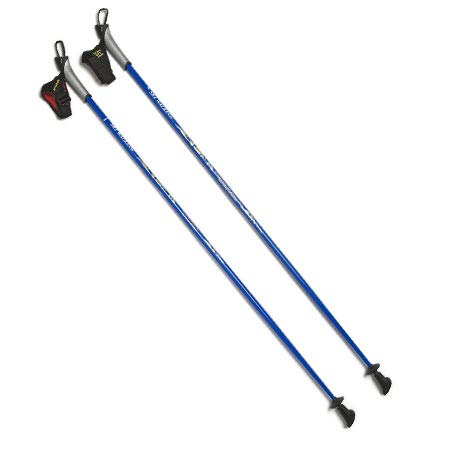
Nordic Walking Poles Custom Fit by American Nordic Walking System

Foxelli Trekking Poles Aluminum with Cork Grips

Hiker Hunger Carbon Fiber Trekking Poles with Cork Grips

LEKI Makalu FX Carbon Trekking Poles

TRAILWORX 3K Carbon Fiber Hiking & Trekking Poles

Foxelli Carbon Fiber Trekking Poles with Cork Grips

X Carbon Stick MX-4 X Carbon Tech Trekking Poles

LEKI Ultratrail FX.One Trekking Poles

TrailBuddy Trekking Poles 7075 Aluminum
A Closer Look At Each Pick
The opening pick comes from American Nordic Walking System, and it takes a different path from nearly every other option here. Rather than a telescoping three-section shaft, you order a fixed-length pole matched to your barefoot measurement, drawn from 32 possible sizes. That sidesteps the wobble that some adjustable aluminum poles develop at the joints after months of use.
The build draws on real ski pole manufacturing, using SWIX and EXEL shafts rather than generic twist-lock assemblies, and ships with carbide metal tips for trail use plus removable rubber tips for pavement. For hikers balancing fitness walking, rehab, or Nordic gait training in mixed urban and trail environments, the precise fit changes how the poles feel under load.
Points In Its Favor
- 32 length options let you match your barefoot height to a near-custom fit, improving wrist and elbow alignment on long walks.
- Ski-factory construction offers rigidity that generic twist-lock poles struggle to match.
- Interchangeable carbide and rubber tips cover pavement, gym floors, snow, and trail in one setup.
- Proper Nordic straps transfer force through the back of the hand, which matters for anyone using poles for gait training.
Trade-Offs Worth Weighing
- Non-collapsible design means full-length transport, so storage in overhead bins or rental cars takes planning.
- Fixed-length ordering removes the ability to share between hikers of different heights.
Quick Facts
Made For
Walkers who treat trekking as a regular fitness practice or rehab routine and want a pole dialed to their exact height.
Consider Something Else When
Thru-hikers counting every cubic inch in their pack should look at TRAILWORX 3K Carbon Fiber Hiking & Trekking Poles, which collapse much smaller.
Foxelli’s aluminum pair is a sensible starting point if you are new to poles and want to learn how they change your stride without committing to carbon. The aircraft-grade aluminum shaft extends from about 24 inches to 54 inches via flip locks, so the same pair covers a wide range of heights in one household or hiking group.
Cork grips give the handles a warmer feel than plain foam in cold weather and absorb sweat during summer climbs. With a claimed weight around 9.4 ounces per pole and a collapsed length near 21 inches, the bundle slips easily into a daypack or carry-on. It is a straightforward, no-drama choice for weekend hikers.
Where It Excels
- Flip locks are quicker to adjust with cold hands than twist locks, useful at elevation when temperatures drop.
- Cork handles stay comfortable on long climbs and reduce sweat slippage in summer.
- Compact collapsed size makes the poles a natural pick for airline-friendly packing.
Honest Trade-offs
- Aluminum transmits more shock to wrists than carbon, something you may notice after long rocky descents.
- Flip locks require periodic checks to stay tight under heavy loading.
Quick Facts
Right Fit For
Casual day hikers and travelers who want a versatile, affordable aluminum setup with cork comfort.
Swap It Out When
Backpackers logging long days on rough terrain will appreciate the lighter carbon feel of Hiker Hunger Carbon Fiber Trekking Poles with Cork Grips.
Hiker Hunger Outfitters brings a full 3K carbon weave to a price tier normally dominated by aluminum. At roughly 7.6 ounces per pole, the swing weight drops noticeably compared to the Foxelli aluminum pair reviewed earlier, which means faster cadence and less fatigue on rolling backcountry terrain.
The handle pairs natural cork with EVA foam extensions, giving you a soft landing zone for short steep pitches where you choke down on the shaft. Flip locks keep length changes quick. For backpackers and weekend hikers who want the carbon experience without moving into premium pricing, this is a sensible middle path.
Everyday Advantages
- Carbon construction damps trail vibration, which your wrists and elbows feel on long descents.
- Cork top grip plus EVA lower extension handles both upright walking and steep switchbacks.
- Light swing weight keeps your shoulders fresh after 10+ mile days.
Points To Keep In Mind
- Carbon demands more careful handling than aluminum around rocks and logistics.
- Flip locks need an occasional check, especially after months of hard use.
Whose Shelf It Belongs On
Backpackers and distance hikers who want carbon comfort at a moderate price.
A Better Fit Elsewhere
Hikers prioritizing ultralight pack weight should consider TRAILWORX 3K Carbon Fiber Hiking & Trekking Poles for a slightly lower per-pole weight.
The LEKI Makalu FX sits at the upper end of the budget category, but its build quality earns the slot. PRC 1000 carbon (a high-modulus carbon variant LEKI uses across its serious backcountry line) brings claimed weight near 8.9 ounces per pole while staying rigid under load. For mountain hikers facing long, rocky days, that stiffness translates directly into less energy lost to pole wobble.
Compared to flip-lock options like the Hiker Hunger pair above, this model uses LEKI’s ELD folding system, which collapses into three short sections about 15.7 inches long, plus the Speed Lock 2 Plus external lever for length changes. The combination packs small and stays locked, which is exactly what you want when scrambling ridges.
The Good Stuff
- High-modulus carbon keeps the shaft stiff under heavy downhill braking force.
- External lever lock holds adjustment reliably in cold and wet conditions.
- Three-section fold packs cleanly into pack pockets and travel luggage.
Trade-Offs Worth Weighing
- Premium pricing pushes the upper limit of what counts as “budget” for many shoppers.
- Folding design has more hinge points to inspect than a simpler telescoping shaft.
Quick Facts
Who Should Grab It
Mountaineers and serious backpackers willing to spend more for stiffness, reliability, and packability.
Another Choice May Suit
Trail runners wanting even shorter folded sections should consider LEKI Ultratrack FX.One Trekking Poles, which collapse to roughly 14.5 inches.
Through-hikers and ultralight backpackers obsess over grams, and TRAILWORX is built for that crowd. Each pole lands near 7.7 ounces (about 218g), putting it among the lightest in the carbon family. The 3K carbon weave absorbs trail vibration rather than passing it straight to your elbows, which becomes noticeable on day three of a long route.
Where the LEKI Makalu above uses a folding design, TRAILWORX sticks with the telescoping layout for straightforward length changes. You give up a touch of folded compactness in exchange for fewer hinge points to worry about, which some hikers prefer on rugged trips.
The Case For It
- Among the lightest poles in this lineup, helping ultralight packs stay under target.
- 3K carbon weave filters shock, useful on multi-day routes with sustained impact.
- Telescoping layout has fewer folding joints to inspect before trips.
Where It May Fall Short
- Longer collapsed length than folding poles like the LEKI Makalu FX, which can matter in tight packs.
- Lightweight carbon requires extra care around sharp rocks and airline handling.
Best Suited To
Thru-hikers and ultralight backpackers counting every gram across multi-day routes.
Where A Sibling Pick Shines
Hikers who prefer the smallest possible packed size should look at LEKI Makalu FX Carbon Trekking Poles, which fold into shorter sections.
This Foxelli carbon pair sits in the same brand family as the aluminum set reviewed earlier but swaps the shaft material entirely. At roughly 7.6 ounces per pole, the carbon build drops meaningful weight for day hikes and travel, and the cork grips carry over from the aluminum version, so you get the same warm, moisture-managing feel in your hands.
Flip locks and an adjustable-height build keep the setup familiar for anyone who has used a telescoping pole before. For shoppers stepping into carbon for the first time without jumping to premium-tier pricing, this is a comfortable entry point that still pairs with most all-terrain accessory kits.
What Works In Its Favor
- Carbon weight near 7.6 oz per pole cuts swing fatigue on rolling terrain.
- Cork handles manage sweat and stay comfortable across seasons.
- Familiar flip-lock layout is approachable for first-time carbon shoppers.
Some Limits To Know
- Carbon shafts need more careful handling around rocks than aluminum alternatives.
- Flip locks want periodic tension checks, particularly on longer trips.
Perfect Match For
First-time carbon shoppers who want the lighter swing without premium pricing.
Skip It When
Hikers wanting the lightest pole on this list will find TRAILWORX 3K Carbon Fiber Hiking & Trekking Poles competitive in weight.
The MX-4 from X Carbon Stick leans on a patented X-shaped weaving pattern (the brand’s “X Carbon Tech”) to interlace the carbon strands in a configuration meant to push strength up without pushing weight along with it. The natural cork grip is the same warm, moisture-wicking material that hikers tend to prefer for full-day outings.
Quick-lock length adjustment keeps sizing simple, and the spec sheet targets the kind of weight-conscious hikers who already watch their pack numbers closely. Versus the LEKI Makalu reviewed earlier, this is a more design-forward option for shoppers who want carbon technology that reads differently on the spec page.
Everyday Wins
- X-pattern carbon weave aims for higher strength without adding weight.
- Cork grip handles sweat through long summer climbs.
- Quick-lock adjustment makes on-trail length changes straightforward.
Trade-Offs To Consider
- Less established brand history than LEKI or Foxelli in mainstream hiking circles.
- Carbon shafts still need more handling care than aluminum alternatives.
Who Will Love This
Weight-focused hikers curious about newer carbon weaving approaches at a non-premium tier.
Reach For A Different Pick When
Anyone wanting the most proven backcountry carbon pedigree should consider LEKI Makalu FX Carbon Trekking Poles.
The Ultratrack FX.One is the running-focused cousin of the Makalu FX reviewed earlier. At a claimed quarter-pound per pole, it is built to move with you rather than slow you down, and the foam Trail Trigger Shark grip is shaped for quick hand-off strides on race-pace efforts.
Unlike the Makalu’s three-section fold, this model pushes the collapsed length down to roughly 14.5-inch sections, which slips into running vests and smaller packs more cleanly. It carries the global-store sourcing note, so fit, labeling, and included accessories can differ from the US-market lineup.
Practical Pluses
- Compact 14.5-inch folded sections fit running packs and small hydration vests.
- Light claimed weight keeps pole swing from breaking your running cadence.
- Foam Shark grip handles sweat on warm-pace efforts.
Honest Caveats
- International sourcing means packaging, accessories, and warranty support can vary from US-market versions.
- Narrower use-case fit than a general trekking model like the TrailBuddy aluminum pair.
Who Should Grab It
Trail runners and fast-packers who want compact, race-friendly poles.
Where Another Pick Suits Better
Hikers covering varied terrain at a walking pace will get more versatility from the LEKI Makalu FX Carbon Trekking Poles.
TrailBuddy wraps the list with a 7075 aluminum build aimed squarely at new trekkers, including seniors and travelers who want balance support without a steep learning curve. 7075 aluminum is a common aerospace-grade alloy, tougher in bending than the cheaper 6000-series alloys sometimes used in entry poles, which is why many beginner-friendly sets lean on it.
Compared to the carbon models higher in the lineup, this pair is heavier per pole, but the trade is forgiveness. Aluminum tolerates the occasional scrape against rock or stroller handle without the brittleness concerns of carbon, which matters when you are still learning how you use poles day to day.
Noteworthy Benefits
- 7075 aluminum handles scrapes and drops better than carbon for first-time users.
- Collapsible layout fits luggage and shared household storage.
- Approachable setup makes it a reasonable pick for seniors and balance support use.
Where It Is Less Suited
- Heavier per pole than carbon options like TRAILWORX, which adds up on long days.
- Aluminum transmits more shock on rocky descents compared to carbon shafts.
Built With In Mind
First-time hikers, balance-conscious walkers, and seniors who want a forgiving starter pair.
Look Elsewhere When
Distance backpackers logging serious mileage will prefer the lighter carbon build of Hiker Hunger Carbon Fiber Trekking Poles with Cork Grips.
Factors That Matter When Choosing Budget Trekking Poles
Material And Weight Trade-Offs
Aluminum poles like the TrailBuddy 7075 pair and Foxelli aluminum set tolerate bumps and drops, which is reassuring for new trekkers. Carbon poles like the Hiker Hunger, Foxelli Carbon, TRAILWORX, LEKI Makalu FX, and X Carbon Stick MX-4 cut weight and damp trail vibration, but they cost more and need gentler handling around rocks and logistics. For weekend hikers staying under 10 miles a day, aluminum is often plenty. For multi-day trips or fast hikers, carbon’s weight savings add up.
Lock And Adjustment Style
Flip locks (used on the Foxelli aluminum, Hiker Hunger, and Foxelli Carbon poles) adjust quickly with gloves on but need occasional re-tensioning. Twist locks are lighter but slower in cold weather. External lever locks like LEKI’s Speed Lock 2 Plus hold firm under heavy braking force and rarely slip, which is one reason mountain-oriented poles lean toward them.
Packed Length And Travel Fit
Folding poles like the LEKI Makalu FX and LEKI Ultratrack FX.One collapse into three short sections around 14.5 to 15.7 inches, fitting running vests and overhead bins more easily. Telescoping poles like the TRAILWORX and TrailBuddy reach a longer minimum length but offer fewer hinge points to inspect. Frequent flyers and runners usually want folding. Thru-hikers prioritizing fewer parts often prefer telescoping.
Grip, Strap, And Tip Setup
Cork grips (found on the Foxelli aluminum, Hiker Hunger, Foxelli Carbon, and X Carbon Stick models) manage sweat and feel warmer in cool weather. Foam grips like the LEKI Ultratrack’s Shark shape shed water faster and suit fast efforts. Interchangeable carbide plus rubber tips, like the set shipped with the American Nordic Walking System poles, make one pole set work on pavement, gym floors, and trail. Match the tip and grip to your typical surface and climate.
Practical Notes Across This Lineup
Common Buying Slip Ups
Picking poles only by weight often leads shoppers to overlook grip material and strap design, both of which determine whether the poles stay comfortable after hour three. A 7.6-ounce carbon pole with a hard plastic grip can wear blisters faster than a heavier aluminum pole wrapped in cork. Similarly, ignoring collapsed length forces hikers with small daypacks to strap poles awkwardly to the outside, where they swing and bounce.
When Spending Up Earns Its Place
The jump to premium-tier poles like the LEKI Makalu FX mostly buys three things: stiffer shafts for technical descents, more reliable locking hardware, and shorter folded dimensions for travel. Casual hikers on gentle terrain rarely feel the difference. Mountain hikers, fast-packers, and frequent flyers usually do, and those are the profiles where the upgrade payoff shows up clearly.
Frequently Asked Questions
Are Budget Trekking Poles Durable Enough For Regular Hiking?
Most aluminum and carbon poles in this price range handle regular weekend hiking on maintained trails. Aluminum tolerates scrapes better; carbon saves weight and dampens vibration but wants more careful handling around sharp rocks.
How Do I Choose The Right Pole Length?
A common starting point is a pole that puts your elbow at roughly 90 degrees when the tip is on flat ground. Adjust from there based on terrain: shorter for uphill, longer for downhill. Fixed-length options like the American Nordic Walking System poles order to your barefoot height for a closer match.
Carbon Or Aluminum For A Beginner?
Aluminum is more forgiving for beginners because it tolerates bumps and costs less to replace. Carbon rewards hikers logging longer miles or fast efforts with lighter swing weight, but the brittleness trade-off matters if you are still learning how to handle poles.
Can Budget Poles Handle Mountain Terrain?
Mountain terrain puts more force through the pole, especially on long descents. Higher-tier options like the LEKI Makalu FX Carbon use stiffer shafts and firmer locks to hold up under that load. For casual mountain walking on maintained trails, most budget poles are workable.
Do I Need Special Tips For Different Terrain?
Rubber tips protect pavement and indoor floors from your pole’s carbide point and add quiet on hard surfaces. Carbide tips bite into trail, mud, snow, and ice for better traction. Sets that ship with both, like the American Nordic Walking System poles, let you swap tips as the surface changes.
The Takeaway
A budget trekking pole is really a match between material, lock style, and how you actually hike. Aluminum pairs reward beginners and casual walkers with forgiveness; carbon options reward backpackers, fast hikers, and mountain trekkers with lighter swing weight and less vibration. Pick the profile closest to yours and the rest of the choice tends to fall into place.