Rolling luggage has a way of changing how you move through airports, train platforms, and hotel corridors, but only when the bag itself is built for the way you actually travel. Today’s best rolling backpacks blend the hands-free ease of a pack with the glide of wheeled luggage, and the five below cover the most useful setups: a kid-sized suitcase, women’s travel backpacks, and compact underseaters built for commuters and short-haul flyers.
The Main Contenders

iPlay, iLearn Airplane Kids Luggage 18″ Carry On

LOVEVOOK 40L Travel Backpack for Women 17.3″
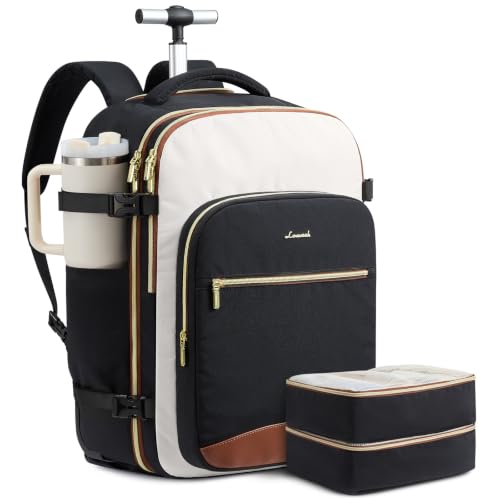
LOVEVOOK Rolling Backpack for Women 40L 15.6″
TIAWOLT Underseater Carry-On with Spinner Wheels
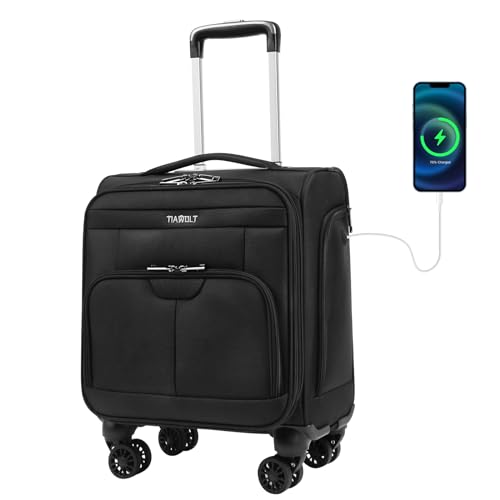
TIAWOLT 16″ Underseat Carry On Softside Black
A Deeper Look At The Lineup
This is the rolling backpack category’s smallest, most playful option, sized specifically for a child to manage on their own. Where the LOVEVOOK packs below are built for adult carry-on systems, this iPlay, iLearn set hands the reins to a young traveler with airplane graphics, a hard polycarbonate shell, and ABS reinforcement that takes the abuse of gate-check handling.
For parents flying with kids who want to give them real luggage responsibility, the size fits a weekend’s worth of clothing plus a few toys, and the multi-directional wheels save small arms from dragging dead weight across terminals. The trade-off is plain: this is a starter piece, not a long-haul companion, and older teens will outgrow both the scale and the themed exterior fast.
Useful Highlights
- Hard polycarbonate and ABS shell resists scratches and the inevitable scuffs of kid handling.
- Multi-directional wheels let a child pivot without adult help, useful in crowded gates.
- Backpack straps add a second carry option when stairs or cobblestone rule out rolling.
- Airplane-themed graphics make the bag easy to spot on a carousel.
Things To Consider
- Capacity tops out quickly for kids who pack their own tablet, books, and snacks.
- Decorative graphics fade or scratch off over years of hard use, owners commonly report.
Feature Snapshot
Right Fit For
Families introducing young kids to independent travel, ages roughly four to ten, on weekend visits to grandparents or short flights.
Consider Something Else When
An adult or teen needs serious carry-on space, in which case the LOVEVOOK Rolling Backpack for Women handles laptop-and-clothes loads far better.
The LOVEVOOK 40L is the carry-on profile for travelers who refuse to check a bag, with a 40L interior wrapped in an 18-by-14-by-8 personal-item silhouette. Unlike the kids’ set above, this is built for a working adult: a 17.3-inch laptop sleeve, separate compartments for shoes and toiletries, and a frame that stays upright on a hotel luggage rack.
You’ll appreciate the organization on a four-day conference trip where wrinkled clothes are a problem, since dedicated zones keep clean and worn items from mingling. The honest caveat: at 40L packed tight, the bag fills the personal-item slot on most airlines, and overhead-bin flyers will need to gate-check if they try to squeeze it in with a second bag.
What Earns Its Place
- Personal-item dimensions fit most major carriers’ under-seat rules without checking.
- 40L swallows a long weekend’s wardrobe plus a change of shoes.
- Dedicated laptop sleeve keeps work tech separated from softer clothing.
Trade Offs
- At full load, the bag can press against your back uncomfortably on long walks.
- Fabric zippers wear faster than hard-shell counterparts with rough handling, owners commonly report.
Who It Suits Best
Carry-on-only commuters, weekend road-trippers, and remote workers who fly with a laptop and want everything in one organized system.
Skip It When
You want wheels for terminal walking, since the LOVEVOOK Rolling Backpack adds that glide while keeping a similar capacity.
The 22-by-15-by-7-inch Rolling Backpack earns its place by offering three carry modes: roll it like a suitcase on the telescoping handle, wear it as a backpack through long concourses, or carry it briefcase-style. Compare that to the non-rolling LOVEVOOK above, and you trade a smaller laptop sleeve (15.6 vs 17.3) for actual wheels and a tuckaway wheel cover that keeps your clothes clean when you switch to backpack mode.
On a mixed-mode trip where you subway to the airport, roll through the terminal, then walk three blocks from the hotel Metro, the strap-switching matters. The luggage pass-through strap lets you piggyback on a larger checked bag, which frequent flyers appreciate.
Standout Benefits
- Wheel cover protects clothing from road grime during backpack carry.
- Three carry modes adapt to stairs, escalators, and smooth terminal floors alike.
- 22-by-15-by-7 fits standard overhead-bin dimensions on most carriers.
Possible Compromises
- More moving parts (wheels, telescoping handle, straps) means more potential wear points over years of use.
- Laptop sleeve tops out at 15.6 inches, smaller than the non-rolling LOVEVOOK option.
Made For
Travelers bouncing between trains, planes, and sidewalks who want one bag that pivots with each surface.
A Better Fit Elsewhere
For pure underseat use, the TIAWOLT Underseater Carry-On with Spinner Wheels stays out of the aisle better than any rolling backpack.
Spinner wheels (the four-wheel design that rotates 360 degrees) are the headline feature here, since you can push the bag ahead of you rather than drag it behind. At 14-by-17-by-9 inches and roughly 30 liters, this TIAWOLT underseater slips under most airline seats without an overhead-bin fight, and the TSA-friendly lock (a lock that security agents can open with a master key without damaging it) keeps agents from cutting zippers during inspection.
For overnight business trips where you land, grab your bag, and head straight to a meeting, the softside exterior flexes around crowded under-seat spaces that rigid cases can’t. Worth noting though: at 6 pounds empty, it carries its own weight on stairs, and the spinner wheels can drift on sloped terminal floors if the bag is top-heavy.
A Favorable Mix
- Spinner wheels glide in tight gate areas where drag-bag designs struggle.
- TSA-approved lock avoids zipper cuts during routine inspection.
- Softside shell absorbs impact better than hard polycarbonate for overhead-bin placement.
Some Limits To Know
- Spinner wheels lose traction on inclined jet bridges and rough pavement.
- 30L capacity caps out at about two nights of clothing.
Quick Facts
Best Suited To
Overnight business travelers, weekend visitors, and flyers who refuse to use overhead bins on regional jets.
Where Another Pick Suits Better
For a longer-haul journey where you want backpack carry options, the LOVEVOOK Rolling Backpack adapts more flexibly to mixed terrain.
This second TIAWOLT option trims one inch off the width (14-by-18-by-9) and arrives in black rather than purple, a deliberate match for pilots, flight crew, and corporate travelers who want luggage that blends into a uniform. The lightweight softside build matters on commuter flights where every pound in the cabin cuts into fuel calculations and pilot briefcase allowances.
You may find the slightly taller profile slips under seats on narrow-body jets better than wider spinner designs, though the trade-off shows up when you pack bulky items. For a clean professional look that pairs with rolling totes and garment bags, this earns its slot.
Good Reasons To Consider
- Black softside exterior hides scuffs that lighter colors show immediately.
- TSA-approved lock matches the other TIAWOLT for crew-friendly inspection.
- 6-pound empty weight keeps it under most airline crew baggage limits.
Worth Bearing In Mind
- Slightly taller profile can catch on deeper under-seat compartments.
- No backpack straps, so terminal stairs require lifting rather than carrying.
Spec Overview
Whose Shelf It Belongs On
Flight crew, pilots, and business travelers who want a quiet, uniform-friendly softside that meets underseat rules.
Reach For A Different Pick When
The TIAWOLT Underseater Carry-On in purple is a better match for flyers who want a pop of color and the same spinner-wheel glide.
What To Weigh Before Choosing A Rolling Backpack
The first call is wheels versus pure backpack carry. A rolling backpack with a tuckable harness handles stairs and escalators that pure spinner bags cannot, but adds moving parts that eventually wear. Travelers who never leave smooth floors prefer spinners; mixed-terrain commuters benefit from the convertible approach.
Capacity sits next. Personal-item backpacks in the 30-40L range fit most underseat rules, but a true 40L bag often pushes the personal-item envelope and risks gate-checking on strict carriers. Measure your typical load before committing, since a tighter pack behaves better on a luggage rack than a stuffed one.
The shell material changes ownership feel. Hard polycarbonate protects fragile contents but adds weight and limits overstuffing. Softside fabrics flex around crowded bins, accept expansion zippers, and tend to absorb rather than transmit impact. Crew and corporate travelers usually favor softside, while parents and younger flyers often prefer the hardshell resilience of polycarbonate blends.
Finally, lock compatibility matters more than it sounds. TSA-approved locks let security agents open your bag with a master key without cutting zippers, which saves both zipper life and replacement hassle on routine inspections.
Key Considerations Across These Picks
Pitfalls Shoppers Hit
Many travelers buy a rolling backpack based on capacity alone and miss the airline’s personal-item dimensions, then watch the bag get gate-checked anyway. Measure your most-used carrier’s underseat limits before clicking purchase, and verify the bag’s listed dimensions rather than trusting a “carry-on” label. A second common miss is ignoring wheel type: two-wheel “roller” designs only roll forward when upright, while four-wheel spinners glide in any direction, and the difference in tight jet bridges is huge.
Where The Extra Money Goes
Higher-tier rolling backpacks earn their cost through reinforced wheel housings, replaceable handles, and YKK-grade zippers (zippers from a Japanese manufacturer known for durability) that survive years of abuse. Where a budget bag may fray stitching at stress points after a dozen trips, premium builds distribute load across bar-tacked seams (seams reinforced with tight perpendicular stitches for strength). The upgrade makes sense for monthly flyers; for annual vacation use, mid-tier bags often deliver the same journey without the markup.
Frequently Asked Questions
Are rolling backpacks allowed as carry-on luggage?
Most major airlines accept them as carry-ons when dimensions fall within their published limits. Personal-item-sized rolling backpacks typically fit under seats, while larger convertible designs go in overhead bins.
How much can a carry-on rolling backpack hold?
Capacity ranges from about 30 liters for compact underseaters to 45 liters for larger convertible packs. Real-world packing depends on compression cubes and clothing bulk more than the listed volume.
Do spinner wheels break easily on rolling luggage?
Quality spinners last years of typical travel, but rough pavement and overloading shorten wheel life. Wheel housings made of reinforced polymer or metal outlast all-plastic budget designs.
Is a rolling backpack better than a traditional suitcase?
For travelers who mix walking, stairs, and smooth floors, a convertible rolling backpack offers more flexibility. For pure hotel-to-airport-to-hotel trips, a traditional suitcase with four spinners often rolls more smoothly.
Can a rolling backpack hold a laptop safely?
Yes, most travel-oriented rolling backpacks include padded laptop sleeves. Sleeve depth and padding vary, so verify your laptop’s dimensions against the sleeve spec before relying on it.
Wrap Up
The right rolling backpack depends on how you actually move through travel days. Young flyers get a confidence boost from the iPlay, iLearn hardshell, carry-on-only adults will appreciate the LOVEVOOK 40L’s laptop-ready organization, and mixed-mode travelers land on the rolling convertible. Overnight flyers who live in underseat spaces find their match in either TIAWOLT, with the color choice coming down to personal style rather than performance.