A bulging suitcase and a closet you can barely close tell the same story. Compression bags exist to shrink bulky jackets, quilts, and seasonal clothes into a manageable footprint, whether you are heading overseas or just trying to reclaim shelf space. The picks below split into two camps: vacuum bags that pull air out with a pump, and zippered packing cubes that physically compress fabric by tightening a strap. Both earn their place, and the right call depends on what you are stuffing inside and how often you travel.
How The Shortlist Stacks Up
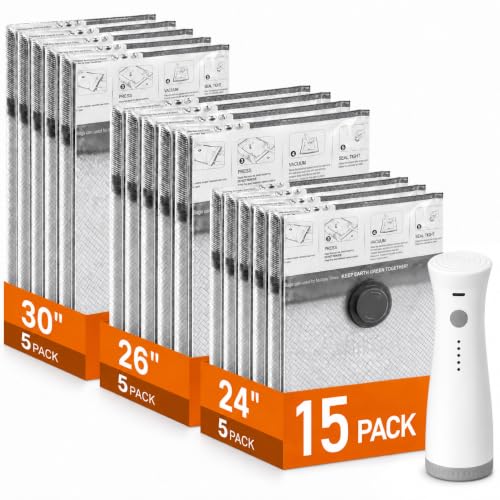
Nekal Vacuum Storage Bags with Pump, 15 Combo Size

Aerotrunk Compression Packing Cubes, 6-Pack, Beige

Aerotrunk Compression Packing Cubes, 6-Pack, Teal

Mapambo 15 Pack Vacuum Bags with Pump

Aerotrunk Compression Packing Cubes, 4-Pack, Teal

SNOCOD 18 Pack Vacuum Bags with Electric Pump

Fygrip Vacuum Storage Bags with Hand Pump, 20 Combo
Fygrip Vacuum Storage Bags with Hand Pump, 10 Small

Fygrip Vacuum Storage Bags with Hand Pump, 10 Large
Meet The Standout Selections
The Nekal kit targets travelers who do not want to wrestle a household vacuum in a hotel room. A USB-rechargeable cordless pump handles the suction, which means the only thing you need is a wall outlet or a power bank to top up between flights.
For someone who flies a few times a year and rents cars at the destination, the cordless convenience beats most electric alternatives that still want a plug. The combo of mixed bag sizes covers sweaters and a couple of bulkier pieces in a single carry-on, and the tear-resistant shell stands up to rough handling in overhead bins.
What Makes Sense
- Cordless pump recharges from any USB port, including a car charger
- 15 mixed-size bags handle most week-long trips
- Reusable design supports repeat trips across a single year
- Tear-resistant build tolerates sharp zippers and shoe buckles
Trade Offs
- Battery charge drops noticeably on multiple large bags back to back
- Hand-pump backup option is not included for emergencies
At A Glance
Whose Suitcase It Belongs On
Carry-on packers and road trippers who want one kit for repeat trips across a year.
Look Elsewhere When
Closet-focused organizers should look at the Fygrip 20 Combo with Hand Pump instead, since manual pumping works without any battery.
Unlike the vacuum kits above, the Aerotrunk cubes use a zip-around compression panel to squeeze clothing flat. You do not need a pump, which is the appeal: no batteries, no cords, no waiting for a charge before a red-eye flight.
The neutral beige hides lint and wear better than a bolder option, which matters for a cube you will pull out of a suitcase in a hotel hallway. For someone who flies monthly and wants reusable organization, the nylon twill build handles the wash cycle without falling apart.
Features That Help
- No pump required, so you never worry about battery failure mid-trip
- Mesh top lets you see what is inside each cube
- Nylon twill construction washes cleanly between trips
Honest Caveats
- Compression is gentler than a vacuum bag on a down comforter
- Beige shows dust on dark clothing edges
- Six cubes can crowd a small carry-on
Made For
Recurring travelers who prefer organization over maximum shrinkage and want cubes they can wash.
A Better Fit Elsewhere
Anyone compressing down jackets for a single long trip should consider the Nekal 15 Combo instead, since vacuum bags shrink bulkier layers far more dramatically.
The teal version of the Aerotrunk set trades the calm neutral palette for a color that pops against a black interior. For shared luggage situations, that color jump matters more than the spec sheet suggests.
Families and roommates packing into one suitcase can grab the right bag without unzipping every cube, which saves time at hotel check-in. Beyond the color, the build mirrors the beige sibling exactly, meaning you get the same mesh visibility and washable nylon.
A Favorable Mix
- Bold color speeds up bag sorting in shared luggage
- Same mesh top visibility as the beige set
- Machine-washable nylon holds up to repeat trips
Small Limitations
- Bright color fades faster than a neutral in hot dryer cycles
Right Fit For
Families and shared-luggage travelers who want quick visual sorting at airport baggage claim.
Reach For A Different Pick When
Solo travelers who prefer a low-key look should choose the Aerotrunk Beige 6-Pack instead, since the color difference is the main trade-off.
The Mapambo kit stands apart from the Nekal set by leaning into a wired USB pump rather than a built-in battery. The trade-off is meaningful: you give up cordless convenience in exchange for what the manufacturer describes as a much stronger suction force.
For a single long-haul move or a winter trip with three heavy parkas, that extra pull shrinks layers vacuum cubes cannot match. You will need a power source nearby, but hotel rooms and airport lounges have plenty of USB outlets.
What Works In Its Favor
- High-pull pump compresses down jackets and quilts aggressively
- 15-bag count covers a full international wardrobe
- USB pump means no battery to forget charged
Things To Consider
- Requires a powered USB port during use, not practical in transit
- Stronger pump creates more noise than smaller cordless units
Best Suited To
Long-haul travelers and relocators packing extreme cold-weather gear into a single checked bag.
Skip It When
Backpackers and hostel travelers without reliable outlets should choose the Nekal 15 Combo, which runs on its own internal battery.
The 4-pack version of the Aerotrunk teal cubes drops two cubes from the larger set. That sounds small, but for a three-day trip the difference between six cubes crammed into a carry-on and four neatly stacked is real.
For weekend warriors, the smaller set avoids the over-packing trap where empty bags take more room than the clothes themselves. The teal color and mesh top carry over from the 6-pack, so you still get the same organization logic.
A Strong Showing
- Smaller footprint suits a personal-item bag or carry-on
- Same color-coded sorting as the larger teal set
- Zip-around compression needs no charging or pumping
Points To Note
- Only four cubes may run short for a week-long family trip
Perfect Match For
Weekend travelers and solo carry-on packers who want one cube per clothing category without wasted space.
Another Choice May Suit
Longer trips with multiple outfit changes call for the Aerotrunk 6-Pack Teal instead, since you will need the extra cubes.
The SNOCOD kit is the most generous bundle in this roundup, with 18 bags split evenly across small, medium, and large. That mix is the quiet hero of the set: one purchase covers a dresser drawer rotation and a holiday trip without buying a second pack.
The Type-C charging port on the included pump matches the cable already on most modern phones, which means one fewer charger in your travel kit. For households rotating between closet and suitcase, this is a meaningful upgrade over single-use bags.
Where It Helps
- 18 bags across three sizes cover both home and travel
- Type-C charging matches most modern phone cables
- One-button pump design keeps operation simple
Trade-Offs To Consider
- Larger count means more storage space needed for empty bags
- Pump weight is higher than single-purpose travel pumps
Feature Rundown
Who Should Grab It
Families and seasonal clothing swappers who want one kit that handles both the closet rotation and trip packing.
Swap It Out When
Hardcore backpackers traveling carry-on-only should pick the Mapambo 15 Pack instead, since the lighter pump weight matters more than bag count.
The Fygrip 20 Combo steps away from electric pumps entirely and ships a manual hand pump. For someone organizing a closet at home, that tradeoff is liberating: no battery to charge, no cord to plug in, just compression on demand.
The mixed-size count covers pillows, sweaters, and duvet inserts in one purchase, which makes seasonal clothing swaps feel less repetitive. Double-zipper seals and a triple-seal valve do the work of keeping air out long term.
Everyday Advantages
- Manual pump never runs out of charge
- 20 mixed-size bags handle a full closet rotation
- Double-zipper closure resists leaks over months of storage
Practical Considerations
- Hand pumping takes longer than an electric pump on large bags
- Bags are thicker than typical travel-only options
Who It Suits Best
Home organizers swapping out seasonal wardrobes twice a year and storing bedding under beds or in closets.
Consider Something Else When
Active travelers chasing frequent trips should choose the Nekal 15 Combo instead, since the cordless pump saves time on the road.
The 10 Small version of the Fygrip set targets tight storage situations where a jumbo comforter bag would dominate the space. Apartment dwellers with shallow closet shelves and dorm rooms under lofted beds benefit most from the smaller footprint.
For a stack of sweaters, a few pairs of jeans, and a coat or two, these small bags compress tightly and stack neatly. The same hand-pump and triple-seal valve carry over from the larger Fygrip sets, so you give up nothing on seal quality.
Strong Points
- Small bag size fits shallow closet shelves and drawers
- Same hand pump design as the larger Fygrip sets
- Triple-seal valve holds compression over months
Possible Compromises
- Not suited for king-size comforters or bulky bedding
Built With In Mind
Apartment renters and dorm residents with shallow shelves who need to compress sweaters and pants, not bedding.
Where A Sibling Pick Shines
Anyone storing comforters and blankets should pick the Fygrip 10 Large Hand Pump set instead, which handles bulkier items without strain.
The 10 Large sibling set goes wide, with each bag sized for full comforters, king-size blankets, and winter coats. For households rotating bulky bedding into attic storage twice a year, the size difference matters more than the count.
The hand pump trades speed for reliability, but you only need to compress a few items per session. The same triple-seal valve design used across the Fygrip line keeps air out across seasons of storage.
Useful Touches
- Oversized bags swallow comforters and king-size bedding
- Manual pump needs no charging between uses
- Reusable design supports year-over-year rotations
Less Ideal Details
- Larger surface area requires more pumping effort per bag
- Empty storage takes significant shelf space until used
The Right Fit
Homeowners with attic or garage space storing off-season comforters, blankets, and heavy winter coats twice a year.
Not Your Match When
Travelers and apartment dwellers should choose the Fygrip 10 Small set, since large bags take up more empty space than they save in a small closet.
What Matters Most Before Choosing Compression Bags
Decide Between Vacuum And Cube Compression First
Vacuum bags pull air out with a pump and shrink bulky items like down jackets and comforters by roughly 80 percent. Packing cubes use a zip-around panel to physically tighten fabric, which means gentler compression but no pump required. Pick vacuum kits when maximum shrinkage on heavy items matters, and pick cubes when you want organization, reusability, and zero charging hassle.
Match The Bag Count To Your Real Rotation
A 10-bag starter pack covers one swap of seasonal clothing for a single person. Households rotating family wardrobes twice a year lean toward 15 or 20-bag combo sets, which mix sizes so one purchase handles both closet and suitcase duty. Solo travelers can usually get by with the smaller end of the spectrum, especially if cubes are involved.
Think About The Pump Before The Bag
A cordless rechargeable pump saves you from hunting for a USB port in a hotel room, but the battery eventually fades. A wired USB pump pulls harder but needs an outlet during use. A manual hand pump is the slowest option but never fails because of a dead battery. The honest read is that pump choice matters more than bag count for frequent travelers.
Look Closely At Closure And Valve Quality
Double-zipper seals and triple-seal one-way valves determine whether a bag stays flat for months or slowly reinflates on the shelf. Thicker plastic shells resist punctures from zippers and shoe buckles inside luggage. For long-term closet storage, these structural details outrank any headline suction number.
Common Slip Ups And Where The Extra Money Goes
Pitfalls Shoppers Hit
The most common mistake is buying the largest bag count available without checking whether the pump included can handle that many cycles per charge. Another slip is choosing a wired pump for hostel or camping trips where outlets are scarce. Buyers also overlook that vacuum bags work poorly on items with internal air pockets, such as memory foam pillows, which simply spring back after compression.
Why Top Tier Costs More
Higher-priced kits typically upgrade three areas: pump suction force for thicker fabrics, valve engineering for long-term seal integrity, and bag shell puncture resistance for rough checked luggage. The case for spending more is strongest when you travel internationally with expensive coats or rotate family bedding into storage every season. For occasional local trips, the value tier covers the job without the upgrade tax.
Frequently Asked Questions
Do vacuum compression bags work on down jackets?
Yes, vacuum bags compress down jackets effectively because feathers trap large volumes that respond well to air removal. Expect a noticeable reduction in bulk, and unpack promptly on arrival so the down can loft back up.
Can you reuse compression bags across multiple trips?
Most reusable compression bags hold up across dozens of compression cycles when the zipper seal stays clean and the bag shell avoids punctures. Replace any bag that develops small holes or zipper damage.
Are compression bags safe for long-term clothing storage?
Compression bags are safe for seasonal storage as long as the fabric is fully clean and dry before sealing. Avoid storing leather or fur long term in vacuum bags, since the lack of airflow can damage those materials.
How big a pump do you actually need?
For travel-sized bags, a small handheld pump rated around 5000Pa handles most clothing. Larger bags with comforters and bedding benefit from a stronger pump, ideally above 15000Pa, to avoid hand fatigue.
Do compression bags replace packing cubes?
Compression bags and packing cubes solve overlapping problems but work best as complements. Vacuum kits shrink bulk, while cubes organize categories and let you access a single outfit without unsealing a bag.
The Takeaway
Compression bags earn their keep in two distinct ways: vacuum kits shrink down jackets and comforters dramatically, while packing cubes organize outfits without any pump at all. Match the format to your real rotation, pay attention to pump type before you count bags, and lean toward reusable shells for anything stored longer than a season. With the right kit, a packed suitcase or a stuffed closet opens up space you forgot you had.