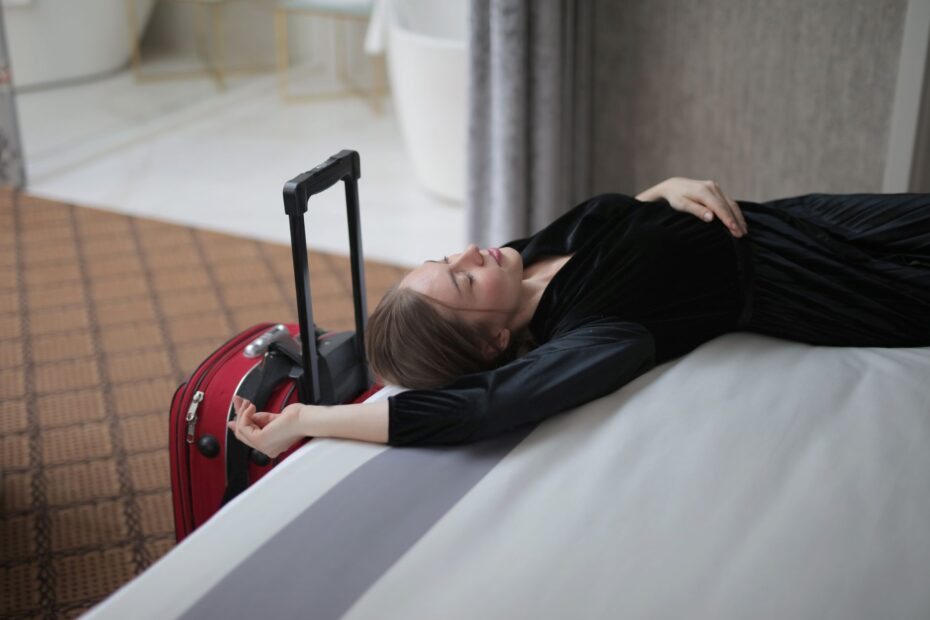
Crossing several time zones can leave your internal clock on departure time while local life follows destination time. You may feel alert at 2 a.m., hungry at midnight, and mentally slow during a 9 a.m. meeting after crossing several time zones.
This overview explains the body-clock mismatch, common symptoms, recovery pattern, and local-time habits that can guide your reset after rapid travel.
Jet Lag Starts With a Mismatch Between Internal and Local Time
A six-hour flight within one time zone can leave you thirsty, stiff, sleep-deprived, and worn down. That is travel fatigue. Jet lag disorder begins after rapid time-zone crossing leaves your brain and organs tied to the departure schedule.
Your circadian rhythm regulates more than sleep. It times alertness, body temperature, hormone release, appetite, and bowel activity across a 24-hour cycle. The International Classification of Sleep Disorders describes jet lag as a circadian sleep-wake disruption linked to crossing time zones.
| Feature | Jet lag | Travel fatigue |
|---|---|---|
| Main trigger | Rapid time-zone crossing | Long travel, poor sleep, stress, dehydration, or inactivity |
| Core problem | Internal timing conflicts with local time | Physical and mental exhaustion |
| Sleep pattern | Sleepiness and insomnia arrive at unusual local hours | Sleep improves after rest, even without a time-zone shift |
| Example | You land in Paris from Chicago and wake at 3 a.m. | You drive 10 hours and feel worn out that evening |
Each added time zone widens the gap between your established rhythm and the new clock. A three-hour shift can disrupt meals and bedtime. An eight-hour shift can make breakfast feel like dinner to your physiology, which explains why the effects reach far beyond ordinary tiredness.
Rapid Time-Zone Changes Disrupt the Circadian System
Inside your brain, the suprachiasmatic nucleus, or SCN, acts as the central timekeeper. This small cluster of cells receives light information through your eyes and coordinates the sleep-wake cycle with daily rhythms in tissues throughout your body.
Your phone changes to destination time in seconds, but the SCN shifts far more slowly. Local sunrise, meals, activity, and bedtime now send cues that conflict with the departure pattern still active in your nervous system.
Light Exposure Sets the Strongest Clock Signal
Bright outdoor light has the strongest effect on circadian timing. Morning light tends to shift your clock earlier, while evening light tends to shift it later. Your response depends on your internal time, not only the hour displayed beside the hotel bed.
After flying from Los Angeles to London, early local daylight can move an eight-hour body-clock delay toward London time. Late-night bright light and a glowing phone screen can pull your sleep-wake cycle in the opposite direction.
Use outdoor daylight as the main reset cue after arrival. Window light is weaker, and late bright light can keep your clock tied to the departure schedule.
Meals and movement also send timing signals, though light exposure has a stronger effect. That mismatch becomes most obvious through sleep and alertness, where a clock error can disrupt your plans within hours of arrival.
Sleep Loss and Mistimed Alertness Produce Early Symptoms
A local bedtime can arrive while your brain still expects afternoon. You can lie awake despite exhaustion, then struggle to stay alert during breakfast, a work presentation, or a drive from the airport.
Five jet lag symptoms appear repeatedly: insomnia, daytime sleepiness, fatigue, poor concentration, and irritability. Sleep deprivation from an overnight flight can intensify each symptom before your circadian rhythm has begun shifting toward local time.
- Insomnia at bedtime Your body resists sleep because its internal night has not started.
- Daytime sleepiness Your strongest urge to sleep can arrive during local work, meals, or sightseeing.
- Heavy fatigue Short sleep and mistimed alertness leave your muscles and mind depleted.
- Poor concentration Routine details slip away, so familiar tasks take more mental effort.
- Irritability Sleep loss lowers patience and makes small frustrations feel sharper.
Headaches, low motivation, and poorer physical performance can join the list. A runner who arrives for a morning race may find the effort harder than expected because the body still expects sleep at that local hour.
Your symptoms do not stay in the bedroom. The same internal clock that times sleep also shapes attention, hormones, mood, and digestion, so the disruption can feel like a body-wide lag rather than one bad night.
The Mismatch Reaches the Brain, Hormones, Mood, and Gut
A missed turn on an unfamiliar road can reveal the cognitive cost before you notice the sleep debt itself. Jet lag can slow reaction time, weaken working memory, reduce attention, and impair decision-making during driving, work, or sport.
Melatonin rises near biological night and signals readiness for sleep. Cortisol follows a daily pattern tied to alertness and stress response. After a time-zone shift, those hormone rhythms can remain tied to your departure location, leaving you sleepy and wired at the wrong local hours.
| Body system | What shifts out of time | What you may feel |
|---|---|---|
| Brain | Attention and reaction-time peaks | Brain fog, errors, slower responses |
| Hormones | Melatonin and cortisol rhythms | Mistimed sleepiness, tension, mood changes |
| Digestive tract | Meal-related gut rhythms | Appetite shifts, indigestion, constipation, diarrhea |
| Muscles | Coordination and exertion timing | Lower training quality, reduced physical performance |
Gastrointestinal symptoms have a practical cause. Your stomach, liver, pancreas, and intestines follow daily schedules, so a large local dinner can arrive during what your gut reads as the middle of the night. Lighter meals at unusual hours can feel easier than forcing a full meal.
Do not drive, make high-stakes decisions, or train at maximum intensity while severe sleepiness clouds your attention. A short nap and a delayed task are safer than forcing alertness.
That immediate safety concern becomes especially relevant when the trip requires your body clock to move earlier.
Eastward Travel Requires a Harder Clock Shift
Moving bedtime earlier asks your clock to shift in a direction it resists. Eastward travel requires a phase advance, meaning your sleep and wake timing must move earlier. Westward travel requires a phase delay, which means staying awake later.
For many adults, delaying sleep feels easier than falling asleep several hours before biological bedtime. A Boston-to-London trip can leave you awake at 10 p.m.; a London-to-Boston trip can leave you alert well into the evening.
| Travel direction | Clock task | Common local-time pattern |
|---|---|---|
| Eastward travel | Advance sleep and wake time earlier | Insomnia at bedtime and sleepy mornings |
| Westward travel | Delay sleep and wake time later | Early waking and evening alertness |
Direction does not dictate your exact experience. Your sleep debt, age, flight arrival time, number of time zones, light exposure, and personal sensitivity all shape how jet lag affects the body. That variation is why recovery follows a range rather than a fixed schedule.
Recovery Progresses Across Several Local Days
The one to three days after arrival can feel most disruptive because local obligations collide with your old rhythm. Your body clock shifts in small increments, not at the moment cabin doors open.
Jet lag recovery time varies with distance and direction. A rough rule is about one day per time zone after eastward travel, with faster progress after westward travel. Sleep debt, poorly timed light, and irregular naps can extend how long jet lag lasts.
Arrival Days Show the Clock Mismatch
- Arrival day Sleepiness, dehydration, and airport stress can blur travel fatigue with circadian disruption.
- Days one through three Local sleep and daytime alertness can remain sharply misaligned after a large shift.
- Later days Symptoms should ease as wake time, daylight, meals, and bedtime settle into a steady pattern.
- Lingering trouble Ongoing insomnia or exhaustion can point to sleep debt, illness, medication effects, or another sleep condition.
Steady local cues matter because the SCN responds to repeated timing signals. The Centers for Disease Control and Prevention highlights sleep, hydration, and timing as travel-health concerns. Your lingering symptoms are not a personal failure; they can reflect late light exposure, irregular naps, or another issue that needs clinical attention.
Before symptoms become persistent, a consistent local routine gives the clock its strongest daily cues.
A Destination Schedule Gives Your Clock Clear Signals
Local morning light and a fixed wake time give your clock a clear direction. A different sleep hour each day sends mixed signals and can prolong the mismatch between your body and destination time.
Use these habits as one routine rather than expecting a single coffee, supplement, or long nap to reset your system. The American Academy of Sleep Medicine places timed light exposure and sleep scheduling at the center of circadian adjustment.
- Wake locally Get up at the same destination-time hour, even after a rough night.
- Seek daylight Spend time outdoors during the local light period that moves your schedule toward destination time.
- Nap briefly Keep naps near 20 to 30 minutes and avoid late-day sleep that delays bedtime.
- Eat on schedule Use local meal times to give your gut a steadier daily pattern.
- Move in daylight Walk outside or exercise lightly during the destination day to reinforce wakefulness.
- Limit late stimulants Avoid late caffeine and alcohol, which can fragment sleep or delay sleep onset.
Hydration can ease dry-air discomfort and headache risk, though water does not reset circadian timing on its own. Melatonin products require care because dose and timing matter. Ask a clinician or pharmacist about melatonin before use, especially during pregnancy, with chronic illness, or alongside prescription medicines.
Severe or Persistent Symptoms Need Medical Attention
Sleepiness that makes driving unsafe is not something to push through. Confusion, major mood changes, repeated inability to function, fainting, chest pain, or severe symptoms that do not ease after several days need medical attention.
Jet lag can overlap with infection, anxiety, dehydration, medication effects, alcohol withdrawal, sleep apnea, or another sleep disorder. Fever, cough, persistent vomiting, or worsening symptoms point away from a routine circadian shift.
- Pause risky tasks Avoid driving, operating equipment, or solo caregiving during severe daytime drowsiness.
- Check medication timing Ask a pharmacist how destination time changes the schedule for prescription drugs.
- Review sleep history Snoring, gasping, or chronic insomnia deserve attention beyond a recent flight.
- Track the pattern Record sleep, naps, meals, caffeine, light exposure, and symptoms for several local days.
- Seek clinical care Contact a clinician for severe, persistent, or safety-related symptoms.
Your clearest next step is a steady local-time routine paired with well-timed daylight after arrival. That approach addresses how jet lag affects the body at its source, while medical advice covers symptoms that no longer fit a short-term travel pattern.
Bottom Line
Jet lag is a timing conflict, not proof that your body is weak or that you failed to sleep well enough on the plane. Give your clock clear local cues through daylight, wake time, meals, and restrained naps. You should expect symptoms to fade as internal timing catches up, yet safety concerns and persistent disruption deserve medical care rather than forced caffeine.
FAQ
What are the five symptoms of jet lag?
Insomnia, daytime sleepiness, fatigue, poor concentration, and irritability commonly emerge after rapid time-zone changes. You can also experience headaches, low motivation, appetite changes, digestive upset, and reduced physical performance, especially after overnight travel across several time zones.
How long does it take the body to recover from jet lag?
Recovery can take several days, and larger eastward shifts can take longer than westward shifts. Your jet lag recovery time depends on time zones crossed, sleep debt, light exposure, arrival time, age, and how steadily you follow destination-time sleep and wake routines.
What is the fastest way to get rid of jet lag?
The fastest practical approach uses destination-timed daylight, a consistent local wake time, short early naps, local meal timing, and limited late caffeine or alcohol. You cannot force your body clock to move instantly, but clear timing cues help your rhythm shift with fewer mixed signals.
Why is eastward travel harder than westward travel?
Eastward travel requires your internal clock to move earlier, so you must try to sleep before your biological night begins. Westward travel asks your clock to move later, and staying awake later tends to feel easier for many adults than falling asleep earlier.
At what point do severe jet lag symptoms need medical advice?
Seek medical advice for confusion, major mood changes, unsafe sleepiness, fainting, chest pain, or symptoms that continue without improvement after several days. You should also seek care with fever, breathing problems, persistent vomiting, or medication concerns that suggest something beyond jet lag.