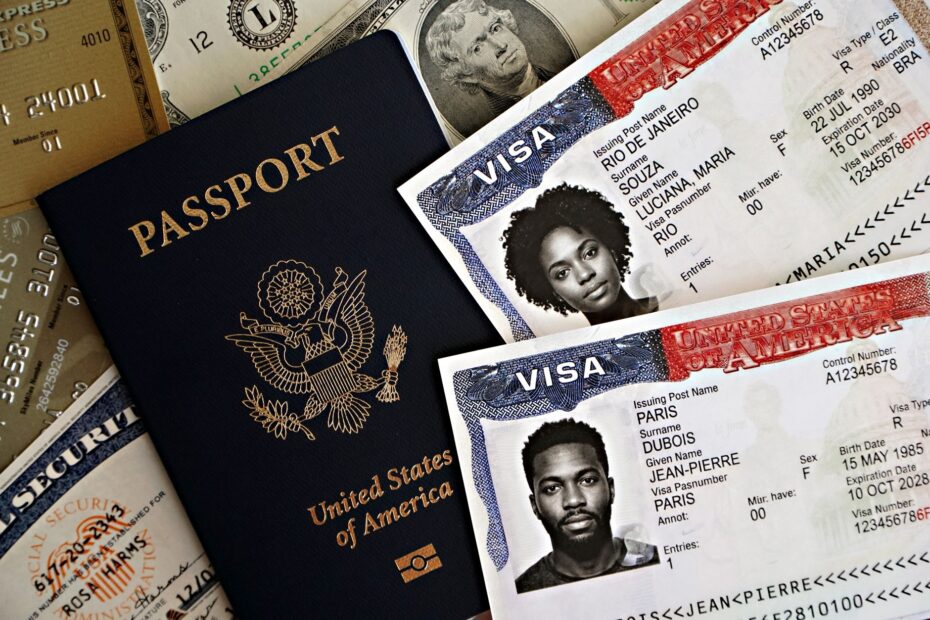
At a primary inspection booth, officers confirm your identity, inspect your passport or entry papers, review travel permission, and decide whether to admit you. A scan, facial comparison, document review, and short interview can lead to routine admission, added review, or refusal.
You face related checks at airline check-in, airport security, cruise terminals, and land crossings. The details below help you prepare for international flights, cruises, and United States border travel.
Border Entry Review Covers Identity, Documents, and Permission
A passport proves your identity and nationality, but it does not grant entry by itself. Border staff look at whether your document appears genuine, whether its photo matches you, and whether your trip meets the destination’s rules.
Your citizenship, route, travel purpose, and length of stay shape the papers you need. A valid passport can identify you abroad, while a visa and Electronic System for Travel Authorization (ESTA) record can show permission to seek admission for a specific visit.
| Check | What staff review | What it means for you |
|---|---|---|
| Document condition | Data page, laminate, photograph, printing, seams, and expiry date | Your passport needs to be current, intact, and readable |
| Identity match | Passport photo, live appearance, and biometric identity verification | Your appearance needs to match the identity shown in the document |
| Nationality record | Issuing country and citizenship details | Your nationality sets visa, transit, and entry rules |
| Admission review | Travel purpose, declarations, prior records, and entry permission | Your documents are part of the decision, not the entire decision |
That distinction matters at every port of entry. You can hold a valid passport and still need a visa, ESTA record, residence permit, onward ticket, or evidence tied to your stated reason for travel.
Travel Documents Vary by Route, Citizenship, and Transport
The crossing method changes which document works for you. A passport book works for international air travel, while certain land and sea routes accept other documents from eligible travelers.
At United States land and sea ports, the Western Hemisphere Travel Initiative sets rules for several crossing categories. U.S. Customs and Border Protection (CBP) uses WHTI-compliant travel documents to confirm identity and citizenship at ports near Canada, Mexico, the Caribbean, and Bermuda.
| Document | International air travel | United States land or sea return |
|---|---|---|
| U.S. passport book | You can present it for international flights | You can present it at land and sea ports |
| Passport card | You cannot present it for international flights | You can present it at eligible land and sea ports |
| Enhanced Driver’s License | You cannot present it for international flights | You can present it at certain crossings as an eligible U.S. citizen |
| Birth certificate and photo ID | You cannot rely on these documents for international flights | You can face added questions in narrow situations |
Returning to the United States from Mexico by land calls for careful document selection. A U.S. passport book, passport card, Enhanced Driver’s License from a participating state, or another listed WHTI document gives you clearer proof than a birth certificate and photo ID.
Before flying, carriers must confirm that your documents support both boarding and arrival at the destination.
Your birth certificate and driver’s license do not replace a passport book for a flight home from Mexico. Carry the document accepted for your route instead of relying on a prior crossing experience.
Airlines Review Entry Papers Before Boarding
Airline staff can stop your trip before you reach the border. Check-in agents review passport validity, visa rules, transit requirements, booking names, and documents required at your destination.
Your boarding pass does not mean border admission. Transportation Security Administration (TSA) screening addresses aviation security, while immigration inspection addresses your permission to enter a country.
- Check-in review: Airline staff review your passport, visa, ESTA record, and destination entry rules before issuing a boarding pass.
- Passenger data: The Advance Passenger Information System (APIS) sends biographic and document data tied to your flight.
- Booking details: Your Passenger Name Record (PNR) can include itinerary, contact details, and reservation information.
- Arrival preparation: Border authorities can review available pre-arrival data before your primary inspection.
A passport expiring in two months can stop boarding where a destination requires six months of remaining validity. Your carrier can also enforce a transit country’s entry conditions, even during an airport connection.
Check the spelling of every name before departure. A missing middle name, reversed surname, or old surname can slow your check-in review where the ticket and passport do not match closely.
Document Inspection Combines Physical Review and Digital Records
At the inspection counter, an officer reviews your booklet, looks at you, scans the machine-readable zone, and asks focused questions. That short exchange links your physical document to records tied to your trip.
Physical features reveal document condition
Printing, laminate, page seams, photograph placement, and the data page tell staff whether a booklet appears intact. Water damage, torn pages, loose laminate, ink marks, or a disturbed photo can lead to closer review.
Your document can still need manual review after a successful barcode read. A scanner reads encoded data, while an officer can see damage or alteration that a machine does not settle.
The chip checks signed passport data
Inside an e-passport, the embedded chip stores biographic data and a digital facial image. Contactless readers check cryptographic signatures that show whether the chip data came from the stated issuing authority and stayed unchanged after issuance.
This chip check adds evidence, but it does not replace visual inspection. Your live face, passport photo, trip details, and answers still shape the entry decision.
How passports are checked at the border includes both paper and digital evidence. You can reduce avoidable trouble by keeping your passport dry, flat, and away from staples, tape, or handwritten changes.
Passport Scans Connect Your Identity to Border Records
The machine-readable zone contains two lines of letters, numbers, and chevrons near the passport data page. A scanner reads your name, passport number, nationality, birth date, expiry date, document type, and document issuer.
What border officers see when they scan a passport depends on the country, port, system access, and officer role. Your scan can connect document data with immigration records, visa information, entry history, stolen-document alerts, and law-enforcement information.
| Claim | Accurate explanation |
|---|---|
| A scan reads only a passport number | The machine-readable zone also contains identity and document details |
| A clean scan grants entry | Your travel purpose, declarations, visa status, and admission rules still matter |
| A chip error proves document fraud | Wear, chip-access trouble, data mismatch, or reader trouble can cause an error |
| Every officer sees identical records | Record access differs across jurisdictions, ports, and job duties |
Automated e-gates follow a similar path. You place your passport on a reader, face a camera, and wait while the system checks a facial match; an exception sends you to an officer for a human review.
Confirming who you are does not by itself establish that you may enter or remain.
A passport scan links records to your document. It does not replace the officer’s judgment about your identity, declarations, answers, or right to enter.
Entry Permission and Admissibility Decide the Final Result
A successful scan opens the record review rather than opening the border gate. Staff still look at your visa or ESTA status, travel purpose, intended stay, customs declaration, prior immigration history, and entry category.
Your planned activities need to fit the permission tied to your trip. A visitor admission, work permission, study status, family visit, cruise connection, and long stay can each call for different evidence.
Travel document verification at borders can draw on immigration records, visa records, stolen-document alerts, and law-enforcement systems. The Interpol Stolen and Lost Travel Documents database helps authorities identify documents reported lost or stolen by participating countries.
After admission to the United States, the I-94 Arrival/Departure Record can show your class of admission and authorized stay. Check the record after entry, since the date and category shown there affect your departure plans.
You cannot independently see every record available at a port. A concern about a passport, visa, or travel authorization belongs with the issuing authority, your consulate, the U.S. Department of State, or the destination country’s immigration authority.
Secondary Inspection Gives Staff Time for Added Review
A referral from primary and secondary inspection does not prove wrongdoing. It means the primary inspection needs more time, more documents, another database search, or a closer identity review.
- Damaged booklet: Water stains, bent pages, or an unreadable data page can lead staff to inspect your identity manually.
- Data mismatch: A conflict involving your name, date of birth, or passport number can require record research.
- Visa concern: Your stated trip purpose can conflict with the permission connected to your visa or authorization.
- Prior record: A past overstay, removal matter, or unresolved immigration matter can require added review.
- Travel pattern: A work plan, missing onward travel evidence, or unclear length of stay can lead to further questions.
A failed scan can come from worn printing, a scratched machine-readable zone, chip trouble, reader trouble, or a data mismatch. Stay calm, answer truthfully, and give staff the papers requested during the review.
What happens during secondary inspection depends on the issue that led to the referral. You can face a longer interview, document review, biometric identity verification, record research, or contact with another government office.
Do not repair your passport with tape, ink, staples, or altered laminate. Take a damaged passport to the issuing authority before your trip.
Preparation Keeps Your Records Consistent Before Departure
Most avoidable border delays begin days or weeks before departure. Check your passport condition, expiry date, visa status, transit rules, and ticket name before you arrive at the airport or land crossing.
- Check expiry dates: Confirm that your passport meets the destination’s remaining-validity rule before you travel.
- Match every name: Keep your booking, passport, visa, residence permit, and supporting records consistent, including middle names and hyphens.
- Confirm permission: Review visa, ESTA, eTA, transit, and cruise requirements tied to your citizenship and itinerary.
- Carry route papers: Bring documents needed for a land border crossing and a passport book for international flights.
- Keep proof ready: Carry lodging details, return plans, work or study papers, and consent records for children traveling with you.
- State facts clearly: Give direct answers about your destination, purpose, length of stay, and goods declaration.
Your records should tell one consistent story from check-in through inspection. Trusted Traveler Programs can shorten parts of arrival processing for eligible members, but you still face customs declarations and admission review.
Travel document verification at borders moves more smoothly where your passport, travel authorization, ticket, and answers match. Resolve a spelling error, expired approval, damaged data page, or route mismatch before departure.
Final Thoughts
Your passport is the starting credential, not a final permission slip. Carry the right document for your route, protect its data page and chip, and keep travel records consistent with the purpose of your trip.
Border staff review facts in layers: document condition, identity, permission, declarations, and admissibility. Your preparation gives them a clearer record and reduces avoidable delays during entry.
FAQ
What documents do border officers ask for when entering a country?
Border staff can ask you for your passport, visa, residence permit, travel authorization, proof of onward travel, lodging details, customs declaration, and trip-purpose evidence. Your exact documents depend on citizenship, destination, travel mode, entry category, and the country you seek to enter.
Do border officers scan passports, and what information do they see?
Yes, border officers scan passports at many ports of entry. The scan can display your name, birth date, nationality, passport number, expiry date, document type, and relevant border records available to that authority.
How does an e-passport chip help confirm that a passport is genuine?
An e-passport chip stores biographic data and a digital facial image. A compatible reader checks cryptographic signatures tied to the issuing authority, helping staff see whether the chip data matches a properly issued document.
How are visas, ESTA approvals, and other entry permissions verified?
Border staff review visa and Electronic System for Travel Authorization records against your passport details, nationality, trip purpose, and travel dates. Your permission record helps show eligibility to seek entry, while admissibility remains a separate border decision.
What databases are checked when travel documents are scanned?
A document scan can connect to immigration, visa, entry-history, stolen-document, travel-alert, and law-enforcement records. Record access varies by country, port, agency role, and the circumstances of your inspection.
What is the difference between airline document verification and border inspection?
Airlines review documents before boarding to confirm that you appear eligible to travel. Border staff decide whether you can enter after reviewing your identity, documents, declarations, travel purpose, and admission record.