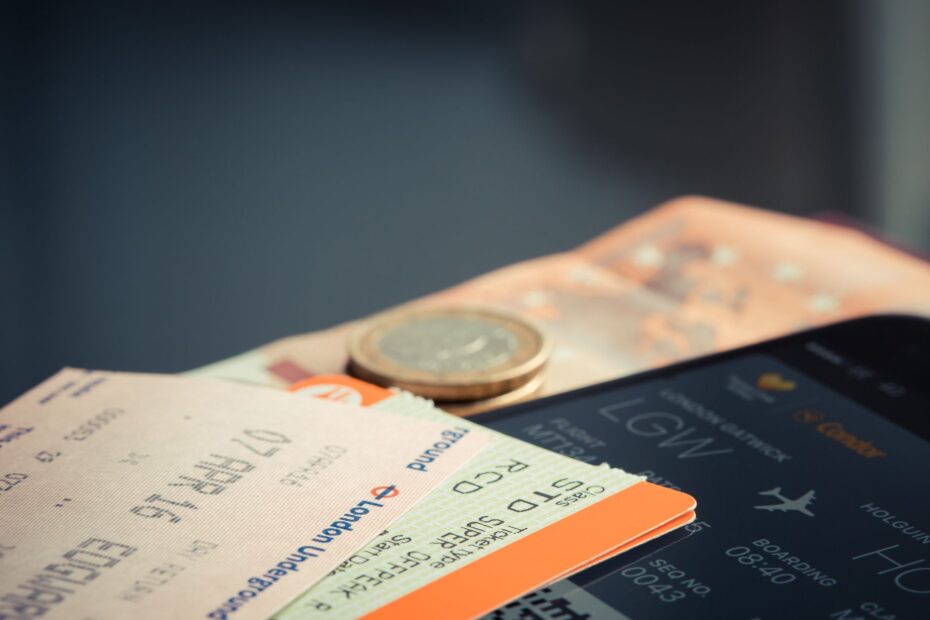
One-way vs. round-trip ticket refers to a choice between booking one flight direction or booking an outbound flight and return flight together. A one-way fare leaves your return open, while a round-trip fare links both directions. A $320 return itinerary can cost less than a $190 outbound fare on the same route.
You’ll see how ticket structure affects pricing, airline fare rules, baggage allowance, schedule changes, onward-travel paperwork, and missed connections before choosing a booking for your plans.
Ticket Structure Sets the Starting Point
A one-way ticket covers travel from one origin airport to one destination airport. Chicago O’Hare to Seattle, for example, is one direction under one reservation. Your next flight may depart on another date, from another airport, or with another airline.
A round-trip ticket includes an outbound flight and a return flight under one booking reference. You leave your starting city, complete your stay, and return under the same reservation. Your return date may be fixed, changeable, refundable, or restricted under the fare rules tied to that ticket.
| Feature | One-way ticket | Round-trip ticket |
|---|---|---|
| Flight segments | One direction from origin to destination | Outbound flight plus return flight |
| Reservation structure | One segment or one direction under a booking | Two directions under one booking reference |
| Return date | Your return may be booked later or from another city | Your return is selected at booking, subject to fare rules |
| Airline mixing | You may book each direction with different carriers | One carrier or partner network handles both directions |
| Airfare behavior | May cost less, the same, or more than half a return fare | May carry a lower combined fare on some routes |
| Changes | Only the purchased direction is affected | A change may affect conditions for the full itinerary |
| Baggage allowance | Each airline sets its own allowance and bag-fee rules | Rules follow the ticketed itinerary and operating carrier |
| Disruption coverage | Separate bookings leave you responsible for missed onward flights | Flights on one ticket carry missed-connection protection |
The one-way vs. round-trip ticket choice reaches beyond your plans for coming home. It determines who handles a delay, how far you can move a return date, and whether your baggage rules shift between outbound and return flights.
That reservation structure becomes more relevant once your arrival and departure cities differ. A return to the same metropolitan area may still involve two airports, two ground-transport plans, and two different travel days.
Different Return Airports Change the Booking Shape
New York provides a clear example of how airport choice affects a return itinerary. You could depart from JFK and return to Newark, even though both airports serve the same metro area. Parking, rail access, rideshare time, and terminal layout can make those airports feel like separate trips.
Your itinerary does not need to begin and end at the same airport. A return flight from Newark to a different airport than your outbound departure still works as part of one booking, subject to the airline’s fare construction for that route.
Open-jaw itineraries suit routes across a region
An open-jaw itinerary arrives in one city and departs from another. You could fly New York to Rome, travel by rail through Florence and Milan, then fly Milan to New York. The overland portion fills the gap between your arrival city and departure city.
You avoid returning to Rome only to board a standard return flight. On a 10-day Italy route, a three-hour train journey from Florence to Milan may replace a full day of airport transfers, backtracking, and waiting.
Your fare may still sit under one booking reference, even though the airports differ. That distinction matters during a schedule disruption because the airline sees the trip as one ticketed itinerary rather than two unrelated flights.
Multi-city bookings place three or more segments together
A multi-city booking contains three or more flight segments. Los Angeles to Tokyo, Tokyo to Seoul, and Seoul to Los Angeles is one example. Google Flights labels multi-city searches separately from standard return searches.
Search three formats before committing to a route with different arrival and departure cities: a multi-city booking, an open-jaw search, and separate one-way tickets. Each route format may produce a different fare construction, schedule, baggage allowance, and disruption responsibility.
Delta Air Lines and American Airlines publish fare conditions for each purchased itinerary rather than using one universal rule for every route. Your ticket structure matters because an open-jaw itinerary may hold one booking reference, while two one-way purchases may not.
Airfare Pricing Does Not Follow Simple Math
A $250 one-way fare does not mean the return direction should cost another $250. Airlines price routes by travel day, cabin, demand, competition, connections, fare class, and local travel patterns. A Monday morning flight from Boston to Dallas may draw business travel, while a Saturday return serves a different market.
The question is round trip cheaper than two one-way tickets has no fixed answer. You need matching dates, airports, cabin type, passenger count, and fare brands before the totals mean anything useful for your trip.
Return fares may undercut two separate directions
A carrier may file a return fare below the sum of two standalone directions. A traveler flying San Francisco to London for six nights could see a $780 round-trip fare beside two one-way fares totaling $1,160.
That $380 difference does not mean the return seat has no value. The airline is selling a complete itinerary within a defined market, and its fare rules may reward a Saturday stay, a certain booking class, or travel through its own connecting network.
Your return flight may also hold a different fare class than the outbound. Two flights that look similar on a booking screen may carry different refund terms, seat rules, and baggage terms after payment.
Separate directions may produce a lower total
The reverse result appears on routes with competing carriers or uneven departure times. A morning outbound with one airline and an evening return with another airline may total less than the return option from either carrier.
Your schedule may improve at the same time. A nonstop outbound on one airline and a later return on another can fit your plans better than a single-carrier itinerary with a long connection.
| Booking pattern | Sample fare total | What changes the total |
|---|---|---|
| One round-trip reservation | $780 | Return fare rules, cabin class, bundled itinerary pricing |
| Two one-way flights on one carrier | $940 | Each direction priced as a standalone market |
| Two one-way flights on different carriers | $745 | Different airports, departure times, bag fees, and self-transfer exposure |
Headline fares are only the starting number. Your trip total can rise after checked bags, advance seat assignments, airport transfers, fare differences after a date change, or a hotel night after a missed self-transfer connection.
Your flight price comparison should use identical dates, cabin type, passenger count, and airports. A lower basic economy fare can lose its edge after your bag and seat needs enter the total.
Fare Rules Matter More Than the Ticket Label
A one-way booking leaves your return decision open, yet it does not automatically give you flexible conditions. Your outbound flight may still be nonrefundable, restricted, or costly to change. A return itinerary can carry the same limits.
Airline fare rules govern refunds, travel credits, change fees, seat selection, baggage allowance, and standby access. Your booking label tells you how the flights are grouped; the fare brand tells you what happens after plans shift.
Separate one-way tickets divide your decisions
An uncertain return date is easier to manage when each leg is booked separately. A relocation, long family visit, work assignment, or road trip ending in another state can make that control more useful than a fixed return flight.
- Unknown return date: Book the outbound now and choose your return after your calendar settles.
- Different return city: Fly into Denver, drive through Utah, and depart from Las Vegas without backtracking.
- Carrier preference: Use one airline for a nonstop outbound and another for a better-timed return.
- Points and miles: Redeem one direction with airline miles while paying cash for the other.
- Separate work plans: Keep a business flight apart from a personal return segment with different change needs.
Yes. Your two reservations may be with the same airline or different airlines, but each reservation has its own fare rules, baggage policy, check-in process, and disruption responsibility.
Written conditions define your flexibility
Round-trip tickets may allow changes or cancellation under their fare rules. Your new flight may require a higher fare, and some fares add a change fee. A refundable ticket may return funds under written conditions, while a nonrefundable fare may return only a travel credit.
Basic economy fares deserve close attention. Some basic economy fares restrict seat selection, changes, carry-on bags, boarding order, or standby options. Your itinerary label matters less than the fare brand and rule text attached to each segment.
Baggage allowance can reshape the value of a booking. A return reservation with one checked bag included may beat two lower-looking one-way fares that charge $35 to $50 per checked bag on each direction.
Stable and Flexible Trips Favor Different Choices
Fixed plans favor a linked reservation. A Friday-to-Monday beach trip, a three-day conference, or a family visit with set holiday dates fits a round-trip booking well. Your flights remain connected, and an outbound delay may lead to rebooking help for later segments on that same ticket.
Your travel pattern matters more than a broad rule about which option costs less. The right answer changes with your return date, return city, airline choice, checked bags, and tolerance for a self-transfer.
Round-trip reservations fit settled plans
Choose a return itinerary where your departure city, return city, and travel dates are settled. One confirmation number makes check-in, baggage handling, schedule changes, and airline contact easier to track.
Your booking also fits standard business travel where an employer expects a known return date. A single reservation creates a cleaner itinerary record where a company needs travel details before releasing funds or arranging meeting schedules.
A return itinerary usually suits a weekend, conference, wedding, or fixed holiday because both directions remain under one reservation and the dates are already known.
One-way travel fits moving plans
A one-way booking suits an apartment move from Phoenix to Portland, an extended stay with no set end date, or travel that ends in another country. You can book a return later with the carrier and schedule that fit your updated plans.
International travel adds a separate checkpoint. You can fly internationally on a one-way ticket, but airline staff at check-in or border staff at arrival may request proof of onward travel.
A return ticket, onward air booking, rail reservation, or other accepted evidence may show that you plan to leave within the permitted stay. Your destination’s entry rules, passport validity rules, visa status, and airline boarding policy shape the documents you need.
Carry onward-travel evidence in a form you can show without internet access. Your passport, visa documents, return plans, and entry conditions may receive review before boarding or at arrival.
The International Air Transport Association maintains Timatic, a database airlines use for passport, visa, and transit requirements. Your airline may rely on that information during check-in, so a valid ticket alone does not settle entry paperwork.
A Matching Search Reveals the Real Cost
Start with one clean search using the same outbound and return dates, airports, cabin, and passenger count. Record the full amount, flight numbers, baggage allowance, seat conditions, and fare rules before changing filters.
Your comparison needs like-for-like choices. A standard economy return fare and two basic economy one-way fares are not equivalent because the lower-looking option may exclude bags, seats, changes, or a protected connection.
Price each version of the same trip
- Search the return itinerary: Record the full total, flight times, airport pair, cabin, and checked-bag terms.
- Price each direction: Search outbound and return flights separately with the same airports and cabin level.
- Match fare brands: Keep standard economy against standard economy rather than mixing fare types.
- Add trip extras: Include checked bags, seats, parking, transfers, and any overnight stay between flights.
- Read change terms: Check credits, refunds, change fees, and fare differences before treating one total as lower.
- Check route variations: Review nearby dates, alternate airports, open-jaw routing, and multi-city routing after the matching search.
You should review the operating airline, not only the marketing airline shown in large type. A flight sold by one carrier but flown by a partner may carry different baggage or seat rules, particularly on an international route.
Time and ground travel have a real cost
A $25 saving can disappear with a 5:15 a.m. airport arrival, a $60 rideshare, or a six-hour layover. Your true trip total includes the time and ground costs created by the schedule, not only the amount beside the fare.
Google Flights can show separate one-way combinations and multi-city results, while an airline’s own site may show fare rules in greater detail. Check both views before payment, especially where a mixed-carrier result has a tight connection.
That comparison also exposes when an itinerary depends on protections that vanish once flights are booked separately.
Separate Tickets and Skipped Segments Carry Risks
A lower fare can become a costly self-transfer. Separate tickets mean each airline sees only its own flight. A delay on the first flight does not obligate the next airline to move you to a later departure.
That gap in responsibility is one of the largest tradeoffs between one reservation and two bookings. Your saving needs to cover the possibility that you must pay for a replacement flight, hotel, food, or ground transport after a missed connection.
Self-transfers need a wider connection buffer
Your connection buffer should cover delays, terminal changes, baggage collection, security screening, and check-in deadlines. A 55-minute connection may work on one protected reservation, yet it may be far too short across two separate tickets.
- Bag collection: Plan to reclaim checked luggage and hand it to the next airline unless through-check service is confirmed.
- Check-in cutoff: Your next carrier may close bag drop 45 to 60 minutes before a domestic departure.
- Longer buffer: Leave several hours between separate tickets, with extra time at airports requiring immigration clearance.
- Overnight backup: Set aside funds for a hotel where a late inbound flight could leave you before an early outbound.
- Replacement flight: Keep room in your budget for a same-day ticket because the onward airline may charge the fare available that day.
Skipped segments can cancel later flights
Missing the outbound flight on a round-trip reservation may lead the airline to cancel every remaining segment, including the return. Airlines treat the itinerary as a sequence rather than two independent flights that you can take in any order.
Your airline may cancel the remaining segments automatically, which means your return flight may disappear from the reservation before you arrive at the airport.
Skipping a final return segment may violate fare rules and may affect your relationship with the carrier. Hidden-city ticketing, where a traveler intentionally leaves during a connection, carries similar risks and can disrupt checked baggage because bags travel to the ticketed final airport.
You should contact the airline before abandoning any segment because schedule changes, illness, or a missed flight may produce options under the fare conditions. Silence can turn a recoverable change into an automatic cancellation.
Because disruptions are inevitable, the cheaper option only works when its limits fit your tolerance for risk.
Your Choice Depends on Certainty and Total Cost
Your return plan is the dividing line. Choose a round-trip ticket where your return date and city are known, one reservation has value, and the all-in amount holds up against separate searches.
Choose one-way flights where your return date, return airport, or preferred carrier remains open. You gain control over each direction, but you also take on separate fare rules, baggage terms, and connection planning.
- Fixed vacation dates: Favor one return reservation for linked flights and simpler disruption handling.
- Move or long stay: Favor a one-way outbound where no reliable return date exists yet.
- Different arrival city: Search an open-jaw or multi-city itinerary before building separate purchases.
- Mixed airline schedule: Use separate directions only after leaving enough time for a self-transfer.
- International departure: Confirm proof of onward travel and entry paperwork before flying on a one-way ticket.
Your one-way vs. round-trip ticket decision becomes clearer after you price the same trip both ways and read the fare conditions. Your booking should reflect the cost of flexibility, not only the number that appears before bags, seats, and changes.
What to Remember
A round-trip ticket gives you a linked itinerary, while a one-way ticket separates your choices. Pick the structure that matches how certain your return plan is, then judge it on full cost, fare rules, baggage terms, and disruption responsibility.
A lower fare matters only where it still fits your real travel needs. Your dates, airports, bag needs, connection time, and onward-travel documents all belong in the final booking decision.
FAQ
What is the difference between a one-way ticket and a round-trip ticket?
A one-way ticket covers one direction from an origin airport to a destination airport. A round-trip ticket includes an outbound flight and a return flight under one reservation, so your airline treats both directions as part of the same itinerary.
Is it usually cheaper to buy a round-trip ticket or two one-way tickets?
Either booking pattern may cost less depending on route demand, travel dates, cabin, fare class, airline pricing, baggage fees, and schedule. Your comparison should match the same dates, airports, cabin type, and passenger count before you judge the totals.
When should I book a one-way flight instead of a round-trip flight?
Book one-way travel where your return date remains open, your trip ends in another city, or another airline has a better return schedule. A move, extended family stay, work assignment, and open-jaw route are common reasons to separate the directions.
Can I use only the outbound portion of a round-trip ticket?
You may take the outbound flight and skip the final return segment, but that choice may violate airline fare rules. You should not expect a refund for the unused return, and repeated skipped segments may affect your relationship with the airline.
What happens if I miss or skip the first flight on a round-trip itinerary?
Skipping the outbound segment may cause the airline to cancel your return flight and every later segment on that reservation. Contact the airline as soon as possible because the fare rules may allow rebooking or another option after a delay or missed flight.
Can I fly internationally with a one-way ticket?
Check-in agents or border officials may ask international travelers for proof of onward or return travel. Your passport validity, visa status, destination entry rules, and permitted stay shape the documents you need to carry.