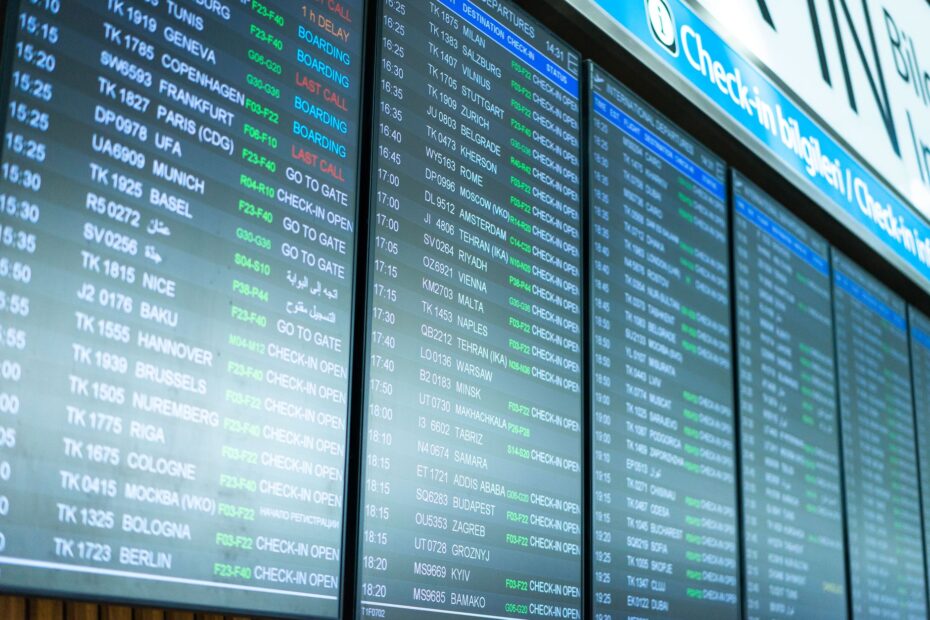
Layover vs. connecting flight refers to two parts of the same trip: a layover is your time between flights, while a connecting flight is the onward plane you board. The distinction affects your gate deadline, checked-baggage route, and airline help after a missed connection.
This comparison covers ticket types, airport procedures, baggage handling, and border checks so you can read your flight itinerary with fewer surprises.
The Schedule Separates Waiting Time From the Onward Segment
Time on the ground and the plane you board next are separate parts of your itinerary. A layover is the period between landing from one flight and departing on another at an intermediate airport. Your layover might last 45 minutes, three hours, or overnight.
The aircraft leaving after that wait is your connecting flight. It carries you from the connecting airport toward your final destination. Most itineraries with an onward segment include both a waiting period and another flight.
| Travel term | What it describes | What you do |
|---|---|---|
| Layover | Time spent between flight segments | Walk, transfer terminals, eat, or wait near your gate |
| Connecting flight | The next flight segment after your wait | Board the onward aircraft with your boarding pass |
| Connecting airport | The airport between origin and final destination | Follow signs, screens, and airline instructions |
A 75-minute gap on your schedule does not mean you have 75 minutes to reach the gate. Boarding can begin 30 to 45 minutes before departure, so your usable transfer time is much shorter than the printed gap.
A Chicago-to-Seattle Route Shows Each Part of the Trip
Flight numbers make the distinction easier to see. A Chicago-to-Seattle itinerary through Denver could leave Chicago at 8:00 a.m., land in Denver at 9:20 a.m., and depart for Seattle 90 minutes later.
Those 90 minutes are your layover. Flight 631 from Denver to Seattle is the connecting flight. Your route includes an outbound segment, a waiting period, and an onward segment with separate airport tasks.
| Route stage | Schedule detail | Meaning for you |
|---|---|---|
| Chicago to Denver | Flight 248 | Your outbound flight segment |
| Denver airport | 90 minutes | Your layover period |
| Denver to Seattle | Flight 631 | Your connecting flight |
A layover does not automatically mean a plane change. Some direct routes stop at an intermediate airport while keeping the same flight number. Your boarding pass and flight number show whether you need to leave the aircraft.
Stopovers, Transit Stops, Direct Flights, and Nonstop Flights Use Different Labels
Length and routing affect the label attached to an intermediate airport stop. A short break between flights is a layover, while a longer stay that includes an overnight visit or more than one day is commonly called a stopover.
The layover vs. stopover vs. transit distinction matters at border control. Your ticket conditions, visa status, baggage tag, and local entry rules decide whether you can leave the airport during the break.
Transit Means Passing Through an Airport or Country
Passengers in transit pass through an airport or country while traveling to another destination. Your international transfer can count as transit even where passport control, customs, baggage collection, and security screening are part of the route.
Direct and Nonstop Flights Describe Routing
A nonstop flight travels from origin to destination without an intermediate landing. A direct flight can land en route yet keep the same flight number, and you could remain on the aircraft during that stop.
- Short layover: Your wait sits between two flight segments and commonly occurs within the same calendar day.
- Longer stopover: Your break can include leaving the airport, booking lodging, or visiting the connecting city.
- Transit stop: Your travel passes through an airport or country before reaching the final destination.
- Direct flight: Your aircraft can land en route without requiring a new flight number.
- Nonstop flight: Your route has no intermediate landing between departure and arrival.
That routing difference also explains the connecting flight vs. direct flight comparison. A connection involves at least two flight segments, while direct service can keep you on the same aircraft through an intermediate stop.
Flight Numbers Reveal Whether You Need to Change Planes
A changed flight number is the clearest signal that another boarding event is ahead. AA248 followed by AA631 means you leave one aircraft and board another, even where both segments use the same airline.
Your next gate could be in the same concourse or across the airport. Check the airport monitor after landing because a terminal assignment can change between your departure and arrival.
Your Itinerary Shows the Next Airport Task
- Flight number: A changed number signals a new segment and a separate boarding event.
- Arrival terminal: This tells you where your walk begins after leaving the aircraft.
- Departure terminal: A different terminal can involve a train, shuttle, or a long indoor walk.
- Boarding time: This is your working deadline, not the published departure time.
- Gate assignment: Airport screens show gate changes that may not appear on an earlier boarding pass.
Your boarding pass is the working document. Check the flight number, boarding time, and gate after landing, even where your airline app showed those details before departure.
That gate check leads into a larger distinction. Domestic transfers and international connections can look similar on an airport map, yet their required airport paths differ sharply.
Domestic and International Transfers Use Different Airport Paths
Domestic Transfers Can Stay Inside the Secure Area
After a domestic arrival, you deplane, follow connection signs, locate the next gate, and board the onward segment. Your checked suitcase stays behind the scenes on a through ticket while you remain inside the secure area.
The Transportation Security Administration, known as TSA, does not require another TSA security screening during a domestic transfer unless you leave the secure side or use terminals without a secure connection. Your connecting airport layout decides whether the terminal route stays airside.
International Transfers Add Border and Customs Steps
International arrivals can add passport control, immigration and customs, baggage collection, terminal travel, and another security checkpoint. U.S. Customs and Border Protection processes arriving international travelers at the U.S. airport where they enter the country.
- Leave the aircraft: Follow signs for arrivals, connections, or passport control instead of heading straight to baggage claim.
- Clear immigration: Present your passport and route-specific visa or entry documents.
- Collect luggage: Retrieve checked bags where customs rules require physical inspection of your belongings.
- Pass customs: Complete the declaration process and follow directions for baggage recheck.
- Clear security again: Enter the departure area and reach your onward gate before boarding closes.
International layover rules vary by country, airport, nationality, and terminal design. Your passport status can determine whether transit is permitted, even during a short airport stay.
Checked Baggage Follows the Ticket Structure and Border Rules
A through ticket links each flight segment under one booking. Airlines tend to tag checked baggage to the final destination where operations permit it. Your bag receipt should show the airport code for that final city.
Entry into the United States is a major exception to standard layover baggage rules. International arrivals commonly collect checked bags before customs, then hand them back at a recheck belt after inspection.
Separate Tickets Put More Transfer Work on You
Separate tickets are two independent contracts, even where flights appear back-to-back in your calendar. A self-transfer can require baggage collection, another check-in, a new boarding pass, TSA security screening, and travel to a different terminal.
Ask the check-in agent where your checked baggage is tagged. A final-destination tag and a customs collection requirement can both be true during the same international itinerary.
That baggage difference affects missed flights as well. A delay on your inbound ticket can leave the onward carrier with no duty to hold its flight or place you on another departure.
Those responsibilities can consume far more time than travelers expect, especially when reclaiming bags and clearing customs.
Connection Time Depends on Airport Tasks, Not the Printed Gap
Minimum Connection Time Makes an Itinerary Bookable
Airlines use minimum connection time, or MCT, to decide whether a route qualifies as a valid connection. The threshold changes with airport size, terminal pair, airline agreements, domestic or international status, and border-control steps.
A valid connection is not always comfortable. Your 55-minute domestic transfer at a compact airport can work smoothly, while the same 55 minutes at a large hub can disappear during a late arrival and terminal train ride.
Two Hours Has Different Value on Different Routes
Two hours can be ample for a domestic transfer with nearby gates and a through ticket. Your international arrival may need more time for passport control, luggage collection, customs, security screening, and terminal travel.
- Airport size: Large hubs can place arrival and departure gates more than a mile apart.
- Terminal route: Trains, buses, and passport-control lines take time beyond the gate-to-gate walk.
- Travel season: Winter storms and peak holiday periods raise the chance of an inbound delay.
- Mobility needs: Wheelchair assistance, children, or a slower walking pace call for extra time.
- Ticket structure: Separate tickets need a longer buffer because the onward seat lacks airline protection.
Plan around boarding time rather than departure time. Your airline can close the aircraft door 10 to 20 minutes before a domestic departure, and international gates can close earlier.
Protected Connections and Self-Transfers Carry Different Exposure
A single airline itinerary gives you a protected connection in many disruption cases. A qualifying late inbound flight sends you to the operating or ticketing airline for rebooking, subject to fare conditions and seats open that day.
Separate tickets leave the missed connection with you. A missed onward departure can mean another fare, lodging, new baggage arrangements, and a changed border plan.
Pre-Departure Checks Limit Airport Guesswork
- Ticket structure: Confirm whether every segment appears under one confirmation number or separate bookings.
- Baggage destination: Read the airport code printed on your checked-bag receipt before leaving the counter.
- Terminal transfer: Review the airport map for trains, buses, and secure-side routes before departure.
- Entry documents: Check passport, visa, transit, and customs requirements for every country on your route.
- Boarding access: Save boarding passes in your airline app and carry a printed copy during complex trips.
- Disruption policy: Read the airline’s missed-connection terms before a delay forces a rushed decision.
Your layover vs. connecting flight choice starts before purchase. Choose a protected itinerary with enough time for the terminal, baggage, and border tasks your route requires.
Final Thoughts
A layover is time on the ground, while a connecting flight is the onward segment that follows it. Your ticket structure controls rebooking responsibility, baggage routing shapes your airport tasks, and international entry rules can add several steps. Check your boarding deadline, baggage tag, and terminal route before departure.
FAQ
Is a connecting flight the same as a layover?
No. A connecting flight is the onward flight segment you board after landing at an intermediate airport. A layover is the time you spend there between the arriving segment and the departing segment, so your itinerary can include both at once.
What is the difference between a layover, a connecting flight, and a stopover?
The time between flights is a layover, while the next plane you board is a connecting flight. A stopover is a longer break, such as an overnight stay or a planned visit that lasts more than one day.
Do I have to change planes during a layover?
A changed flight number means you board another aircraft. A direct flight can land at an intermediate airport under the same flight number, so you could remain seated unless the crew instructs you to deplane.
How long does a layover need to be for a domestic or international connection?
Your required time depends on the airport, terminal route, ticket structure, and border procedures. A 55-minute domestic transfer can work at a compact airport, while an international arrival can need extra time for immigration, customs, baggage collection, security screening, and terminal travel.
Do I need to collect and recheck checked bags on a connecting flight?
Your checked baggage can travel to the final destination on a through ticket, but the bag tag gives the clearest answer. International arrivals into the United States commonly require you to collect bags for customs and hand them back for recheck.
Do I have to go through TSA security again during a layover?
You normally stay beyond the TSA checkpoint during a domestic transfer and walk to the next gate. Another screening applies after leaving the secure area, entering from an international arrival path, or transferring through terminals without a secure connection.