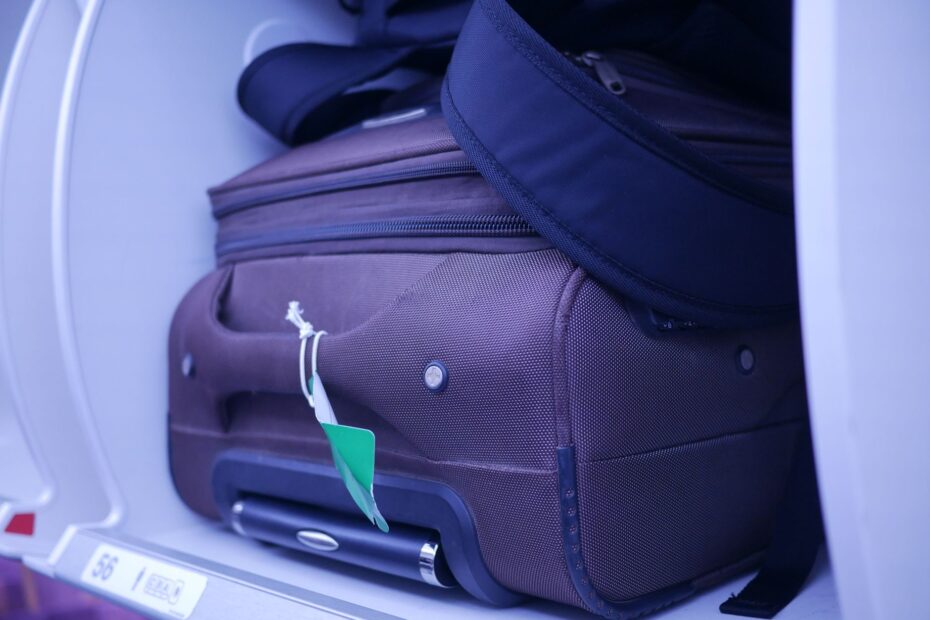
A standard ticket may permit cabin or checked bags subject to stated size, weight, and quantity limits. Your under-seat backpack may be included, while a full-size cabin bag or checked suitcase can carry a charge based on your fare, route, and airline.
You’ll find the rules that shape domestic trips, overseas routes, basic economy fares, connections, and airport charges. The details matter most before your bags reach a scale or sizing frame.
Your Ticket Sets the Starting Bag Entitlement
Your booking confirmation gives you the starting answer, not a broad airline promise. The airline baggage allowance tied to your ticket can vary by operating carrier, route, fare brand, cabin, frequent-flyer status, payment-card benefit, and fare conditions.
That variation explains why two passengers on the same aircraft can have different bag rights. Your fare class can include a personal item alone, a personal item plus cabin bag, or checked baggage with a stated weight cap.
Each Passenger Has a Separate Bag Entitlement
Four travelers under one booking number may still receive individual luggage entitlements. Your airline can permit weight pooling on select routes, though you should see that rule stated in the fare terms before shifting pounds between suitcases.
| Ticket detail | How it affects your luggage | What you should review |
|---|---|---|
| Your fare brand | It can limit your ticket to a personal item or include cabin and checked bags. | Find the fare name in your confirmation. |
| Your cabin | Premium cabins can include more checked pieces or heavier pieces. | Review the bag count and per-bag cap. |
| Your status or card | Eligible benefits can add a checked bag to your ticket. | Confirm that your flight qualifies. |
| Your route | Domestic and international services can carry different bag terms. | Match the policy to each flight segment. |
For example, your standard economy ticket can include a cabin bag, while a basic economy fare on the same route includes only an under-seat item. That fare difference leads to the next packing task: placing each piece in the right category.
Personal Items, Carry-Ons, and Checked Bags Have Separate Rules
Three bag categories sit in three different places during your flight. Your personal item stays under the seat, your carry-on baggage goes in an overhead bin, and your checked baggage travels in the aircraft hold.
Each category can have different inclusion rules, dimensions, and charges. A cabin bag that fits an overhead bin does not automatically qualify as a personal item beneath the seat ahead of you.
| Bag category | Where your bag goes | Typical contents for you |
|---|---|---|
| Personal item | Under the seat ahead of you | Your wallet, medication, laptop, and travel papers |
| Carry-on bag | Overhead bin | Your clothing and essentials for the flight |
| Checked bag | Aircraft hold | Your larger clothing, shoes, and permitted toiletries |
A Backpack Can Count as Your Personal Item
On many airlines, a backpack qualifies as an under-seat item when it meets personal-item dimensions and your fare includes a full-size cabin bag. A large hiking pack can exceed under-seat space, even though it looks smaller than a rolling suitcase.
Low-cost carriers and basic economy fares draw the sharpest line between these categories. Your personal item can be included while your cabin suitcase requires advance payment, a higher fare, or an eligible status exception.
Keep medication, passports, chargers, and one change of clothes in your under-seat item. Gate checking can separate you from an overhead-bin bag minutes before boarding.
Fare Class, Cabin, and Benefits Decide Included Bags
A fare name can matter more than the airline logo printed on your itinerary. Your standard economy ticket, basic economy fare, premium-cabin seat, or low-cost fare carries its own cabin-bag and checked-bag terms.
Basic economy fares vary widely. Some include a full-size carry-on, while others restrict your ticket to a personal item unless you pay for a cabin bag or qualify through status, a payment card, or route-specific terms.
Cabin and Checked Bag Counts Need Separate Answers
How many bags can I bring on a plane depends on two counts: bags allowed in the cabin and checked pieces included with your ticket. Your fare can include one personal item and one carry-on, yet no checked suitcase.
Premium cabins can add checked pieces, higher weight caps, or both. But your flight still has physical cabin-bag limits, and a larger carry-on can be gate-checked after overhead bins fill.
Status Benefits Depend on Flight Eligibility
Your frequent-flyer status can add checked-bag benefits, though qualifying flights and fare types still control. United Airlines links many bag benefits to MileagePlus status and eligible cards, while Delta Air Lines and American Airlines publish separate status and card terms.
Alliance names do not create one shared luggage rule. Star Alliance, SkyTeam, and oneworld matter because your loyalty benefit can extend across partners, but your ticket conditions and operating carrier decide whether it appears on a given itinerary.
An included piece is not automatically acceptable; its measurements and weight still determine whether it can travel.
Size, Weight, and Count Form Your Actual Limit
A suitcase can meet the allowed bag count and still fail at the counter because its wheels push it beyond the size cap. Your carry-on allowance has three parts: piece count, outside dimensions, and, on some carriers, cabin-bag weight.
Outside Dimensions Include Wheels and Handles
Your tape measure should cover the bag’s full outer shell, including wheels, handles, feet, and bulging pockets. Cabin dimensions differ by airline, so a suitcase accepted on Delta Air Lines can face a sizing-frame issue on another carrier.
Measure a packed bag rather than an empty shell. A soft-sided case can gain several inches from an outer pocket, a jacket, or a tightly packed zipper seam.
Checked Bags Follow Piece or Weight Systems
Under the piece concept, a ticket specifies the number of checked suitcases permitted, plus maximum weight and size for each. The weight concept gives you a total checked-luggage weight allowance that you divide across your bags under the carrier’s terms.
Linear dimensions mean length plus width plus height. A bag measuring 30 by 20 by 12 inches totals 62 linear inches, and your checked baggage weight limit can differ by cabin, route, and ticket.
| Limit type | What your airline counts | Your packing consequence |
|---|---|---|
| Piece concept | Your number of checked bags | Each suitcase must stay below its own weight and size cap. |
| Weight concept | Your total checked-luggage weight | Your bags share a total, subject to per-bag restrictions. |
| Cabin allowance | Your personal item and carry-on bag | Each piece must fit its assigned cabin space. |
The International Air Transport Association describes baggage practices across global air travel, but it does not set one binding limit for your ticket. Your carrier’s published terms control the suitcase in front of you.
International Routes and Connections Need Segment Reviews
The 62-inch suitcase that fits a domestic allowance can face different inclusions on an overseas itinerary. Your international flight baggage allowance can follow a piece allowance, a total-weight allowance, or route-specific terms tied to a partner carrier.
Outbound and return segments can carry different rules. Your booking can show one round trip while two airlines, two fare classes, or two cabin-bag standards sit behind it.
Marketing and Operating Airlines Can Differ
Your ticket can carry an American Airlines flight number while another airline flies the aircraft. The marketing airline sells the itinerary, while the operating airline supplies the aircraft and can control your cabin-bag dimensions or boarding enforcement.
Codeshare flights need a segment-by-segment review. Your outbound flight and return flight can have different aircraft operators, even where the reservation looks like one continuous trip.
Checked Bags Can Follow an Interline Rule
On a single-ticket international itinerary, the most significant carrier’s policy or another published interline arrangement may govern checked bags. Your confirmation should show the bag entitlement, but a route change or rebooking can alter the carrier that governs it.
Review the operating airline for each segment before packing. A connection with a partner can change cabin-bag limits even where your checked suitcase remains tagged to the final destination.
Extra, Heavy, and Large Bags Can Add Charges
A suitcase can trigger more than one airport charge. Your airline can charge for an extra checked bag, excess weight, and oversize dimensions on the same piece.
A 52-Pound Bag Can Cost More Than Repacking
Your 52-pound suitcase sits 2 pounds above a 50-pound cap, yet overweight baggage fees can apply at the counter. Move shoes, a toiletry bag, or a jacket into another permitted bag before check-in, provided that your other bag stays within its own limits.
That small excess matters because fee bands do not always rise pound by pound. Your counter agent follows the stated threshold, and 52 pounds can fall into the same charge band as a heavier suitcase.
| Bag issue | What triggers it | What you can do |
|---|---|---|
| Extra checked piece | Your bag count exceeds the included amount. | Pay in advance where your carrier permits it. |
| Overweight bag | Your suitcase exceeds its stated pound limit. | Redistribute items before reaching the counter. |
| Oversize bag | Your linear dimensions exceed the stated cap. | Bring a smaller case or arrange cargo transport. |
Airport payment can cost more than advance online payment because carriers set separate fee channels. Very heavy or very large bags can also be refused, so payment at the counter does not solve every excess-baggage issue.
Because counter remedies are limited, checking the applicable rules before departure is the safest safeguard.
Your Pre-Departure Review Finds the Rule That Applies
Your booking confirmation holds the details needed for a sound packing plan. Start with the fare line, then match every flight segment to the airline that will fly you.
- Open your confirmation. Find your fare brand, cabin, flight numbers, stated bag entitlement, and every stop.
- Identify each operator. Review which airline flies each segment, not only the logo that sold your ticket.
- Review carrier terms. Visit the operating airline’s baggage site or baggage fee calculator for route-specific dimensions and charges.
- Measure your bags. Use a tape measure for outside dimensions and a household scale for checked luggage.
- Pay before travel. Prepay checked bags where your carrier permits it and the advance amount suits your trip.
- Save the details. Store a screen capture of the relevant policy and your booking’s luggage line.
Your final review belongs close to departure because aircraft swaps, schedule changes, and fare changes can alter bag details. That record also gives you a clear reference where your itinerary displays a different allowance at the airport.
Packing Choices Reduce Airport Surprises
The bag near your feet should carry items that would cause the biggest disruption inside checked luggage. Your passport, medication, valuables, charging cable, and flight essentials belong in an allowed personal item or carry-on bag.
The Transportation Security Administration sets TSA carry-on restrictions, including liquid limits and screening rules for electronics. Your airline sets the bag’s size and count, while TSA rules control what passes through the security checkpoint.
- Leave weight room. Stay several pounds below your checked-bag cap to allow for airport-scale differences.
- Place dense items carefully. Put books and shoes in smaller bags only where each piece remains below its own limit.
- Fill your personal item. Place vital travel items under the seat rather than in checked luggage.
- Prepare for gate checks. Remove medication, documents, batteries, and valuables before surrendering a cabin bag.
- Review before departure. Treat your latest booking details as the final authority on baggage allowance on flights.
Smart packing is less about squeezing in one more shirt than leaving room for airline enforcement. Your bag should pass a sizer, a scale, a full overhead bin, and a partner-operated connection without a rushed repack.
Bottom Line
Your ticket, not your suitcase, sets the starting limit. Review your fare, operating carrier, route, included bag count, outside dimensions, and weight cap before leaving home.
That short review turns baggage allowance on flights from an airport gamble into a packing choice you control. Your preparation matters most on basic economy tickets, codeshares, and trips with a 50-pound checked-bag cap.
FAQ
What does baggage allowance mean on a flight?
Baggage allowance means the bags your ticket permits, plus the size, weight, and count limits attached to each one. Your ticket can include a personal item, carry-on baggage, checked baggage, or a mix of those categories based on your fare and route.
How many bags can I bring on a plane for free?
Your included bag count depends on your fare, cabin, airline, route, and benefits tied to your status or payment card. A ticket can include only a personal item, a personal item plus carry-on bag, or those cabin pieces plus one or more checked bags.
Is baggage allowance per person or per family?
Your luggage entitlement is assigned per passenger in most cases, even where your family shares one reservation. Each checked suitcase must meet its own size and weight limits unless your airline states that weight pooling is permitted for your route and fare.
What happens if my checked bag weighs 52 pounds?
Your 52-pound checked bag exceeds a 50-pound limit by 2 pounds and can trigger an overweight fee. Move items into another permitted bag before check-in, or remove items for cabin travel, provided that each remaining piece stays within its own restrictions.
Can I bring a backpack and a carry-on?
Your backpack can travel with a carry-on bag where it fits the airline’s personal-item dimensions and your fare includes both cabin pieces. Review the backpack’s packed size, since a large travel pack can exceed the under-seat allowance despite looking compact.
Do basic economy tickets include a carry-on or checked bag?
Depending on the airline, a basic economy fare may include a full-size carry-on, only a personal item, or cabin pieces without a checked suitcase. Your fare brand, route, airline, status, and payment-card benefit determine which bags appear on your ticket.