A soaked pack turns a good day hike into a miserable one. Wet down jackets, damp electronics, and a clammy strap against your back ruin the rhythm of any trail, which is exactly why a dedicated backpack rain cover earns its place in your kit. The right one slips over your pack in seconds, sheds water like a second skin, and stays put through brush and wind. The list below covers backpack covers, plus a few tarps and footprints that double as shelter-from-storm options when you need to cover more than one bag at camp.
An Overview Of The Picks

Tasmanian Tiger TT Raincover XL Black Backpack Cover

Osprey Poco Child Carrier Raincover
Onewind Ultralight Tent Footprint Silnylon

Unigear Backpack Rain Cover 5000mm

Onewind 10×10ft Waterproof Camping Tarp

Onewind 6×8 ft Camping Tarp 70D Nylon

Onewind Ultralight Footprint Backpack Cover
Osprey Ultralight Raincover for Backpack

Onewind Compact Footprint Silnylon

Tatonka Rucksack Rain Cover
Meet The Standout Selections
When your pack is bulging with multi-day gear, an ordinary cover stretches at the seams and flaps uselessly in the wind. The Tasmanian Tiger TT Raincover XL Black is built to swallow packs up to 100 liters, so anything from a long-weekend load to a full mountaineering kit slips inside without a fight. Its T-Cover Tex fabric shrugs off sustained rain and resists abrasion from granite scrambles and bushwhacking.
The integrated stuff sack makes it easy to deploy the moment clouds build, and it tucks back into a pocket-sized bundle when the sun returns. For trekkers logging serious mileage in nasty weather, the XL footprint is the difference between a soggy base layer and a dry camp setup. Hunters and military-style load carriers will appreciate the dark, low-visibility colorway on open terrain.
Notable Gains
- Genuinely oversized cut handles expedition loads without strain
- T-Cover Tex fabric holds up under wet brush and abrasion
- Attached stuff sack keeps the cover organized when packed
- Camouflage-friendly black tone suits hunting and field use
Things To Consider
- Loose fit on smaller daypacks can catch wind without cinching
- Bulkier packed size than ultralight alternatives below
Key Specs
Built With In Mind
Backpackers carrying expedition loads above 70 liters, hunters, and anyone facing multi-day storms on exposed routes.
Swap It Out When
The Osprey Ultralight Raincover is a better match for day hikers carrying 20 to 40 liters who prize light weight over raw capacity.
Hiking with a small passenger in tow raises the stakes on every weather decision, and a generic cover rarely fits the way a child carrier needs. The Osprey Poco Child Carrier Raincover slips over the Poco’s built-in sunshade to keep both child and pack dry through steady rain. Clear panels let your little one keep watching the world go by rather than staring at a wall of fabric.
It is purpose-built for the Poco family of carriers, so the fit feels snug instead of improvised. Parents chasing spring showers on family-friendly trails will find the electric-lime color a welcome safety feature, since visibility on crowded paths matters when a toddler is along for the ride. Compared with the Tasmanian Tiger above, this cover prioritizes a precise, parent-friendly fit over raw volume.
Notable Upsides
- Tailored cut works with the Poco sunshade for a clean seal
- Clear viewing panels keep kids calm and engaged in rain
- Bright color improves roadside and trailhead visibility
Points To Keep In Mind
- Only fits Osprey Poco child carriers, not standard packs
- Adds bulk when stored in the carrier’s back pocket
Made For
Parents hiking with toddlers in Osprey Poco carriers on cool, damp trails where visibility and comfort matter.
Not Your Match When
The Unigear Backpack Rain Cover suits traditional hikers carrying a 30 to 70 liter pack without a child seat.
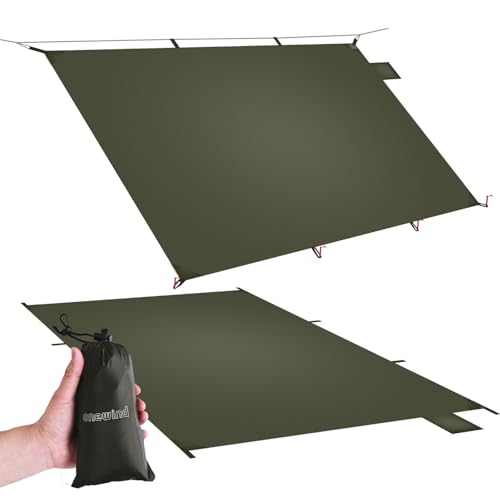
Thru-hikers measure every gram, and a wet tent floor ends a streak faster than tired legs. The Onewind Ultralight Tent Footprint uses 1.1oz 20D ripstop silnylon with a 4000mm PU and silicone coating, which is the spec language for “very waterproof, surprisingly light.” It slips under your shelter to block groundwater, sharp sticks, and abrasion that would otherwise shorten your tent’s lifespan.
The thin profile rolls into a peanut-sized bundle and barely registers on the scale. Where the Unigear cover above protects a pack from above, this footprint protects the floor of your whole sleep system from below. Long-distance trekkers who already count ounces will see the logic in carrying both.
Useful Touches
- 4000mm head rating handles saturated ground and rain pooling
- 20D silnylon keeps packed weight and size minimal
- Reinforced PU and silicone layers balance weight and durability
Honest Caveats
- Thin fabric demands careful handling around sharp ground
- Not shaped to a specific tent, so trimming may be needed
Quick Facts
The Right Fit
Thru-hikers, section hikers, and anyone trimming grams from a fast-and-light kit who needs reliable ground protection.
Reach For A Different Pick When
The Onewind 10x10ft Waterproof Camping Tarp makes more sense if you want above-ground shelter rather than under-tent coverage.
A 5000mm waterproof rating sounds like spec-sheet fluff until you stand under a real downpour and watch the water bead off your pack. The Unigear Backpack Rain Cover is built from 70D and 210T ripstop nylon, and the layered fabric shrugs off rain that would soak a thinner cover. Two anti-slip straps keep the cover locked to your pack on steep switchbacks, where cheaper covers tend to migrate sideways.
A small drainage eyelet on the base prevents water from pooling inside the cover, which is a common silent failure on simpler designs. The cover adjusts to a wide range of pack sizes, so one cover can serve most of your trips across the year. If you want a single, dependable cover for all-season hiking without paying expedition-tier prices, this is the one to weigh.
A Favorable Mix
- 5000mm head rating holds up under heavy, sustained rain
- Two anti-slip straps keep the cover in place on rough trails
- Adjustable sizing fits a broad range of pack volumes
- Bottom drain hole prevents internal water pooling
Where It Is Less Suited
- Slightly heavier than ultralight dedicated covers
- Loose fit on tiny daypacks can feel baggy in wind
Who It Suits Best
All-season hikers who face regular rain, want one cover that adapts to several packs, and prefer adjustability over custom fit.
Consider Something Else When
The Osprey Ultralight Raincover is the smarter pick for hikers carrying sub-30-liter packs who care more about grams than adjustability.
Sometimes a backpack cover isn’t enough, and you need a piece of fabric that can throw shade, block rain, and shelter a cook tent. The Onewind 10x10ft Waterproof Camping Tarp delivers 100 square feet of ultralight silnylon coverage weighing about 740g, which compresses down small enough for a backpack lid strap.
The generous footprint pitches as an A-frame over a hammock, a flat shelter over a mesh tent, or a ground fly for group cooking. Compared with the silnylon footprint earlier on this list, this tarp swings overhead rather than lying underneath, so it adds true livable space to camp. Hikers who treat their tarp as a multi-tool will appreciate how many configurations one piece of cloth can serve.
Why It Works Well
- 10x10ft footprint covers a hammock, tent, or cooking area
- 740g total weight stays friendly to backpackers
- Silnylon build sheds rain and dries quickly at camp
- Pitches in multiple layouts for varied environments
Trade Offs
- Requires tie-out points, trees, or trekking poles to pitch
- Silnylon can sag in cold, wet conditions without tensioning
Best Suited To
Hammock campers, bushcrafters, and backpackers who want one shelter layer that doubles as rain protection for gear.
Look Elsewhere When
The Tasmanian Tiger XL is a stronger fit if you want a fitted backpack cover rather than an open-air shelter.
Silnylon tarps win on weight, but 70D ripstop nylon wins on confidence when the wind picks up. The Onewind 6×8 ft Camping Tarp uses a heavier denier rating (denier is a measure of fiber thickness), giving it better tear resistance for serious bushcraft and survival use. The OD green colorway stays low-visibility in wooded terrain, which appeals to hunters and wildland practitioners.
At 48 square feet, the smaller footprint suits solo shelters, single-person hammocks, and quick rain flies for cooking. Where the 10×10 above offers more living room, this tarp focuses on toughness and packability. It pairs well as a ground cover for the Onewind Ultralight Footprint reviewed earlier.
Real Benefits
- 70D nylon resists tearing on brushy and rocky sites
- Compact 6×8 size works for solo shelters and hammocks
- OD green color blends with wooded environments
- Lighter than traditional canvas, tougher than silnylon
Points To Note
- Heavier than silnylon options of similar size
- Smaller footprint limits group or cook-tent setups
Who Will Love This
Solo bushcrafters, hunters, and campers who value tear resistance and low-visibility color over ultralight specs.
A Better Fit Elsewhere
The Onewind 10x10ft Waterproof Camping Tarp makes more sense for two-person shelters and group rain flies.
Carrying both a backpack cover and a groundsheet starts to feel redundant when one piece of fabric can do both jobs. The Onewind Ultralight Footprint Backpack Cover offers 360-degree coverage that wraps your pack while doubling as a clean surface at rest stops or camps. Built-in webbing loops on every corner let you stake it down in a sudden gust, which is something typical bag covers rarely manage.
It pulls double duty for backpackers who already carry a thin footprint for their shelter. The trade-off is a less tailored fit over your pack compared to a dedicated cover like the Unigear above. For minimalist kits, though, fewer pieces that do more work is a real win.
Strong Points
- Functions as both pack cover and ground sheet
- Corner webbing loops anchor the fabric in wind
- 360-degree coverage shields packs from all angles
Small Caveats
- Less tailored fit over shaped packs than dedicated covers
- Requires staking at rest stops to stay clean and dry
Perfect Match For
Minimalist campers and thru-hikers who want to combine ground and pack protection into a single piece of kit.
Skip It When
The Unigear Backpack Rain Cover is a better match for hikers who prefer a tailored, strap-locked fit over multi-function design.
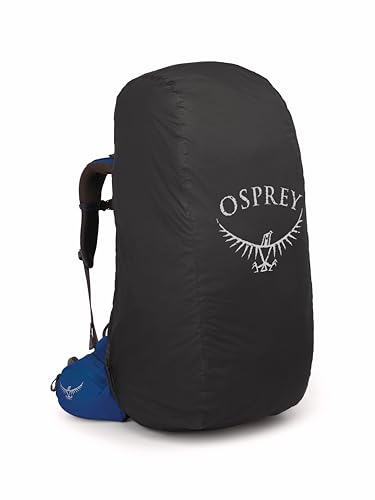
The Osprey Ultralight Raincover takes the brand’s accessory line into lighter, more responsible territory with main body fabrics that use recycled content and DWR (durable water repellent) treatments made without PFAS, which are the forever chemicals common in older rain gear. Taped seams complete the waterproof build, so water has nowhere to sneak through when rain persists for hours.
It packs down small enough to live in your pack’s lid pocket until the sky opens. Compared with the Tasmanian Tiger XL, this is the cover you grab for a day hike rather than an expedition. Hikers who already trust Osprey packs will find the sizing logic familiar, which removes one guess from the buying process.
Advantages To Know
- Recycled main body fabric trims environmental footprint
- DWR without PFAS keeps chemicals out of your rain runoff
- Taped seams prevent slow leaks at stress points
- Ultralight packed size suits day hikes and fast packing
Factors To Consider
- Less protection for large packs above 50 liters
- Premium materials often come at a higher cost
Feature Snapshot
Right Fit For
Day hikers, commuters on foot, and small-pack users who want responsible materials and a clean, lightweight cover.
Consider Something Else When
The Tasmanian Tiger XL is the better choice for multi-day trekkers running 70 to 100 liter expedition packs.
When pack space is the real constraint and not weight, a compact footprint solves more problems than it creates. The Onewind Compact Footprint uses the same 4000mm PU and silicone-coated silnylon formula as its larger sibling, just trimmed into a smaller, more packable cut. It slides into a side pocket or stuff sack without complaint.
For solo shelters and small tents, this footprint does exactly what an expensive custom-cut sheet does at a friendlier pack size. It can also serve as an emergency rain fly for a daypack in a pinch, which broadens its usefulness on longer trips where every gram and inch counts.
The Good Stuff
- Compact packed size slips into tight pack pockets
- 4000mm waterproof rating matches larger Onewind sheets
- Light enough to justify carrying on shorter trips
- Doubles as emergency rain fly for small packs
Things That May Matter
- Smaller size limits coverage under family-sized tents
- Thin fabric needs care around campfire coals and sharp sticks
Feature Rundown
Whose Shelf It Belongs On
Solo backpackers and minimalists running small shelters who want ground protection that nearly disappears in their pack.
Where Another Pick Suits Better
The Onewind 10x10ft Tarp is the smarter pick for campers who need overhead shelter and not just ground coverage.
Some designs earn their place by staying simple, and the Tatonka Rucksack Rain Cover is one of those time-tested pieces. The straightforward rain flap slips over daypacks and mid-size rucksacks to shed rain without bells or whistles. Available in red for high visibility or green for a low-visibility camouflage look, it lets you match the cover to the trip.
It lacks the cinch straps and taped seams of newer designs, so fit is a touch looser on technical packs. For traditional daypack users, school commuters, and casual hikers, that simplicity is a feature, not a flaw. The Tatonka rounds out the list as a no-nonsense option for anyone who wants a basic, functional cover.
Bright Spots
- Simple, proven design with no learning curve
- Color options suit visibility or camouflage preferences
- Affordable entry into rain protection for casual hikers
Practical Considerations
- Looser fit compared with cinched, tailored covers
- Limited sizing information makes pack matching a guessing game
Who Should Grab It
Casual daypack users, students, and traditional hikers who want a simple cover without extra hardware.
A Better Fit Elsewhere
The Unigear Backpack Rain Cover is the smarter pick for hikers who want adjustable straps and a 5000mm waterproof rating.
What Matters Most Before Choosing a Backpack Rain Cover
Match Capacity To Your Pack Size
The fastest way to ruin a rain cover is to buy one sized for the wrong volume. A 30-liter cover stretched over a 70-liter pack will tear at the seams, while a 100-liter cover draped over a daypack flaps uselessly. Most covers list a size range, and matching your pack’s advertised volume to the cover’s range is the most reliable rule.
Read Waterproof Ratings As A Layered Promise
A “waterproof” cover can mean anything from a light DWR spray to a fully taped, multi-coated shell. Head ratings like 4000mm and 5000mm refer to a hydrostatic head test, where a fabric column of water is measured in millimeters until it leaks, so higher numbers equal better resistance. The Unigear’s 5000mm handles sustained rain, while a 1500mm cover is fine for drizzle and short showers.
Prioritize Secure Attachment
Covers without straps or cinches slide off on the first downhill, which is when you actually need them most. Anti-slip straps, buckle systems, or elastic hems all help. The Unigear’s twin straps and the Tasmanian Tiger’s snug cut solve this in different ways, so pick the method that matches how you hike.
Weigh Packability Against Durability
A thicker, heavier cover will outlast a paper-thin ultralight one, but it also eats more pack space. For day hikers with room to spare, a robust 70D nylon cover makes sense. For thru-hikers counting every gram, a 20D silnylon footprint or ultralight cover is the smarter trade, with the caveat that thin fabrics demand careful handling.
Smart Buying Advice for Backpack Rain Cover Shoppers
Where Shoppers Go Wrong
Buying on color or brand familiarity alone is a common trap. A bright, attractive cover that fits poorly will leak at the seams and slide off your pack when you need it most. Measure your pack’s volume before choosing a size, and read the listed capacity range carefully. Skipping the waterproof rating is another shortcut that ends in a wet sleeping bag.
When Paying More Pays Off
Premium covers earn their cost through taped seams, recycled fabrics, and stronger hardware that hold up over years rather than seasons. If you hike weekly or face serious weather, the Osprey Ultralight’s responsible materials and taped seams justify a step up. For occasional fair-weather use, a basic cover like the Tatonka gets the job done without straining your wallet.
Frequently Asked Questions
How do I pick the right size backpack rain cover?
Check your pack’s advertised liter volume and match it to the cover’s listed range. A snug fit prevents flapping and water intrusion better than an oversized cover cinched tight.
Are higher waterproof ratings always better?
Higher ratings mean stronger resistance to hydrostatic pressure, which matters in sustained rain. For drizzle and short showers, mid-range ratings perform well without added weight.
Can I use a tent footprint as a backpack rain cover?
A flat footprint can wrap a pack in a pinch, but it lacks shaping and attachment points. Dedicated covers stay in place far better on technical terrain.
How do I clean and store my rain cover?
Wipe with a damp cloth and mild soap, then air dry before folding to prevent mildew. Store loosely in a stuff sack so coatings don’t crack at sharp folds.
Do PFAS-free DWR treatments perform as well?
Newer PFAS-free treatments shed water effectively for most hiking conditions, though they may need more frequent reapplication. They trade a small performance gap for a much cleaner environmental footprint.
Closing Remarks
Your pack carries everything that keeps your trip comfortable, and a dependable rain cover is the small piece that protects all of it. Match capacity and waterproof rating to your usual conditions, then choose between ultralight, multi-use, and expedition designs based on how you hike. The right cover disappears in your pack until the sky turns, then earns its weight in dry gear and a clear head.