When you’re a week past the last cell tower and the weather rolls in sideways, a satellite communicator becomes the one piece of gear that keeps the trip from becoming a story for the wrong reasons. The picks below cover the core use cases backpackers actually face, whether you’re chasing a long trail in the Cascades, a remote loop in Patagonia, or a ski tour with zero reception. Most of these are messaging-and-SOS communicators rather than voice phones, which matches what backpackers actually need: lightweight hardware, dependable two-way text, and a panic button that works when nothing else does.
The Main Contenders

Garmin inReach Mini 2 Communicator Bundle, Flame Red

Garmin inReach Mini 2 Bundle, Flame Red
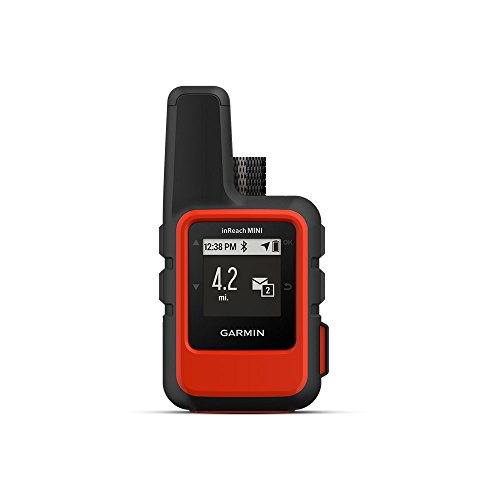
Garmin inReach Mini Satellite Communicator, Orange

Garmin inReach Mini 2 Communicator, Flame Red

Garmin inReach Messenger Plus Communicator
Fire-Maple Fixed Star 1 Stove System

Garmin GPSMAP 64st Handheld GPS
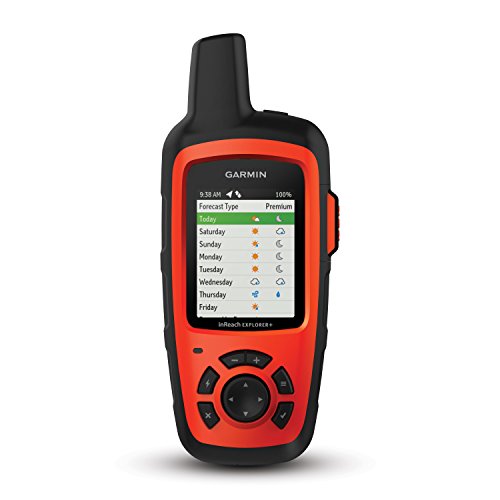
Garmin inReach Explorer+ with Topo Maps
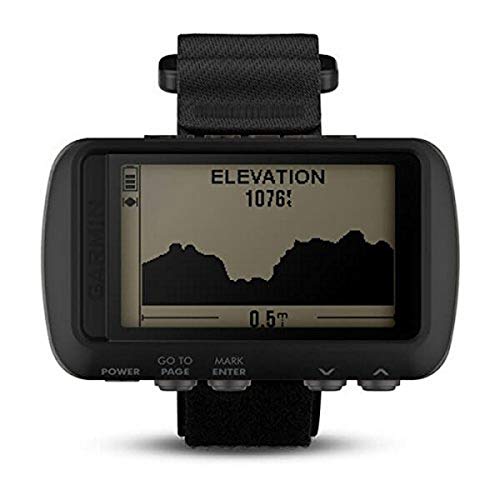
Garmin Foretrex 601 Wrist GPS

Garmin inReach Mini 2 Communicator, Orange
The Strengths Of Each Pick
For backpackers who put their satellite communicator through years of abuse, this bundle pairs the inReach Mini 2 hardware with a Deco Essentials protection plan stretching out to roughly 26 months. The Mini 2 itself remains a featherweight, two-way satellite messenger that fits on a pack strap without complaint, sending and receiving text messages through the Iridium network even when you’re camped in a slot canyon.
The extended coverage wraps accidental damage and post-warranty malfunctions into one package, which for some hikers removes the worst-case worry: a fried device two seasons into a thru-hike. Anyone logging serious miles across multiple years tends to appreciate that combination, since replacement costs otherwise come straight out of pocket.
What Works In Its Favor
- Compact two-way messaging over the global Iridium satellite network
- Interactive SOS linking to a 24/7 emergency response coordination center
- Long protection window through the included extended plan
- Bluetooth pairing with compatible smartphones for easier typing
- Lightweight body that disappears on a pack strap or chest harness
Things To Consider
- An active satellite subscription is required for full functionality beyond basic GPS
- The bundle price runs higher than a Mini 2 sold without protection coverage
Who It Suits Best
Multi-year backpackers and thru-hikers who value long protection windows and a compact satellite communicator rolled into one package.
Skip It When
The Garmin inReach Explorer+ suits backpackers who want built-in topo maps and on-device route navigation more than a long warranty plan.
Where Item 1 emphasizes long protection, this bundle leans into travel practicality with a 10-foot USB-C cable, USB wall and car adapters, and a portable power bank tucked alongside the Mini 2. Trekkers flying into a foreign trailhead or driving cross-country to a remote trail will appreciate not having to chase down charging accessories separately. The core device itself is identical to the standard Mini 2: Iridium-backed two-way text, interactive SOS, and Bluetooth phone pairing.
For backpackers who treat each trip like a small expedition, the all-in-one charging setup removes a category of packing mistakes. You show up with everything that keeps the device alive for a two-week journey.
Strong Points
- Long USB-C cable and dual charging adapters included from the start
- Portable battery bank adds field charging on extended trips
- Same global two-way messaging and SOS as the standalone Mini 2
- Bluetooth pairing lets you type on a phone keyboard for longer updates
Worth Noting
- The accessory bundle adds bulk to the original Mini 2 footprint inside your pack
- An active satellite subscription is required for messaging and SOS features
Made For
Out-of-country trekkers and road-to-trail backpackers who want their charging kit bundled with the communicator itself.
Look Elsewhere When
The Garmin inReach Mini 2 Communicator, Flame Red (Item 4) is the cleaner pick for backpackers who already own compatible cables and adapters.
The original inReach Mini is the doorway into Garmin’s satellite ecosystem without paying Mini 2 prices. You still get the core promise: a small, rugged handheld that enables two-way text messaging over the global Iridium network once a subscription is active. Compared to the Mini 2 in Item 4, the original Mini has a slightly older internal antenna design, which in deep canyons or under dense canopy may show slower message delivery for some hikers.
First-time satellite shoppers often find the original Mini a sensible way to test the category. If the messaging habit grows, the Mini 2 picks up improved battery life and faster satellite acquisition down the road.
A Few Highlights
- Palm-sized form factor that disappears on a pack strap or in a hip belt pocket
- Two-way text messaging over the Iridium satellite network with active subscription
- Interactive SOS to a 24/7 emergency response coordination team
- Bluetooth pairing for easier message composition through a connected phone
Trade Offs
- Battery life and satellite acquisition run shorter than the Mini 2 generation
- An active subscription is required for both messaging and SOS features
- The antenna design may struggle in narrow canyons versus newer Mini hardware
Best Suited To
First-time satellite shoppers stepping into the inReach ecosystem who want a proven communicator at the lowest tier.
Where Another Pick Suits Better
The Garmin inReach Mini 2 Communicator, Orange (Item 10) suits hikers who want updated battery life and faster satellite lock in tougher terrain.
This is the Mini 2 stripped down to its essentials: the handheld, the charging cable, and nothing else weighing down the box. Solo weekend hikers carrying a single two-day pack tend to gravitate toward this configuration because the device itself is small enough to clip on a sternum strap without bulk. The Mini 2 adds improved satellite acquisition versus the older Mini (Item 3), so messages tend to send faster when the sky is partially obscured.
The trade-off versus the bundles above is that you bring your own charging accessories. For backpackers who already own a USB-C cable and a power bank, that is rarely a problem.
Useful Touches
- Compact, lightweight body that fits in a palm or clips to a pack
- Global two-way text messaging over the Iridium satellite network
- Interactive SOS with 24/7 emergency response coordination
- TracBack routing helps you retrace a route back to the trailhead
- Bluetooth pairing for easier message composition on a connected phone
Honest Caveats
- Charging cable and power accessories are not included in this listing
- An active satellite subscription is required for full messaging and SOS capability
Who Should Grab It
Solo weekend hikers who want a streamlined Mini 2 with no bundled extras to pay for or carry.
Not Your Match When
The Garmin inReach Mini 2 Bundle, Flame Red (Item 2) is a stronger match for backpackers who need charging accessories included out of the box.
The Messenger Plus moves beyond the Mini 2’s text-and-SOS baseline by adding voice recording and photo-sharing through your connected smartphone. For trip leaders coordinating a group spread across a valley, a quick voice clip or thumbnail photo tends to communicate trail conditions faster than typing on the device itself. An active satellite subscription remains the unlock for either capability, and some jurisdictions regulate or prohibit the use of satellite communication devices, so check local rules before depending on one.
Compared to the Mini 2 line in Items 1, 2, and 4, this device leans more toward “stay connected with people at home” than “compact pocket rescue tool.” Backpackers who want richer messaging at the cost of slightly more bulk tend to find the trade worthwhile.
Where It Helps
- Two-way text messaging plus voice and photo sharing over the satellite network
- Interactive SOS linking to a 24/7 emergency response coordination team
- Smartphone pairing expands how messages can be composed in the field
- Compact form factor still clips comfortably onto a pack strap
Points To Keep In Mind
- Voice and photo features require an active satellite subscription tier
- Some jurisdictions regulate or prohibit satellite communication device use
- Device runs slightly larger than the bare Mini 2 form factor
Right Fit For
Group trip coordinators and family-contact-focused backpackers who want richer messaging than basic text.
Consider Something Else When
The Garmin inReach Mini 2 Communicator, Flame Red (Item 4) is the better pick for backpackers who want the smallest possible pocket footprint and don’t need voice or photo features.
The Fire-Maple Fixed Star 1 isn’t a satellite communicator, but it slots into a backpacker’s kit list right next to one. The integrated system uses a heat exchanger design intended to reduce boiling times versus open-flame stoves, and at roughly 18 ounces total it packs stove, pot, and bowl into a single compact kit. A fuel canister is not included and compatibility excludes Coleman canisters, so you’ll want to bring the right fuel from home.
Where the Garmin communicators above handle safety, this one handles dinner. Together they form a sensible pairing for any multi-day trip where you want one less thing to think about at the cook station.
The Upside
- Heat exchange technology intended to reduce boil times versus open-flame stoves
- Compact, all-in-one kit with stove, pot, and bowl nesting together
- Compatible with most standard backpacking fuel canisters on the market
- Lightweight enough at roughly 18 ounces for most multi-day packs
Some Limits To Know
- Fuel canister sold separately and is not compatible with Coleman canister models
- This is a stove system, not a satellite communicator, so it pairs with one of the other items
Built With In Mind
Full-kit backpackers who want a single integrated stove system that nests together cleanly inside their pack.
Another Choice May Suit
The Garmin inReach Mini 2 Communicator, Orange (Item 10) is the right pick for backpackers focused specifically on safety messaging, since the Fixed Star 1 only handles cooking.
The GPSMAP 64st is the road-not-taken alternative for backpackers who prefer dedicated buttons over a touchscreen and want preloaded topographic maps. The 2.6-inch color screen remains readable in direct sunlight, and the high-sensitivity GPS plus GLONASS receiver tracks position under tree cover that phones often lose. Battery life runs up to 16 hours on a pair of AAs, which means swapping cells at a trail town rather than hunting for an outlet.
Note that this is a navigation device rather than a satellite communicator. Pair it with one of the Mini 2 picks above if you want both mapping and off-grid messaging in your pack.
A Favorable Mix
- 2.6-inch sunlight-readable color display with 160 by 240 pixel resolution
- Preloaded TOPO U.S. 100K maps plus 8GB of expanded internal memory
- Dual battery system runs on two AA cells or an optional rechargeable pack
- Bluetooth and ANT+ sensor support for heart rate, temperature, and accessories
Room For Improvement
- This is a GPS navigator, not a satellite communicator, so no two-way text or SOS
- Weighs around 8.1 ounces with batteries, heavier than the Mini 2 line
Perfect Match For
Map-first navigators who want tactile buttons, preloaded topo maps, and replaceable batteries for long off-grid trips.
Reach For A Different Pick When
The Garmin inReach Mini 2 Communicator, Flame Red (Item 4) is the stronger fit for backpackers who specifically need two-way satellite messaging and SOS.
The Explorer+ sits between the original Mini and the Mini 2 line by combining satellite messaging with built-in topographic navigation and onboard routing. For trip leaders planning multi-week routes, having both functions in a single handheld cuts the gear list and removes the worry of charging two devices. The Iridium-backed two-way text and SOS behave like other inReach devices once an active subscription is in place.
Compared to the Mini 2 (Items 1, 2, 4, and 10), the Explorer+ is bulkier in hand but consolidates two devices into one. Long-trip backpackers tend to find that consolidation worth the extra size.
Notable Upsides
- Two-way text messaging over the global Iridium satellite network
- Built-in topo data and route navigation on the device itself
- Interactive SOS through a 24/7 emergency response coordination center
- Consolidates messaging and navigation in one handheld for multi-week trips
Factors To Consider
- Bigger and heavier than the Mini 2 form factor in the rest of this list
- An active satellite subscription is required for messaging and SOS features
- Older generation hardware compared to the Mini 2 line
Who Will Love This
Long-trip planners and expedition-style backpackers who want both topographic navigation and satellite messaging in one handheld.
Swap It Out When
The Garmin inReach Mini 2 Communicator, Flame Red (Item 4) is the better pick for backpackers who prefer a smaller, lighter device and rely on their phone for navigation.
The Foretrex 601 straps to your wrist like a watch, leaving both hands free for trekking poles, ropes, or ice axes. It works with GPS, GLONASS, and Galileo satellite systems for positioning accuracy, and a 3-axis accelerometer, compass, and barometric altimeter feed navigation data even when the satellite signal briefly drops. Battery life stretches past 48 hours in navigation mode and up to a week in UltraTrac, depending on settings.
Constructed to military standards (MIL-STD-810G) and night-vision-goggle compatible, this is a navigator rather than a satellite communicator. Pair it with one of the Mini 2 options above for two-way messaging on the same trip.
Bright Spots
- Wrist-mounted form factor keeps both hands free for poles or technical terrain
- Multi-constellation tracking across GPS, GLONASS, and Galileo satellite systems
- 3-axis accelerometer, compass, and barometric altimeter for navigation redundancy
- Battery life exceeds 48 hours in navigation mode and stretches up to 1 week
Where It Is Less Suited
- This is a navigator, not a satellite communicator, so no two-way text or SOS
- Night vision compatibility is useful for some users, irrelevant for others
Whose Shelf It Belongs On
Tactical route hikers and hands-occupied backpackers who want a wrist-mounted navigator built to military standards.
A Better Fit Elsewhere
The Garmin inReach Mini 2 Communicator, Flame Red (Item 4) is the better match for backpackers who specifically want two-way satellite messaging and SOS in one device.
The orange Mini 2 mirrors the Flame Red version in Item 4, right down to the global two-way messaging and interactive SOS through the Iridium satellite network. The color difference is more practical than cosmetic: a high-visibility orange body is easier to spot inside a cluttered tent, inside a glove, or on a snow-covered pack. Group trip leaders sometimes prefer it for that exact reason, since fewer devices get left behind at breaks.
TracBack routing navigates you back to your starting point along the same track you recorded on the way in, which is reassuring when weather rolls in on an unfamiliar ridge.
Reasons It Performs
- Compact, lightweight body with a high-visibility orange finish
- Two-way messaging over the global Iridium satellite network
- Interactive SOS with 24/7 emergency response coordination
- TracBack routing helps retrace your path to the trailhead
- Bluetooth pairing for typing messages through a connected smartphone
Points To Note
- An active satellite subscription is required for full messaging and SOS capability
- Some jurisdictions regulate or prohibit satellite communication device use
Who It Suits Best
Group trip leaders and backpackers in snow or low-visibility terrain who want a high-visibility Mini 2 they won’t misplace.
Where A Sibling Pick Shines
The Garmin inReach Mini 2 Communicator Bundle, Flame Red (Item 1) is the better pick for backpackers who want extended warranty coverage bundled in.
Picking The Right Satellite Communicator For Your Trip
Start with what you actually need the device to do. For most backpackers, a two-way satellite messenger with interactive SOS covers the safety checklist: it lets you text family or friends from the trail and trigger a 24/7 emergency response if something goes sideways. Devices that add on-device topographic navigation or photo and voice sharing cost more and add weight, so they only make sense if you actually use those features.
Subscription tiers matter as much as the hardware itself. An active satellite subscription is required across the Garmin inReach line for both messaging and SOS, and some jurisdictions regulate or prohibit the use of satellite communication devices entirely. Check local rules before depending on one for a trip.
Weight and form factor drive daily comfort. The Mini 2 family weighs in at the featherweight end and disappears on a pack strap, while the Explorer+ consolidates navigation and messaging into a larger handheld. Wrist-mounted navigators like the Foretrex 601 leave both hands free for trekking poles but don’t offer two-way text on their own.
Pair the communicator with the rest of your kit. The Fire-Maple stove system covers cooking on a multi-day trip, while the GPSMAP 64st handles map-first navigation. A combined setup of Mini 2 plus one of these companions is a common configuration for serious backpackers.
What Trip Planners Get Wrong About Satellite Phones
Where Shoppers Go Wrong
A common slip-up is treating a satellite communicator as a phone replacement. Most backpackers don’t actually need voice calls; they need short text updates and a panic button. Buying a feature-heavy device and never using the extra capabilities just adds weight. Another trap is forgetting the subscription. An inReach Mini 2 without an active plan is an SOS beacon, not a messaging device, and some users only realize that on day three of a trip.
When Paying More Pays Off
The higher tier earns its keep when you actually push the device. Thru-hikers and expedition backpackers benefit from longer battery life, faster satellite acquisition, and richer features like voice notes and photo sharing. The Explorer+ and Messenger Plus cost more because they consolidate navigation and richer messaging into one device, and that consolidation adds real value on long trips.
Frequently Asked Questions
Do satellite phones work everywhere?
Most satellite communicators rely on the Iridium network, which provides global coverage including the poles. Local regulations can still limit or prohibit use in certain jurisdictions, so checking regional rules before travel is wise.
Do I need a subscription for an inReach device?
Yes. Every Garmin inReach listed above requires an active satellite subscription for two-way messaging and interactive SOS. Without an active plan, SOS may still function depending on the device and plan tier.
How long does the battery last on a Mini 2?
Battery life varies with usage and conditions. Sending frequent messages drains the battery faster than occasional check-ins, and cold weather tends to reduce runtime in the field.
Can I use a satellite communicator in place of a PLB?
Personal Locator Beacons (PLBs) transmit a one-way SOS on a separate frequency reserved for emergencies. Satellite communicators like the Mini 2 add two-way text but still trigger an SOS through a coordination center.
Is a satellite phone or a messenger better for hiking?
For most backpackers, a two-way satellite messenger hits the right balance of weight, cost, and capability. Dedicated satellite voice phones are heavier, pricier, and rarely necessary for trail use.
Closing Remarks
The right satellite communicator for you depends on how far off the grid you actually go, how often you want to check in, and how much weight you’re willing to carry. The Mini 2 family covers most backpackers well, the Explorer+ consolidates navigation and messaging for longer trips, and the Messenger Plus adds richer communication for group trip leaders. Pair whichever device fits with the rest of your gear, and you’ll stay in touch without turning the hike into a logistics project.