A backpacking umbrella earns its place on the trail by doing two things at once: shedding rain without weighing you down, and standing up to a gust that would snap a cheap frame. The right one for you depends on terrain, weather window, and how little space you can spare in your pack. This roundup breaks down eight compact options, each with a clear specialty, so you can match the canopy to the conditions you actually hike in.
The Shortlist At A Glance

erised’s bifrost Wood-Grain Handle Travel Umbrella

POKIXY Compact Travel Umbrella

NINEMAX Windproof Travel Folding Umbrella

Chakipee Travel Compact Windproof Umbrella

LifeTek Premium Travel Umbrella
Moorrlii UPF 50+ Compact Travel Umbrella

Bluinzi 2 Pack 46 Inch Compact Umbrellas
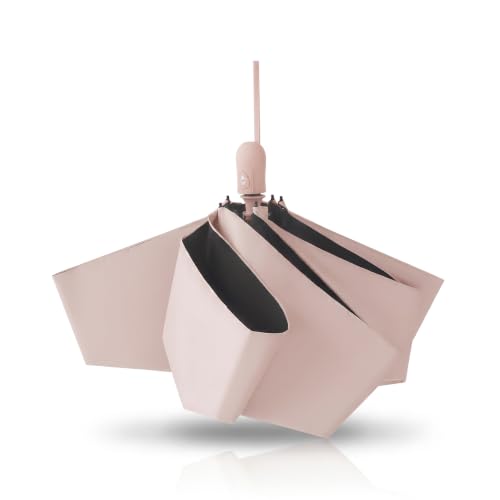
Mustarpicking Compact Sun Umbrella
The Picks, Examined More Closely
The bifrost umbrella leans into the “always with you” approach, with a wide strap that loops over a pack strap or a belt loop and a wood-grain handle that feels sturdier than the usual plastic. UPF 50 (a fabric rating that blocks 98 percent of ultraviolet rays) on the canopy means it pulls double duty as a sunshade on exposed switchbacks. The auto open/close button is useful when you need a free hand to dig out a map or a snack.
Compared to the POKIXY pick below, this one trades some rib strength for everyday styling. The contrast color panels help you spot it quickly in a cluttered pack, and the included pouch keeps the wet canopy off your down jacket. For most weekend hikers, it’s a comfortable mix of form and function.
The Upside
- UPF 50 fabric shields against harsh alpine sun
- Wide strap secures easily to backpack webbing
- 10-rib frame offers a more rounded canopy than 8-rib alternatives
- Wood-grain handle stays grippy when hands are cold or wet
- Auto open/close helps when one hand is holding a trekking pole
Things To Consider
- Wood-grain handle can scuff over time on rough trips
- Carrying pouch adds a small step before the umbrella tucks away
Best Suited To
Backpackers who want a single canopy for both rain and sun on mixed-elevation trails.
Look Elsewhere When
The Chakipee Travel Compact is a better match for hikers who face sustained high winds and prioritize canopy fabric toughness.
Wind is what kills most compact umbrellas, and POKIXY builds the eight fiberglass ribs (flexible supports that bend and spring back rather than snap) to flex through a gust instead of folding inside-out. Fiberglass matters on a long-haul trail because it tolerates a few rough days in a stuffed pack without losing its shape. The auto open/close mechanism saves fumbling when a squall rolls in mid-ridge.
Where the bifrost model leans on style, this one strips down to weather-ready basics. Owners commonly report that the small folded footprint slips into a side pocket of a 40-liter pack, leaving room for a water filter up front. For thru-hikers running lean and light, the lower rib count keeps the weight down while still covering one person.
Useful Highlights
- Eight fiberglass ribs flex rather than crack in wind
- Compact fold frees up space for other essentials
- Auto open/close is a one-hand operation
Points To Keep In Mind
- Smaller canopy leaves shoulders exposed in sideways rain
- No UV rating in the listed specs, so it’s a rain-first tool
- Lightweight frame may flex noticeably in steady 25+ mph gusts
Feature Snapshot
Right Fit For
Thru-hikers and ridge hikers who face real wind and want a canopy that can take a beating.
Reach For A Different Pick When
The Moorrlii UPF 50+ Compact Travel Umbrella suits backpackers tackling open alpine sun exposure where UV protection matters as much as rain cover.
NINEMAX focuses on the small daily annoyances: a button that opens and closes without a fight, a folded length that slides into a commuter tote, and a frame built for the kind of gust that hits between subway and sidewalk. For backpackers taking a quick overnighter or a long weekend, it covers the basics without overcomplicating things.
Stacked against the POKIXY pick above, NINEMAX trades a few technical features for a friendlier feel. The auto open/close system feels lighter in the hand, which works on short trips but may not inspire confidence on a week-long storm window. It works well for hikers and travelers who want one canopy for town and trail.
Noteworthy Benefits
- Automatic open and close for fast deployment
- Windproof construction for everyday gusts
- Travel-friendly size slips into laptop bags
Trade Offs
- Specifications are limited, so rib material isn’t confirmed in the source
- Less detailed frame info than the LifeTek Premium Travel Umbrella
Made For
Commuters, weekend hikers, and travelers who need one umbrella for the trailhead and the city block.
Swap It Out When
The Bluinzi 2 Pack 46 Inch Compact Umbrellas makes more sense for hiking partners or families who want a spare canopy in the pack.
210T fabric (a tight, high-count polyester weave that resists tearing and dries quickly) is the headline feature here, and it’s a meaningful one for backpackers. Tightly woven fabric sheds water faster than loose weaves and resists small punctures from brushy trails. Chakipee pairs it with a windproof frame and an automatic open/close that keeps things simple when rain arrives mid-step.
Where NINEMAX feels like a city umbrella with trail-ready features, Chakipee leans harder into pack-trip durability. The slightly sturdier build adds a small amount of weight, but you may find the trade worth it on longer routes where a torn canopy ends a trip early.
Where It Excels
- 210T fabric handles wet brush and quick downpours
- Windproof design for ridge and saddle crossings
- Auto open/close keeps the action one-handed
Honest Caveats
- Limited published specs compared to premium models
- Slightly heavier than ultra-light minimalist picks
Spec Overview
Who Should Grab It
Long-distance backpackers who need a fabric that holds up to brushy trails and repeated wet-dry cycles.
Consider Something Else When
The Mustarpicking Compact Sun Umbrella is the better match for thru-hikers who need an ultralight 7.8 oz option above all else.
LifeTek frames itself as the traveler’s umbrella, and the design choices support that pitch. The folded profile is small enough for a purse, laptop bag, or carry-on, but the brand emphasizes a strong frame for heavy rain, plus sun UV protection. For digital nomads bouncing between hostels and trail towns, that dual-use angle is genuinely useful.
Where Chakipee aims at trail-side durability, LifeTek focuses on the day-in, day-out crowd. The automatic open and close feels reliable in the hand, and the published framing leans toward heavier downpours than the entry-level picks above. Backpackers taking long layovers and crowded transit days may appreciate the build quality, even if the listed source details are lean.
Well-Handled Touches
- Automatic open/close deploys cleanly one-handed
- Slides into purses and laptop bags for daily carry
- Strong frame built for heavier rain events
- UV protection layer for sunny stretches between storms
Room For Improvement
- Premium framing usually comes with a higher cost than basic picks
- Lighter published specs compared to specialty models like Moorrlii
Whose Shelf It Belongs On
Frequent travelers, remote workers, and backpackers who split time between hostels and trailheads.
A Better Fit Elsewhere
The erised’s bifrost Wood-Grain Handle Travel Umbrella is a stronger match for hikers focused on UV shielding and backpack-strap carry.
Moorrlii treats the umbrella as a sun tool first. UPF 50+ (the highest tier of ultraviolet protection for fabrics, blocking more than 98 percent of UV) sits alongside a black glue inner coating that absorbs reflected light, plus a water-repellent outer canopy for the rain showers that still roll in. The 39-inch canopy gives you full head-and-shoulders coverage, and the 9.8-inch folded length fits a pack side pocket.
Compared to the POKIXY pick above, this one carries more sun-shield detail and a clearly published coverage area. The windproof framing handles gusts but isn’t the headline feature. For backpackers tackling treks where the sun is the real hazard, the dual rating is a practical combination.
Strong Points
- UPF 50+ protection for high-UV environments
- Black inner coating reduces reflected glare
- 39-inch canopy offers generous single-person coverage
- 9.8-inch folded size suits pack pockets
Some Limits To Know
- Heavier than the 7.8 oz Mustarpicking option
- UV-first focus may be overkill for shaded forest hikes
Key Product Details
Built With In Mind
Alpine trekkers, desert hikers, and backpackers tackling long open stretches where sun exposure stacks up fast.
Not Your Match When
The NINEMAX Windproof Travel Folding Umbrella fits a casual commuter or weekend traveler better than a UV-focused trekker.
Two umbrellas in one pack changes the math for hiking duos. Bluinzi uses a double 10-rib construction that the brand frames as more wind-stable than the typical 6- or 8-rib compact. The 46-inch canopy is on the larger side for the compact category, which helps when two people want to share space under one or move between canopies during a squall.
Compared to the NINEMAX single-pick above, the trade is bulk versus redundancy. Pairs of hikers who split the load between two packs may find the dual setup a smarter way to handle a broken rib or a forgotten umbrella, with no single point of failure on a wet day.
Strengths Worth Knowing
- Two umbrellas per pack for shared trips or spares
- Double 10-rib frame aims for higher wind stability
- 46-inch canopy is generous for the compact category
Worth Bearing In Mind
- Carrying two umbrellas doubles the pack space needed
- Solo thru-hikers don’t need the redundancy
Perfect Match For
Hiking partners, family campers, and anyone who wants a backup canopy packed in for a long stretch.
Skip It When
The Mustarpicking Compact Sun Umbrella suits solo backpackers tracking every ounce, where one ultralight umbrella beats two mid-weights.
Seven point eight ounces changes how you pack. Mustarpicking builds around that weight target, and the umbrella slips into a purse, daypack, or travel bag without becoming a noticeable item. UPF 50+ protection on the canopy means the sun-shield role is the main event, while the automatic open/close handles sudden shifts in weather.
Compared to the Moorrlii option above, the Mustarpicking umbrella sheds grams and printed coverage figures. For a thru-hiker who counts every fraction of an ounce and is willing to accept a smaller canopy, the savings stack up across a long route.
A Few Strong Suits
- 7.8 oz weight is one of the lightest on the list
- UPF 50+ for serious sun exposure
- Automatic open/close with one hand
- Compact enough to live in a purse or daypack
Where It Is Less Suited
- Smaller canopy covers less than the Moorrlii 39-inch option
- Minimal published frame details leave wind ratings unclear
Who It Suits Best
Solo thru-hikers and ounce-counters who want sun protection without adding weight to a long-distance pack.
Where Another Pick Suits Better
The Bluinzi 2 Pack 46 Inch Compact Umbrellas is a stronger fit for hiking pairs who want a larger canopy and a backup.
Choosing A Backpacking Umbrella That Earns Its Spot
The first decision is weight, and the second is canopy diameter. Sub-10 oz umbrellas like the Mustarpicking fit a thru-hiker’s kit, but the small canopy leaves shoulders wet in sideways rain. Heavier 12 to 14 oz models give you wider coverage and sturdier ribs, which matter on exposed terrain. Your pack’s hip-belt pockets and side sleeves should drive the folded-length decision, since a too-long umbrella will sit on the outside of the pack and catch wind.
The rib material is the next real filter. Fiberglass ribs (flexible supports that spring back after a gust) hold up better than metal in wind and rough handling, and you can see the difference after a season of stuffing a folded umbrella into a tight pack. The canopy fabric matters too, especially for sun exposure. UPF 50+ ratings (the highest tier for UV-blocking fabric) give you a measurable sun advantage, and tightly woven polyester like 210T sheds water faster and resists small tears from brush.
Auto open/close is convenient but adds a small mechanical risk over time. For trips where a single broken button is the difference between a wet night and a dry one, a manual umbrella can be the safer bet. Match the umbrella to the trip: short overnights and urban travel favor auto mechanisms, multi-week routes reward simpler builds.
What Sets These Picks Apart
Pitfalls Shoppers Hit
A common slip is buying by folded length without checking the open diameter. A tiny folded umbrella can still cover a head, but a 35-inch open canopy leaves shoulders exposed in heavy rain. Look at the open dimension first, then the folded length.
Another trap is trusting “windproof” labels without checking the rib count. Six-rib compact umbrellas flip inside out in moderate gusts, while eight-rib and ten-rib models flex through. Match the rib count to the wind you actually hike in.
When Paying More Pays Off
Higher-tier models in this category invest in fiberglass ribs, denser canopy fabric, and tested UPF 50+ coatings. The upgrade pays off for backpackers who face real wind, brushy trails, and high-UV routes. For casual weekend trips in mild weather, a budget compact often does the same job at lower cost.
Frequently Asked Questions
What weight should I aim for in a backpacking umbrella?
Sub-10 oz models fit a thru-hiker’s pack, while 12 to 14 oz models offer wider canopies and sturdier ribs for rougher terrain.
Does a higher rib count really make a difference in wind?
Yes. Eight-rib and ten-rib umbrellas flex through gusts that flip six-rib models, and fiberglass ribs hold their shape longer than metal.
Can a backpacking umbrella double as a sunshade?
Models with UPF 50+ ratings are built for it. The black inner coating on options like the Moorrlii reduces reflected glare on open terrain.
How do I dry a wet umbrella on the trail?
Open it partially after a rain and shake off excess water before folding. A loose fold prevents mildew and keeps the canopy from setting into creases.
Is an automatic open/close worth the weight?
It’s a small convenience that helps one-handed use, but it’s a mechanical part that can fail. Manual umbrellas are simpler for long routes where reliability matters most.
Wrap Up
Your best backpacking umbrella depends on the weather you actually hike through. Ultralight sun-first models work for high-altitude treks, fiberglass-ribbed windproof builds suit stormy ridges, and dual packs help hiking duos share the load. Match the canopy to the climate, the folded length to your pack, and the rib count to your wind window, and you’ll spend less time soaked and more time moving.