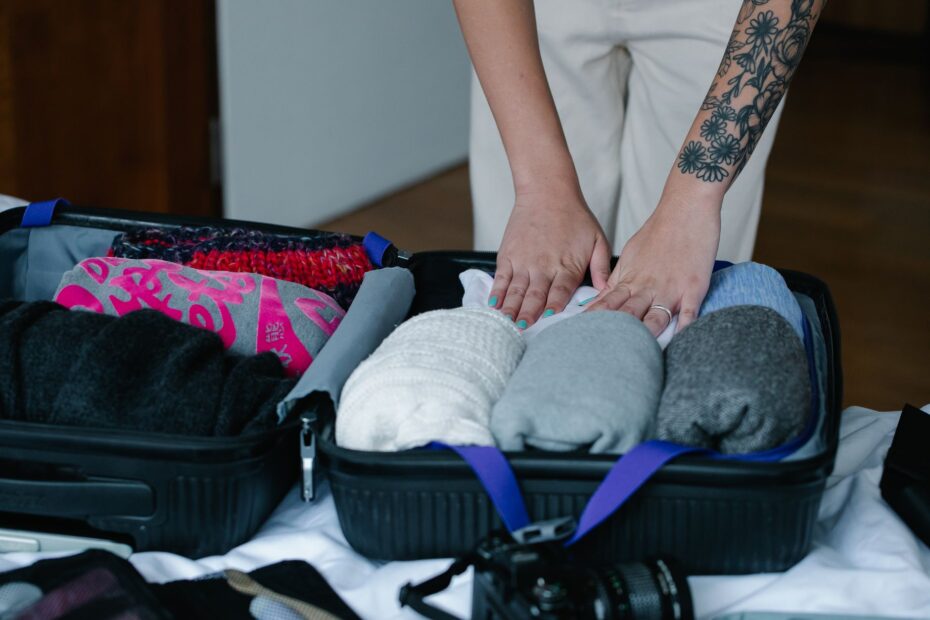
Before each trip, a repeatable system can align what you carry with bag space, weight limits, easy access, and transport rules. Your suitcase can be full yet work badly when a charger sits under clothing, shoes pull the bag sideways, or unused garments fill half a packing cube.
You’ll use the planning, wardrobe limits, fabric methods, and bag zones below for weekend trips, one-week trips, and routes with several stops.
Space, Weight, Access, and Versatility Set the Foundation
A packed bag works only when each item earns its room. Travel packing efficiency means filling usable capacity without leaving awkward gaps, exceeding an airline baggage allowance, or burying the items you need during transit.
Your suitcase has four limits: usable volume, total weight, access to essentials, and item versatility. A thick sweater worn once takes more of your packing budget than a thin layer that fits three outfits.
| Constraint | What wastes it | Practical response |
|---|---|---|
| Usable volume | Loose gaps and bulky duplicates | Fill narrow spaces with rolled soft items |
| Total weight | Heavy shoes, liquids, and electronics | Set a category weight limit before packing |
| Access | Documents or medication under clothing | Keep transit items in your personal item bag |
| Versatility | Single-use garments | Pack pieces that fit two or more outfits |
Start with a rough volume and weight budget before anything enters the case. Give clothing the largest share, then reserve fixed room for footwear, toiletries, technology, and trip-specific gear such as a rain shell or hiking shoes.
Leave 10 to 15 percent of your bag unfilled. That buffer gives you room for dirty laundry, a damp swimsuit, or a purchase without turning the return trip into a zipper fight.
With the bag’s limits established, the order and purpose of each day determine what earns a place.
The Trip Schedule Defines What Belongs in the Bag
That 10 to 15 percent buffer works only after the trip sets clear limits. Seven nights in one hotel with laundry access needs fewer garments than seven nights across four cities with formal dinners.
Write a short packing checklist from your actual schedule instead of possible disasters. Your climate range, dress expectations, laundry access, transport changes, and outdoor plans show which categories deserve space.
- Trip length: Use the number of nights for underwear and core clothing rather than bringing a new outfit for every day.
- Weather range: Choose stackable layers, such as a T-shirt, overshirt, and light shell, instead of separate outfits for each temperature.
- Dress needs: Reserve one polished option for a dinner or meeting rather than several similar dress shirts.
- Laundry access: A sink wash or hotel laundry service can reduce clothing volume on trips longer than five days.
- Location changes: Keep overnight basics together for train rides, road trips, and late hotel arrivals.
Airline baggage allowance rules vary by carrier, route, cabin class, and fare. Check your carry-on luggage dimensions, personal-item allowance, and weight cap before choosing a bag, since a domestic route can differ from an international segment.
Your personal item bag should hold your passport, medication, wallet, phone, chargers, headphones, and a small snack. That separation keeps the main bag closed through boarding, gate changes, and the opening stretch of a flight.
A Coordinated Wardrobe Produces More Outfits With Fewer Pieces
Once transport limits are clear, clothing becomes the largest source of either waste or flexibility. A capsule wardrobe reduces item count through a narrow color palette and mix-and-match pieces that share layers, shoes, and accessories.
Choose each garment after naming two planned pairings. Your black trousers can work with a white tee for a museum day and a button-up for dinner, while a patterned shirt with no matching layer has little value in the case.
The 5-4-3-2-1 Packing Method Creates a Starting Limit
A practical baseline includes five tops, four bottoms, three layers or dresses, two pairs of shoes, and one accessory set. You can treat those counts as a ceiling rather than a rigid rule because a beach trip and a winter city trip need different proportions.
| Category | One-week example | Why it earns space |
|---|---|---|
| Tops | 3 T-shirts, 1 button-up, 1 knit top | Each fits every bottom |
| Bottoms | Jeans, trousers, shorts | Three fabrics cover casual and polished plans |
| Layers | Overshirt, cardigan, rain shell | Layers cover temperature swings |
| Shoes | Sneakers and loafers | One active pair and one dressier pair |
For your situation, reduce the count before adding to it. A warm destination may need three tops and one light layer, while cold weather can justify another base layer but not three nearly identical sweaters.
The 3-3-3 Travel Rule Fits Short Casual Itineraries
The 3-3-3 travel rule reduces the core wardrobe to three tops, three bottoms, and three shoes or comparable categories. It suits a three- or four-day casual itinerary, frequent laundry, or a route where you wear one shoe pair in transit.
Small wardrobes have a clear limit. Your clothing list needs more room for cold weather, a formal event, specialized sports, or a no-laundry itinerary, so add function rather than duplicate colors and silhouettes.
Rolling, Folding, and Bundling Serve Different Fabrics
Fabric behavior should guide the method rather than habit. Rolling versus folding clothes changes how fabric sits in the bag, with soft pieces fitting curved corners and crisp fabrics needing a flatter route.
| Method | Use it for | Watch for |
|---|---|---|
| Rolling | T-shirts, knitwear, leggings, sleepwear | Hard creases in stiff cotton |
| Folding | Button-downs, blazers, pressed trousers | Unused air around flat stacks |
| Bundling | A small outfit group with delicate pieces | Slower access to an inner garment |
Roll casual trousers, activewear, and soft tees snugly rather than crushing them into hard cylinders. You can fit those rolls along suitcase edges and beside shoes, which makes this one of the more practical space-saving suitcase packing methods.
Fold structured shirts along their natural seams and place tissue paper or a dry-cleaning bag between slippery fabrics. The smooth layer reduces friction, helping you pack a suitcase without wrinkles caused by movement and sharp folds.
Bundling works through a different structure. Wrap soft pieces around a firm core, such as a folded sweater, then place the bundle near the top of the bag; your dressier clothing avoids the deep crease lines caused by tight compression.
Packing Cubes Sort Clothing but Do Not Remove Weight
Sorted categories save time at the hotel and during transit. Packing cubes keep shirts, underwear, workout gear, and cables separated, so you can find one category without pulling every garment onto the bed.
Compression packing cubes and compression bags reduce clothing volume by squeezing out air. They do not reduce the actual weight of packed items, and a dense cube can push your carry-on luggage beyond a carrier’s weight cap.
- Standard cubes: Use these for garment organization and faster hotel unpacking.
- Compression cubes: Reserve these for bulky knitwear where volume, rather than weight, creates the problem.
- Laundry bag: Separate worn clothing before odor reaches clean layers.
- Toiletry pouch: Keep travel-size liquids and solid alternatives together for security screening.
- Cable organizer: Keep charging cords from winding through socks and shirts.
- Shoe bags: Keep sole dirt away from clothing while containing an awkward shape.
Compression is not weight reduction. A tightly squeezed four-pound stack still weighs four pounds, even though it occupies less room.
Saving volume only helps when the resulting load stays balanced, secure, and easy to reach on the move.
Bag Zones Keep Heavy Gear Stable and Daily Items Reachable
Dense objects belong near the wheel end of rolling luggage. That placement lowers the center of gravity, helps your suitcase roll straighter, and reduces the chance that the bag tips at a curb.
Use three layers inside the case. Put shoes and dense toiletry items at the base, clothing cubes or bundles in the center, and flatter garments plus a light jacket across the top.
Irregular spaces need a specific job. Pack shoes heel-to-toe, fill them with socks or protected chargers, and place a sealed liquids pouch near the opening so your toiletries remain reachable during a security check.
Your arrival-night items should sit closest to the zipper: sleepwear, toothbrush, clean underwear, and a charging cable. Late arrivals feel calmer because you can settle in without unpacking the full bag.
A One-Week Carry-On Layout Shows the System in Practice
For a seven-day trip with cool mornings, mild afternoons, and one dinner out, pack five tops, three bottoms, two layers, one dressier option, two shoe pairs, sleepwear, underwear, and a compact swim or workout item. That capsule supports repeated wear without seven separate daily outfits.
Place sneakers and loafers at the wheel end, with socks inside each shoe. Your center layer can hold one cube for tops and underwear, plus another cube for bottoms and sleepwear.
Lay the overshirt and rain shell flat across the cubes. A clear toiletry pouch stays near the zipper, while your personal item carries documents, medication, valuables, a power bank, a charger, and anything needed during transit.
International travel can add an adapter, passport copies, and route-specific documents, so remove a nonessential garment to preserve room. For a formal event, trade the casual overshirt for a wrinkle-resistant blazer rather than packing both.
Cold weather calls for worn bulk: travel in the heaviest boots and outer layer, then pack lighter base layers. A no-laundry week needs extra underwear and socks, while your tops and bottoms can still repeat through different combinations.
Five Mistakes Undercut a Carefully Planned Bag
A suitcase can go wrong long before the zipper closes. The five biggest packing mistakes are planning for every hypothetical event, duplicating similar garments, bringing too many shoes, treating compression as weight reduction, and skipping transport limits.
- Hypothetical outfits: Remove clothing meant for vague possibilities that never appear on your itinerary.
- Near duplicates: Keep the stronger of two similar black tops, trousers, or sweaters.
- Shoe excess: Limit footwear to pairs with distinct jobs, such as walking and dress wear.
- False compression: Weigh the packed case after using compression gear rather than before.
- Unchecked limits: Confirm carrier dimensions and weight rules before leaving home.
Wrinkles, overflow, and access failures respond to editing rather than frantic repacking. Wear your bulkiest layer in transit, remove the least useful item, and keep one small empty zone for dirty laundry separation or souvenir space.
On the return trip, place worn clothing in its own bag and group partly used toiletries together. Reassess each souvenir before forcing an overfilled case closed, because a second bag fee can erase the convenience of an impulse purchase.
Takeaways for a Lighter, More Usable Bag
Before anything reaches the suitcase, assign every item a clear role to keep the bag lighter and more usable. Your strongest setup uses a trip-specific capsule wardrobe, realistic airline limits, a fabric-appropriate packing method, and a layout that keeps dense gear stable and daily essentials close.
For how to pack lighter for travel, start by removing duplicates rather than searching for another organizer. Your bag becomes easier to carry, easier to open, and easier to repack once every item has a planned purpose.
FAQ
How does travel packing efficiency work?
Clothing, gear, and toiletries fit better when matched to your itinerary, luggage limits, and available bag space. You pack versatile items, place heavy gear near the wheel end, keep transit essentials in your personal item, and leave 10 to 15 percent of the case open for the return trip.
What is the 5-4-3-2-1 rule for packing?
A simple starting capsule includes five tops, four bottoms, three layers or dresses, two shoe pairs, and one accessory set. You should adjust those counts for weather, dress codes, and laundry access, but the rule stops your clothing list from growing without a clear purpose.
What is the 3-3-3 rule for travel packing?
Three tops, three bottoms, and three shoes or comparable core categories form the basis of this compact approach. Your trip needs frequent laundry, casual plans, or a short duration for that smaller wardrobe to work comfortably, since cold-weather gear and formal clothing consume more space.
Do packing cubes actually save space or just keep luggage organized?
Packing cubes mainly keep luggage organized by separating shirts, underwear, cables, and workout clothing into clear categories. Compression-style cubes can reduce the volume of soft garments, but your packed bag weighs the same because squeezing air out does not remove fabric weight.
Do compression packing cubes really work?
By reducing the air between soft garments, these cubes make bulky clothing occupy less volume. They do not make your luggage lighter, so you still need to check your packed bag against airline weight limits before heading to the airport.
Is rolling clothes better than folding them for travel?
Rolling works well for soft knits, T-shirts, activewear, and casual trousers because rolls fit narrow spaces with little loose air. Folding works better for structured shirts, blazers, and pressed trousers, while bundling can protect a small group of dressier garments from sharp fold lines.