A single safety limit can trigger a chain reaction through crowded airspace, airport constraints, and airline operations. Weather 800 miles away can hold your aircraft, crew, gate, or route. The stated cause shapes your next step, from rebooking a connection to requesting a refund.
You need live details before a missed connection, hotel booking, cruise departure, or work event grows into a larger disruption. The sections below explain how each part of the flight system affects your itinerary.
Delays, Cancellations, Diversions, and Missed Connections Have Different Effects
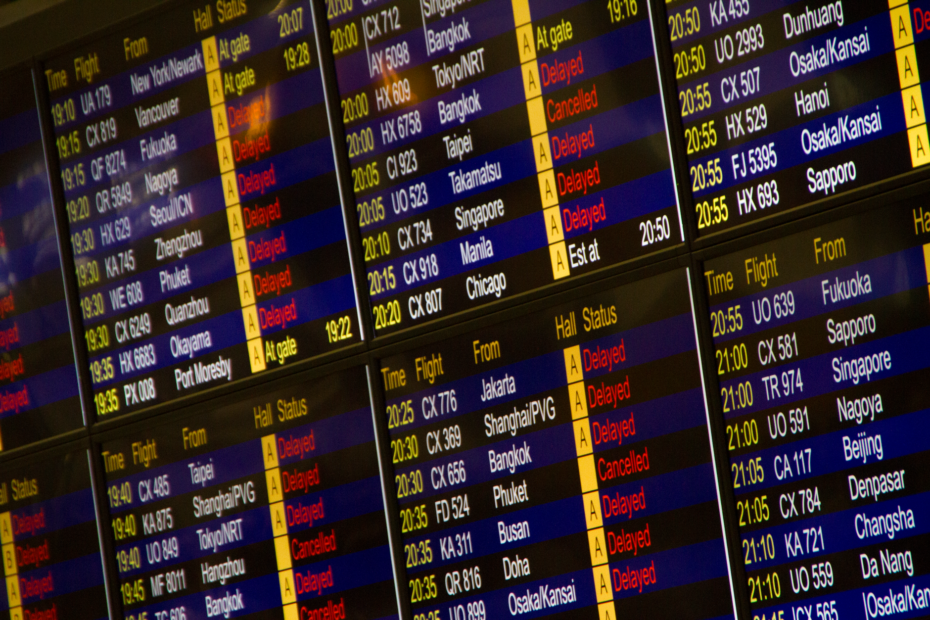
A departure board can place several disruptions under the same red alert, yet each term has a different result for your trip. A delay means the flight still plans to operate, though it will depart or arrive later than scheduled.
A cancellation means the scheduled flight will not operate. A diversion means an airborne aircraft lands somewhere other than its planned destination because of weather, a medical event, fuel limits, or a runway closure.
| Disruption | What happens | What it means for you |
|---|---|---|
| Delay | The flight operates later than planned. | You may need a new connection plan or same-day rebooking. |
| Cancellation | The scheduled flight does not operate. | You can seek rebooking or a refund for the unused ticket. |
| Diversion | The aircraft lands at another airport. | Your arrival time and ground transportation can change sharply. |
| Missed connection | An earlier disruption blocks the next segment. | You need protection onto another itinerary. |
Your missed connection is not a separate airline operating category. It results from an earlier delay, cancellation, diversion, or schedule change, so the original cause can shape your rebooking choices and expense claims.
Knowing the label is only the first step; identifying the trigger determines which remedies and explanations apply.
Capacity, Safety, and Airline Operations Start Most Disruptions
The notice in your app may show the final visible problem rather than the event that started it. Three forces shape flight operations: weather and National Airspace System limits, airport capacity limits, and airline-controlled issues such as mechanical maintenance or crew scheduling.
Airlines schedule aircraft, pilots, flight attendants, gates, and runways in close sequence. A 45-minute interruption can consume the small recovery window before your next segment, especially during a busy holiday weekend.
One event can produce several disruption labels
A thunderstorm can slow arrivals at Chicago O’Hare, hold an aircraft in Denver, delay its crew in Houston, and leave a gate unavailable in Newark. Your notice may show “late-arriving aircraft,” though severe weather started the chain hours earlier.
| Source | Operational effect | Common visible notice |
|---|---|---|
| Weather or NAS limits | Fewer safe arrivals and departures | Air traffic control delay |
| Airport capacity | Runway, gate, taxiway, or deicing backlog | Airport congestion |
| Airline operations | Aircraft or crew cannot operate on schedule | Maintenance, crew, or late aircraft |
That chain matters because your airport can have blue skies while the aircraft, crew, or route still sits inside a wider disruption. You get a clearer picture by tracking the inbound aircraft rather than relying on the weather outside your terminal.
Weather Cuts the System’s Safe Aircraft Flow
Clear skies at your gate do not prove that your flight has a clear path. Extreme weather can reduce visibility, runway acceptance rates, braking performance, and safe spacing at your departure airport, destination, or the airport where your plane began its day.
Thunderstorms force Air Traffic Control to route aircraft around hazardous cells. Those detours use more fuel and airspace, while arrivals and departures slow across regions that can include New York, Washington, Atlanta, and Chicago.
- Low visibility: Fog and heavy rain require greater spacing between arrivals, reducing runway throughput.
- Strong winds: Crosswinds can restrict runway use and require wider separation between aircraft.
- Snow and ice: Deicing queues and runway treatment slow aircraft movement near the gate.
- Extreme heat: Hot air reduces aircraft performance and can limit takeoff weight at high-elevation airports.
Your aircraft may wait for a connecting crew, an open gate, or a safe route through an affected region. The National Weather Service provides weather information that helps explain why a clear local forecast does not settle the issue.
Gate-area weather is only one clue. Check the inbound aircraft and destination airport before assuming the local forecast explains your delay.
Air Traffic Control and Airport Bottlenecks Restrict Movement
Weather-related spacing rules can quickly lead to traffic-management restrictions. The Federal Aviation Administration uses these tools to keep aircraft safely separated because an airport cannot accept every scheduled arrival during reduced-capacity periods.
Air Traffic Control, or ATC, controls flight flow across the National Airspace System. Your flight can face an ATC hold even after boarding is complete because a safe arrival slot has not opened at the destination.
| Term | Meaning | Effect on your flight |
|---|---|---|
| Ground stop | Departures toward a location pause. | Your aircraft stays at the gate until release. |
| Ground delay program | Flights receive scheduled departure delays. | Your pushback time can move by minutes or hours. |
| Miles-in-trail | Aircraft fly farther apart en route. | Departure slots shrink and airborne routes slow. |
| Flow restriction | ATC limits traffic through a route or airspace area. | Your flight can take a longer route or await clearance. |
Airport congestion also occurs in favorable weather. A closed runway, blocked taxiway, full ramp, unavailable gate, or long deicing line can leave your aircraft ready to fly but unable to move.
Your itinerary can contain both an FAA-related delay and an airline issue. A late aircraft caused by an ATC ground stop can later create a crew-timing problem, turning an external interruption into an airline recovery problem.
Mechanical Maintenance and Crew Limits Can Remove a Flight From Service
A mechanic’s log entry can stop a departure even though the aircraft looks normal from your seat. Maintenance teams must resolve a mechanical discrepancy or complete a required inspection before the aircraft is released as airworthy.
A morning Phoenix-to-Dallas flight with a hydraulic warning illustrates the limits of an aircraft swap. A replacement aircraft needs an open gate, a compatible crew, enough fuel time, and room in the wider daily schedule.
Your app can show several short delays while dispatch searches for that replacement. A swap becomes harder late in the day because spare aircraft may be operating elsewhere or assigned to later departures.
Crew duty-time limits restrict recovery
Pilots and flight attendants operate under federal duty-time and rest rules. A late inbound arrival, missed positioning flight, illness, or crew shortage can leave an aircraft and passengers ready, yet without a legal crew to depart.
A crew timeout is not a discretionary choice. Once a crew reaches its duty limit, the airline needs a replacement team or must cancel the segment.
Your practical choice changes as the day gets later. Ask whether a replacement crew is assigned and seek a confirmed later seat before the remaining options narrow.
Even with a replacement crew, the aircraft itself may be arriving late from a disruption elsewhere.
Late-Arriving Aircraft Spread Delays Far From the Original Cause
The phrase “late-arriving aircraft” means your assigned plane is still completing an earlier segment. Airlines use the same aircraft for multiple flights each day, so a morning storm or mechanical issue can affect airports that never saw the original problem.
- Morning storm: Thunderstorms restrict departures from Orlando and hold a Dallas-bound aircraft at its gate.
- Late arrival: The aircraft reaches Dallas 70 minutes behind schedule and misses its planned turnaround window.
- Displaced crew: A flight attendant crew arrives late from another segment and approaches duty-time limits.
- Gate conflict: The assigned gate remains occupied because an earlier arrival cannot depart.
- Connection loss: Your evening Dallas-to-Seattle flight leaves late, placing onward reservations at risk.
Repeated 20-minute updates do not prove a cancellation, but they show that dispatch is waiting for a moving part to settle. The airline may hold the flight while a crew, gate, airspace release, or replacement aircraft remains available.
You should act before a long gate wait removes your choices. Search alternate flights, protect a connection through the airline app or an agent, and check nearby airports before remaining seats disappear.
Cancellations Happen When the Schedule Cannot Recover
At some point, extending a delay causes more damage than removing a flight from the schedule. Airlines cancel flights when an aircraft cannot be positioned, a crew will exceed legal duty limits, or later segments would become unreliable for the rest of the day.
| Primary driver | Cancellation pattern | What you should expect |
|---|---|---|
| Weather or ATC | Several carriers and airports are affected. | Same-day seats can be scarce across the region. |
| Maintenance | One aircraft or route is affected. | An aircraft swap or later rebooking attempt may follow. |
| Crew issue | A late-day segment loses its operating crew. | A replacement crew or the next available departure may follow. |
| Late aircraft | An earlier disruption spreads through the schedule. | The result depends on remaining recovery time. |
Historical carrier data shows patterns, not live explanations. The Bureau of Transportation Statistics tracks on-time performance by carrier and route, including United Airlines and Delta Air Lines, but it cannot identify the cause of your active delay.
Carrier comparisons also need context. A hub airline operating through storm-prone or congested airports can post weaker results during one period without showing that every disruption came from airline operations.
For an individual traveler, systemwide patterns matter less than timely updates and the protections available that day.
Live Information and Passenger Rights Shape Your Next Step
The live cause changes the choice in front of you. Weather across a region points toward early rebooking, while a maintenance delay on one aircraft can make a short wait for an aircraft swap reasonable.
| Live cause | Best immediate action | Practical expectation |
|---|---|---|
| Severe weather | Seek an earlier routing or alternate airport. | Meals and hotels depend on carrier policy and coverage. |
| ATC restriction | Protect tight connections before boarding. | Nearby flights may face the same restriction. |
| Maintenance | Ask about an aircraft swap, rebooking, or refund. | Airline-controlled commitments may apply. |
| Crew issue | Request the next confirmed seat promptly. | Late-day recovery can be limited. |
| Late-arriving aircraft | Track the inbound plane and alternate routes. | Short updates can continue until dispatch decides. |
- Check the airline app: Look for a cause code, revised departure time, and self-service rebooking choices.
- Track inbound aircraft: Find the prior flight number and actual arrival status at your airport.
- Review FAA status: Check National Airspace System information for ground stops and airport delays.
- Protect connections: Ask for confirmed onward seats before your inbound flight departs.
- Save documentation: Keep receipts, notices, and screenshots for insurance or expense claims.
The U.S. Department of Transportation does not set a universal 3-hour flight delay rule that pays compensation to every delayed passenger. Refund eligibility can arise after a significant schedule disruption when you decline the airline’s alternative and do not use the ticket.
Airline delay compensation rules differ from refund rules. EU Regulation 261/2004 and UK rules can require compensation after qualifying long delays or cancellations on covered routes, subject to carrier, route, and extraordinary-circumstances rules.
The Montreal Convention addresses some international damage claims rather than a flat payment for every delayed flight. Your receipts, cancellation notice, and rebooking record can matter where an expense claim or travel insurance claim arises.
Flight Disruptions Reward Fast, Informed Decisions
Your flight is part of a moving chain of aircraft, crews, gates, runways, and airspace. Find the live cause, trace the inbound aircraft, protect tight connections early, and separate airline commitments from legal rights.
That sequence gives you a stronger response than waiting for a vague announcement to become a cancellation. Your records also give you clearer support for a refund, reimbursement request, or insurance claim.
FAQ
What are the most common causes of flight delays and cancellations?
Severe weather, Air Traffic Control restrictions, airport congestion, late-arriving aircraft, mechanical maintenance, and crew scheduling and duty-time limits are common causes. A disruption at one airport can also affect aircraft, crews, and gates at later stops across the airline network.
Why can bad weather in another city delay my flight when my airport has clear skies?
Your aircraft or crew may be arriving from the affected city, or your route may cross restricted airspace. Thunderstorms can reduce safe flight flow across a region, even though conditions at your departure gate appear calm.
What does a late-arriving aircraft mean, and why is it so common?
A late-arriving aircraft is still completing an earlier flight before it can operate your segment. Airlines use each aircraft for several flights a day, so a morning delay can continue through later cities and departures.
How do air traffic control restrictions and airport congestion cause delays?
ATC limits departures, arrivals, routes, or aircraft spacing when safe capacity falls. Airport congestion adds gate, taxiway, runway, ramp, and deicing constraints, leaving aircraft unable to depart or arrive on schedule.
Can an airline cancel a flight because of crew shortages or maintenance problems?
An airline can cancel a flight when a legal crew is unavailable or a mechanical discrepancy remains unresolved. Federal duty-time limits prevent a crew from continuing after its permitted work period, and maintenance work must finish before release.
Why do airlines cancel flights instead of delaying them longer?
Airlines cancel flights after recovery becomes unrealistic. A further delay can disrupt later aircraft assignments, crew duty limits, gates, and connections, creating wider operational problems for the remaining schedule.